
A harbor-ferry tester asks a pre-trained model to draft a weekend-sailing test script from a user story rather than to classify last week’s tickets. Which type of AI does this use?
Select an answer to reveal the explanation.
Short Explanation
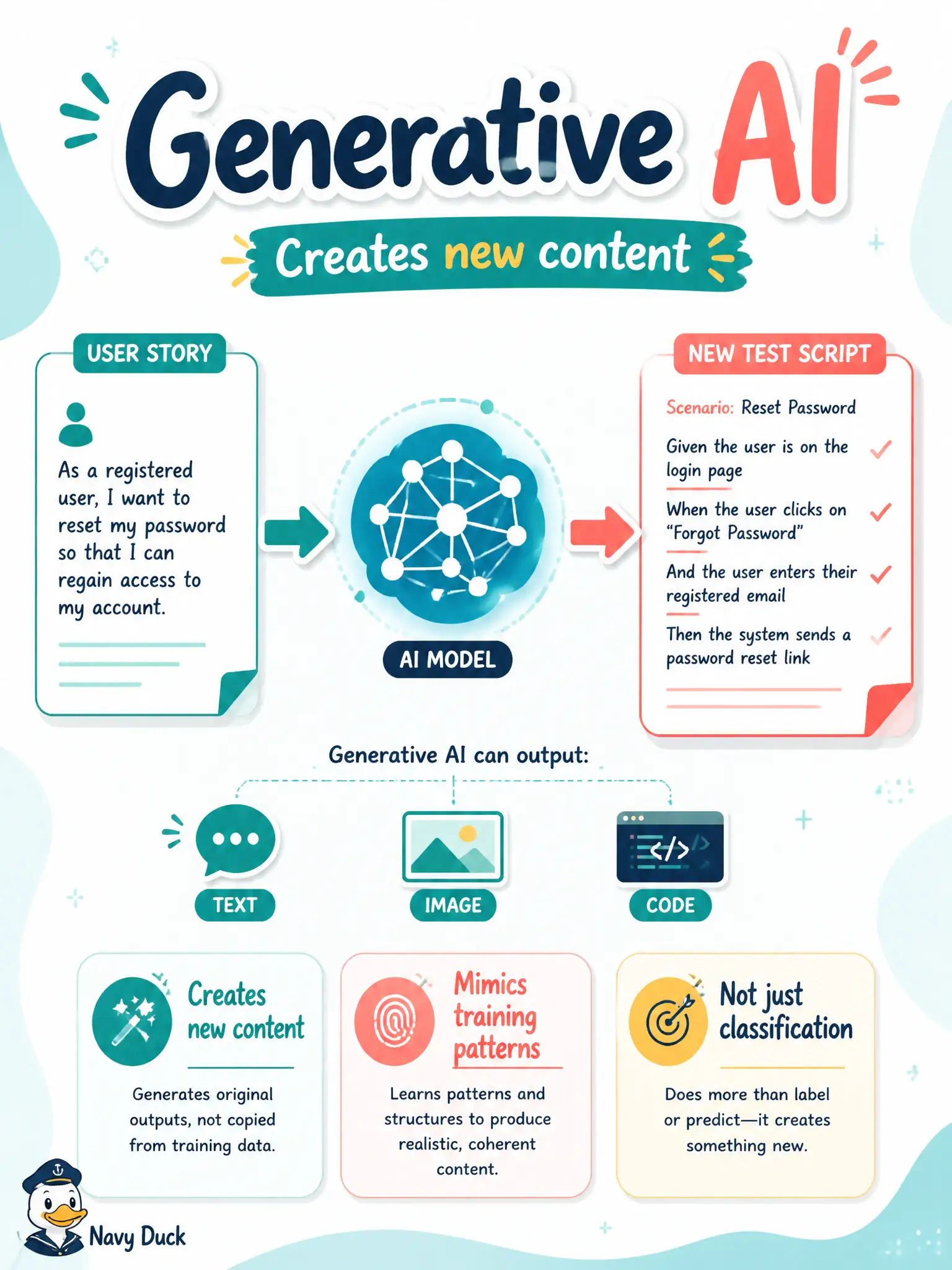
Think of a helper that writes a fresh draft from patterns it has seen, not one that only sorts old tickets. Generative AI creates new text, images, or code. Drafting a test script from a user story is that content-creating role, not a synonym for every AI type.
Full Explanation
Generative AI creates new artefacts—text, images, or code—by mimicking patterns from training. When a harbor-ferry tester asks a pre-trained model to draft a weekend-sailing test script from a user story, the task is content creation, not classification of last week’s tickets. Civic testing teams use GenAI precisely for that drafting role while keeping review against the ferry basis.
Symbolic AI fails because an editable if-then boarding table executes rules; it does not draft a new test script from a story. Classical machine learning fails because categorizing past tickets after feature selection and training is predictive classification, the opposite of generating a new script. Deep learning used only to score berth photographs without producing new text fails because the requested output is generated language testware, not an image score.
Exam caveat: GenAI is defined by producing new content, not by every use of a neural network. Classifying historical tickets remains classical/predictive territory even if a vendor says “AI.”
Operational check: confirm the deliverable is a newly drafted script or similar artefact; confirm the model was applied via prompting rather than a fresh classical training job on ticket labels; review the draft against the ferry user story before execution; log GenAI-as-draft-aid in the municipal test plan.