
A municipal hydrant-flush notice team has no in-house LLM specialist and needs docs plus an active user community when their case helper misbehaves. Which selection criterion matches that need?
Select an answer to reveal the explanation.
Short Explanation
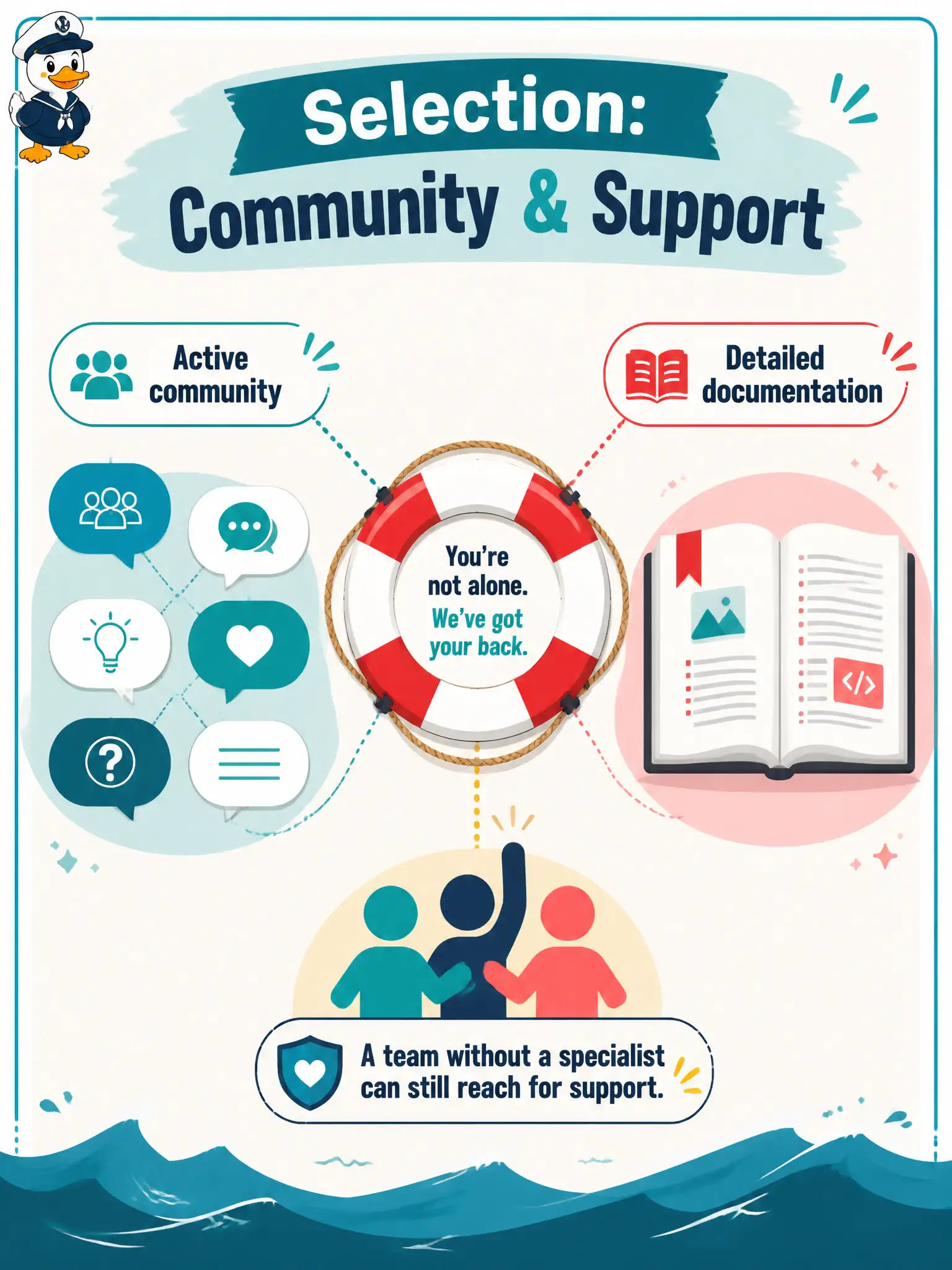
When the helper hiccups and nobody on staff is an LLM specialist, community and docs are the lifeline. Active community plus detailed documentation is a named selection criterion. Attack lists and shadow escalation are not that criterion.
Full Explanation
Community and support—meaning an active user community and detailed documentation—is an official LLM selection criterion, especially valuable when the organization lacks deep in-house LLM specialists. A municipal hydrant-flush notice team that needs docs plus an active user community when their case helper misbehaves is selecting against that criterion. Attack-vector enumeration as the primary model score confuses Chapter 3 threat catalogs with supportability. Shadow AI as the preferred escalation path for outages worsens control instead of providing sanctioned support. Metamorphic testing of the notice system by the LLM vendor is not the community-and-support criterion and may not even be offered. Exam caveat: attack-vector scoring, shadow-AI escalation, and CT-AI metamorphic testing of unrelated systems do not fulfill this criterion. Operational check: before adopting a hydrant-flush helper, verify active community channels and documentation quality sufficient for a team without in-house LLM specialists. Keep civic testware subject to the same review discipline you would apply to human-authored packs. On the written exam, prefer syllabus terminology over vendor marketing language or lab choreography.