
A community dye-vat reservation desk compares a commercial hosted model with an open-source-licensed model they would operate themselves. Which selection criterion focuses on ongoing spend?
Select an answer to reveal the explanation.
Short Explanation
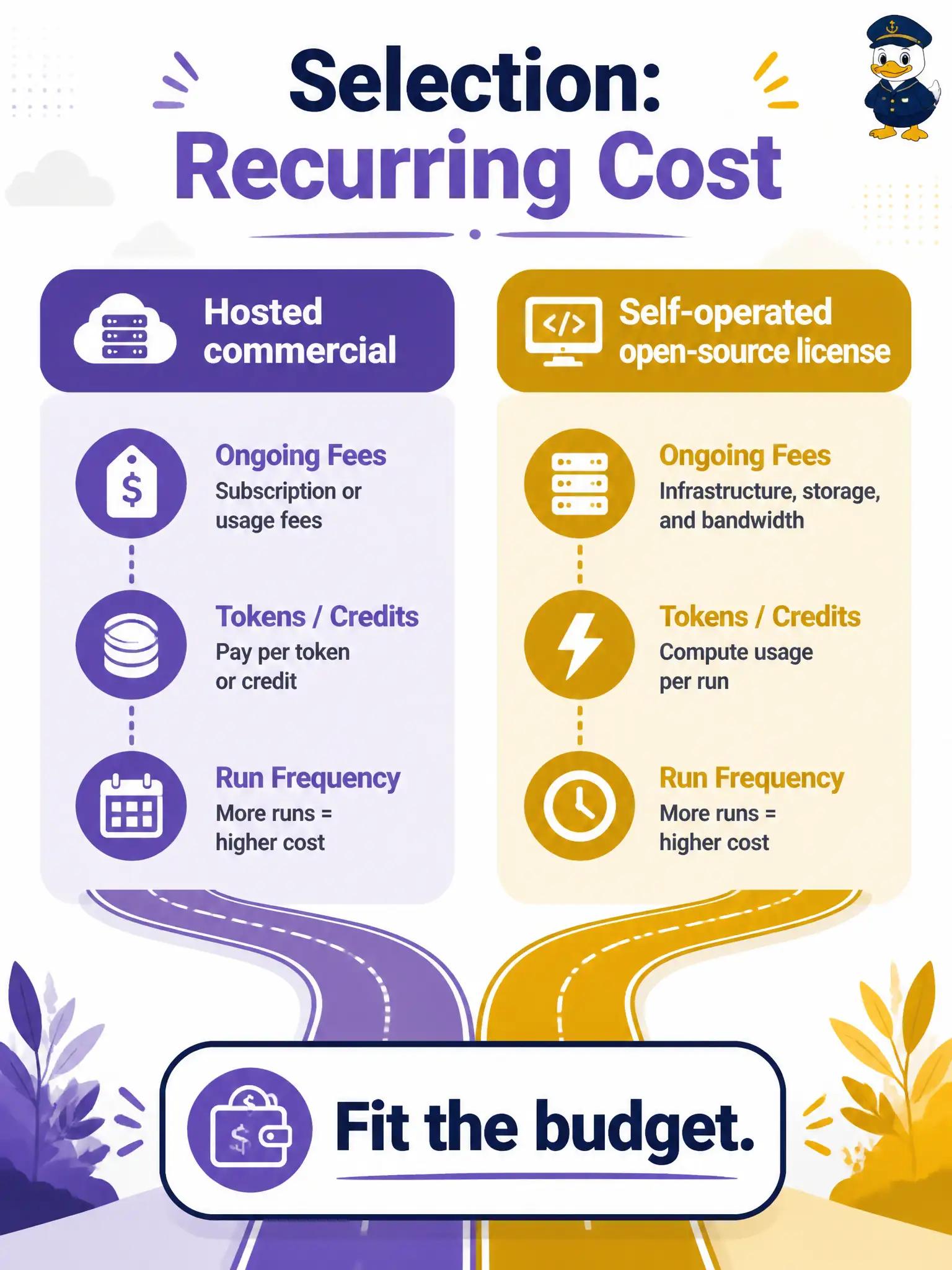
The sticker price is only the first sip of dye — the vat keeps costing as you run it. Recurring cost covers licensing and operational expenses, including tokens and how often the test task runs. That criterion keeps the choice inside budget.
Full Explanation
Recurring cost is an official selection criterion covering licensing fees and operational expenses, influenced by token volume and how frequently the test task executes. A community dye-vat reservation desk comparing a commercial hosted model with an open-source-licensed model they would operate themselves should include that ongoing-spend look, not only sticker price. Neuron coverage thresholds for every generated assertion are CT-AI SUT measures, not the recurring-cost criterion. Mandatory use of personal unsanctioned chat panes for cost savings introduces shadow AI and is not a valid cost criterion. Replacing all human testers in the initiation phase is neither a selection criterion nor sound adoption practice. Exam caveat: the written exam stays at summarize depth; it is not a hands-on pricing calculator lab. Operational check: estimate licensing plus operational cost under expected dye-vat token volume and run frequency for each candidate before choosing. Keep civic testware subject to the same review discipline you would apply to human-authored packs. On the written exam, prefer syllabus terminology over vendor marketing language or lab choreography. Treat fluent output as a draft until organizational quality gates and data-handling rules are satisfied.