
A municipal sidewalk-repair ticket pack is filed with no mark that an LLM drafted the steps. Which strategy guideline obligation is missing?
Select an answer to reveal the explanation.
Short Explanation
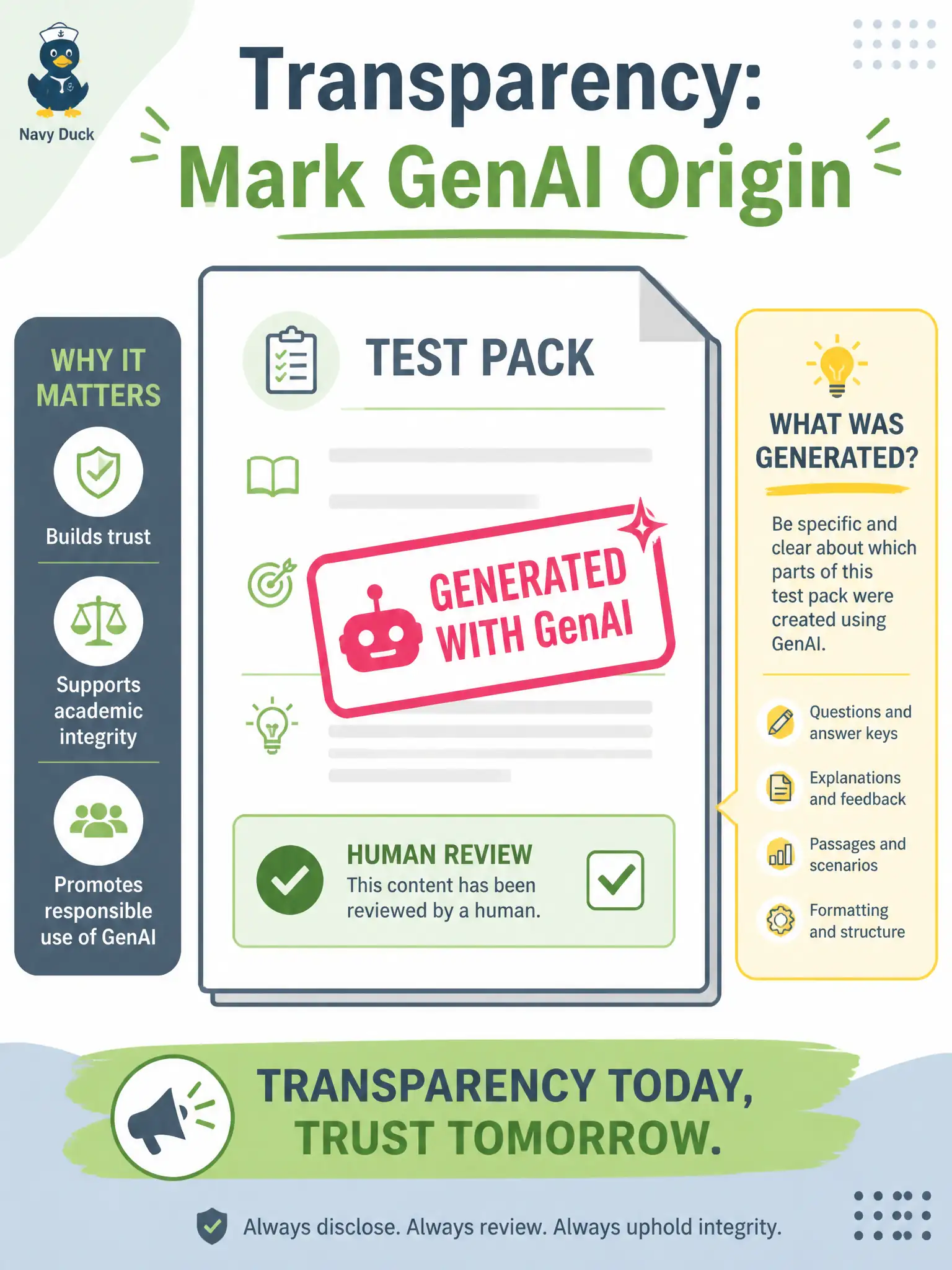
If nobody can tell who wrote the steps — human or helper — the trail goes cold. Transparency guidelines require marking what GenAI generated. Filing an unmarked LLM-drafted pack breaks that obligation.
Full Explanation
GenAI testing strategy guidelines include a transparency obligation: it should be clear what was generated using GenAI. Origin marking supports review, accountability, and trust in testware. A municipal sidewalk-repair ticket pack filed with no mark that an LLM drafted the steps fails that obligation and hides authorship from reviewers. Requiring every pack to include vendor SKU names in the header confuses transparency of GenAI origin with product branding. Requiring metamorphic relations as the only allowed review method imports a CT-AI technique and does not satisfy origin marking. Requiring discovery-phase experiments before any production defect is written confuses adoption sequencing with transparency of generated content. Exam caveat: vendor naming, CT-AI metamorphic methods, and discovery-phase sequencing are separate topics and do not satisfy the transparency guideline. Operational check: when an LLM drafts sidewalk-repair steps, mark the pack as GenAI-assisted before filing so reviewers know to apply appropriate scrutiny. Keep civic testware subject to the same review discipline you would apply to human-authored packs. On the written exam, prefer syllabus terminology over vendor marketing language or lab choreography.