
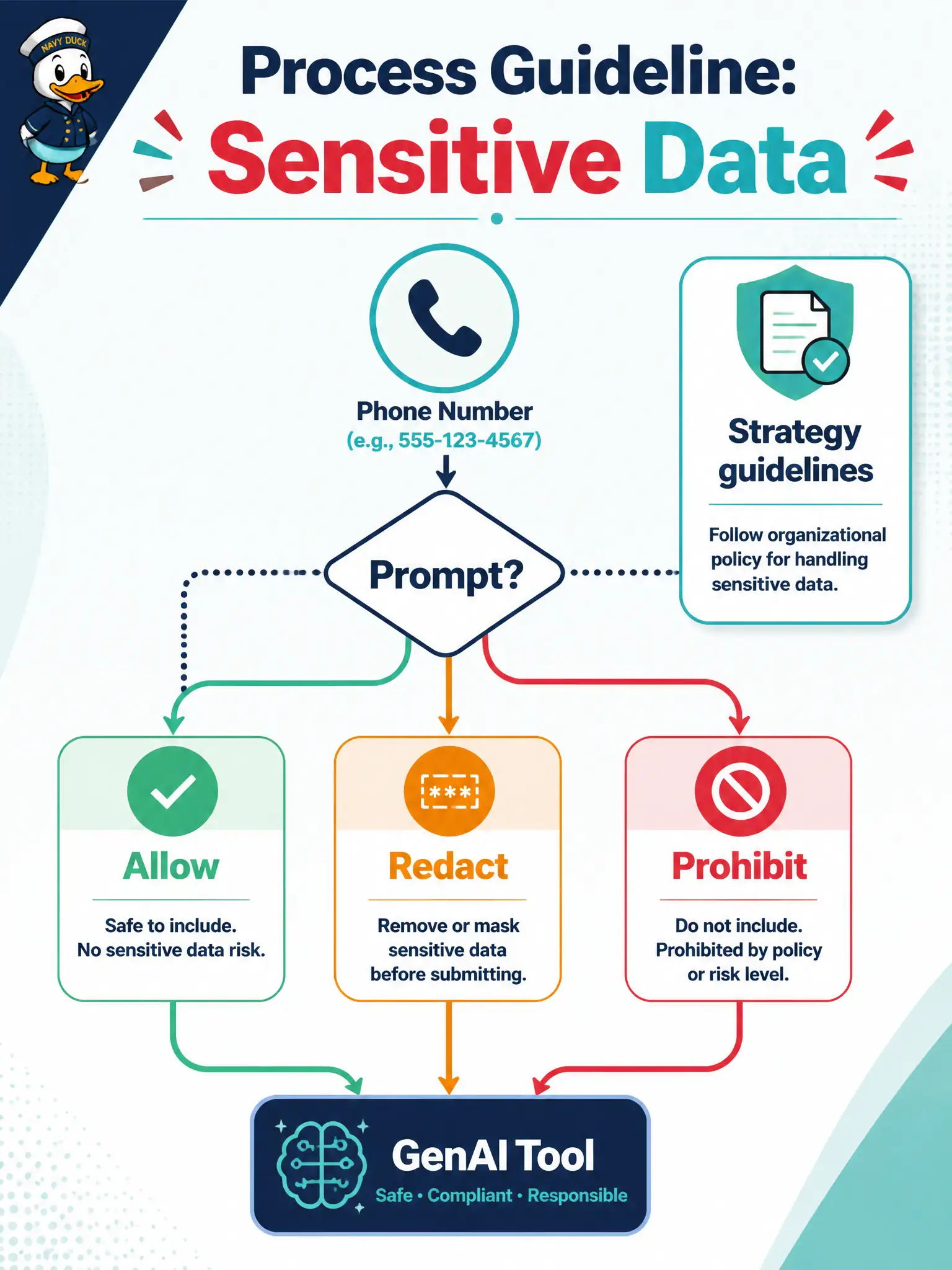
A community loom-reservation strategy is silent on whether resident phone numbers may be pasted into prompts. What process guideline belongs in the GenAI testing strategy?
Select an answer to reveal the explanation.
Short Explanation
If the strategy is silent on phone numbers, testers will invent their own rules — usually the risky ones. Process guidelines must include how sensitive data may (or may not) be used with GenAI tools. That belongs in the strategy, not as an afterthought.
Full Explanation
Process guidelines within a GenAI testing strategy must address the use of sensitive data. Clear rules reduce accidental leakage of resident or production information into prompts and tools. A community loom-reservation strategy silent on whether resident phone numbers may be pasted into prompts is missing that sensitive-data guideline. Rules requiring neuron coverage measurement for every LLM reply import CT-AI SUT practice into a data-handling guideline. Rules that treat personal unsanctioned helpers as the preferred channel endorse shadow AI rather than control sensitive data. Rules that forbid human review of any generated testware conflict with quality gates and do not protect phone numbers. Exam caveat: sanitization skills deepen later; CT-AI coverage ideas, shadow channels, and skipping review are not the sensitive-data guideline this item targets. Operational check: add an explicit rule that resident phone numbers and similar loom-reservation PII must be removed or masked before any GenAI prompt, and name approved tools only. Keep civic testware subject to the same review discipline you would apply to human-authored packs. On the written exam, prefer syllabus terminology over vendor marketing language or lab choreography.