
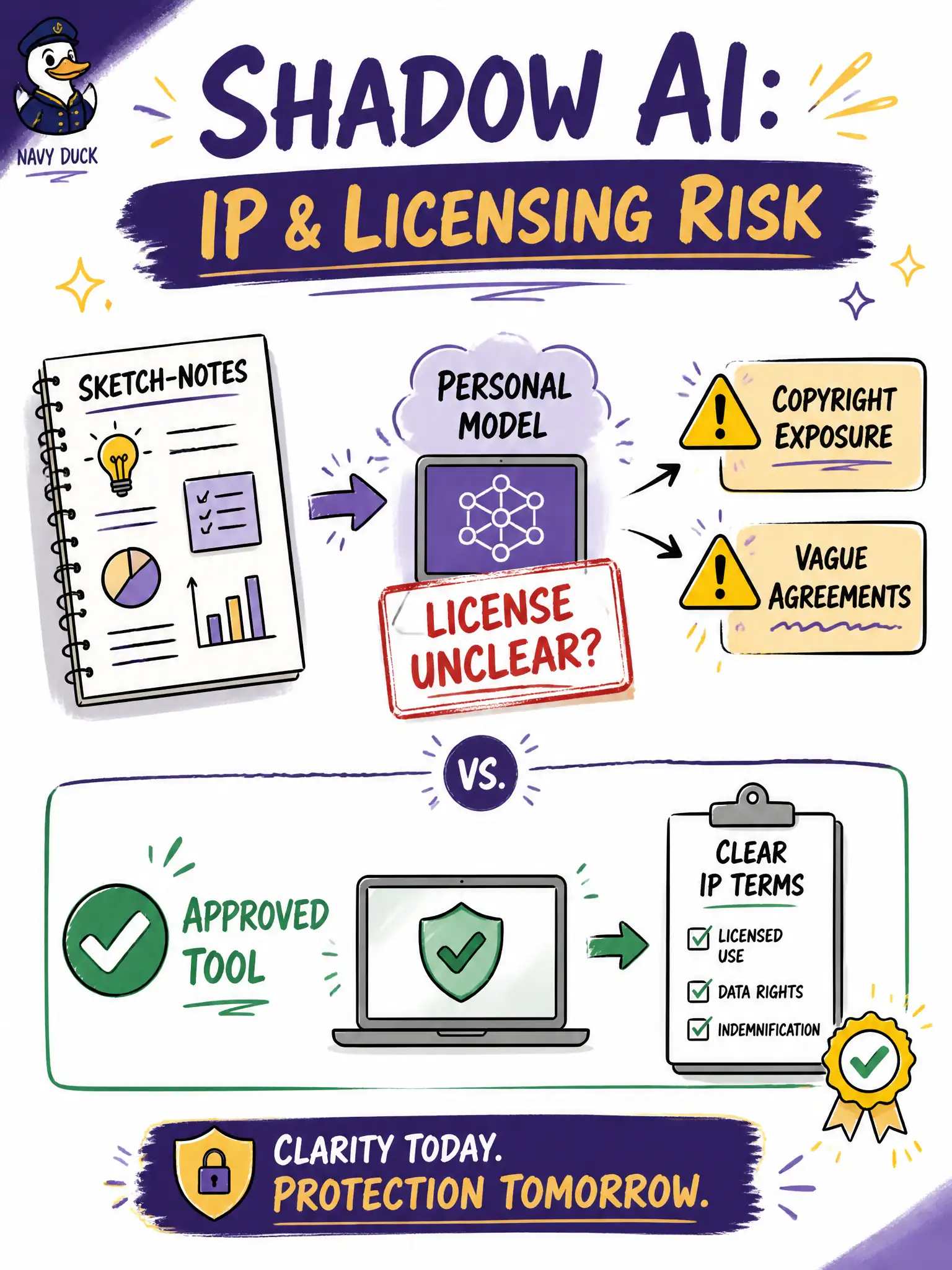
A community mural-permit tester drops an artist’s unpublished sketch notes into a free personal model whose license terms are unclear. Which shadow-AI risk does this primarily illustrate?
Select an answer to reveal the explanation.
Short Explanation
Unclear licenses are like borrowing paint without knowing who owns the color recipe. Dropping unpublished sketch notes into a free personal model with fuzzy terms can create intellectual property and licensing exposure for the shop. That is a classic shadow-AI risk.
Full Explanation
Shadow AI can create vague intellectual property and licensing risk when copyrighted or unpublished material is processed under unclear tool agreements, exposing the organization if authorization and ownership terms are not understood. A community mural-permit tester dropping an artist’s unpublished sketch notes into a free personal model with unclear license terms illustrates that IP/licensing exposure. Failure to define initiation-phase use-case priorities is an adoption-phase planning gap, not the IP risk of unapproved tools. Low execution success rate on generated automation scripts is an effectiveness metric concern, not licensing exposure. Missing transparency marks on GenAI-drafted test steps is a strategy transparency guideline issue, not the IP/licensing consequence of shadow AI. Exam caveat: adoption phases, metric scores, and transparency guidelines address other Chapter 5 parts and do not replace this IP/licensing consequence of unapproved personal tools. Operational check: keep unpublished civic mural materials out of personal models until legal and licensing terms of an approved tool are understood and documented. Keep civic testware subject to the same review discipline you would apply to human-authored packs.