
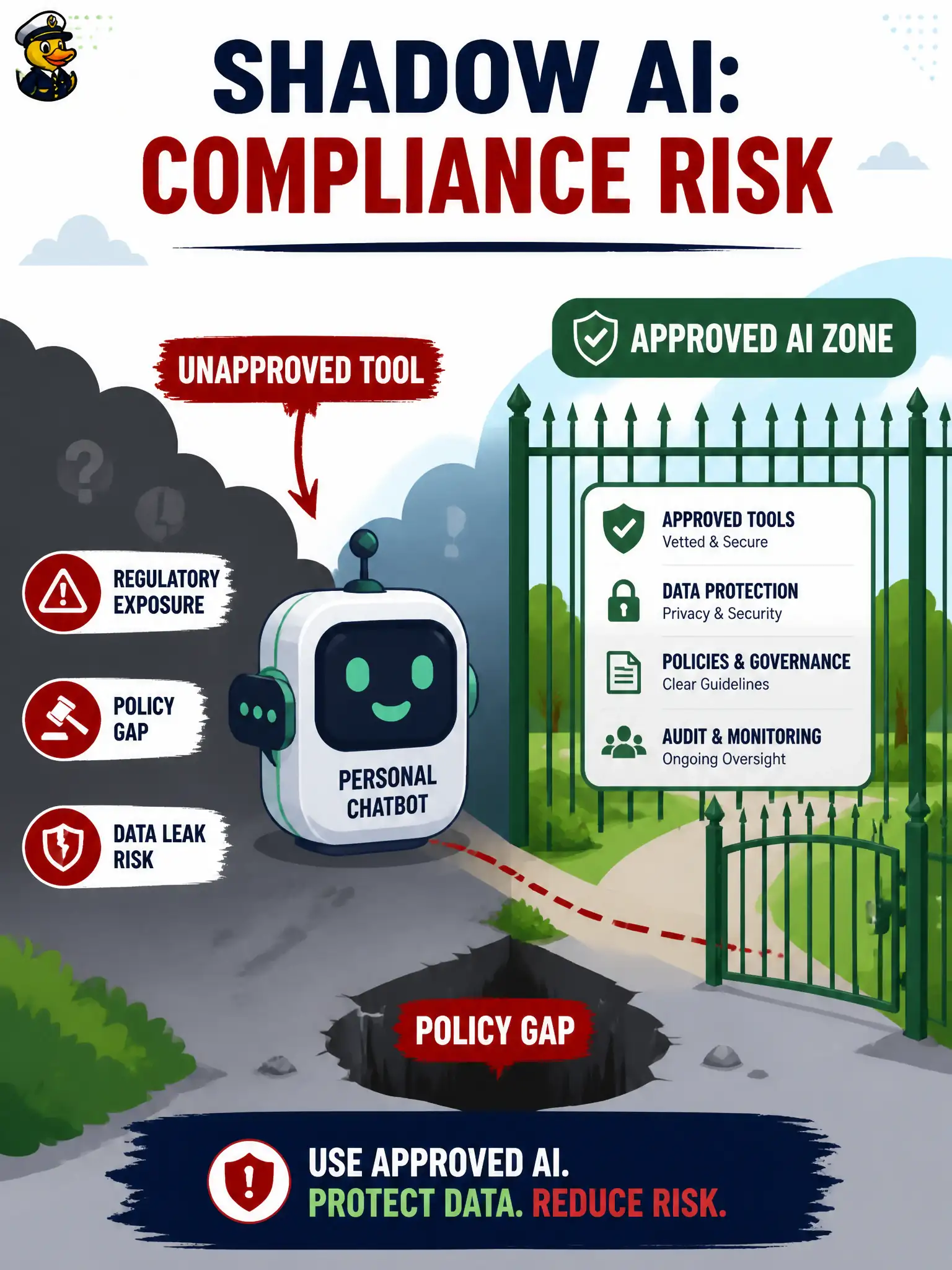
A municipal rain-garden inspection pack is drafted in a personal GenAI helper even though the city requires AI processing only under approved instruments. Which shadow-AI risk is illustrated?
Select an answer to reveal the explanation.
Short Explanation
City rules are like trail markers — you stay on the approved path or you are off-policy. Drafting inspection packs in a personal helper when only approved processing is allowed creates compliance and regulatory risk. That is a named shadow-AI consequence, not a metrics or window-size issue.
Full Explanation
Shadow AI introduces compliance and regulatory risk when testers process work outside the organization’s approved AI instruments and policies. A municipal rain-garden inspection pack drafted in a personal GenAI helper despite a city rule that AI processing occur only under approved instruments illustrates that compliance failure. Poor diversity of generated test cases under §2.3.1 metrics is an effectiveness-measurement topic, not the compliance consequence of unapproved use. Insufficient context-window size for long inspection forms is a technical feature concern for selection, not shadow-AI compliance risk. Weak community support documentation for the personal model is a community-and-support selection criterion, not the regulatory exposure of bypassing approved instruments. Exam caveat: the item recalls the compliance/regulatory risk category; it does not re-examine specific Chapter 3 frameworks or attack catalogs. Operational check: before drafting rain-garden inspection packs with GenAI, verify the tool is on the city’s approved AI instrument list and that logging and policy controls apply. Keep civic testware subject to the same review discipline you would apply to human-authored packs.