
A manufacturing SOC rapidly contains a phishing-driven endpoint intrusion before any production systems are disrupted or data is accessed. When preparing the post-incident visual summary for plant leadership, how should the analyst frame the outcome?
Select an answer to reveal the explanation.
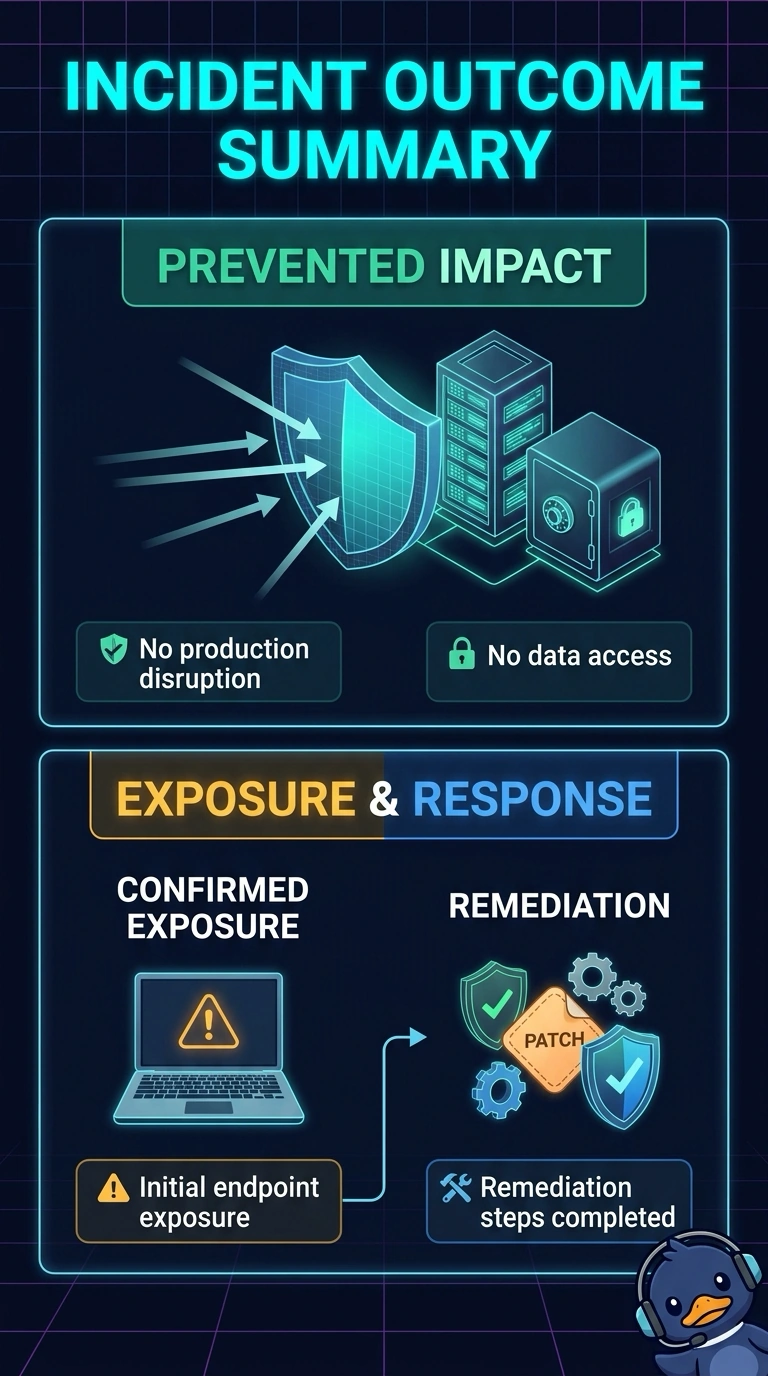
Short Explanation
Catching a spark before it reaches the factory floor is a win, yet you still need to explain how the spark got in. The trap is either hiding a near-miss or exaggerating the damage instead of clearly pairing prevented impact with the remaining fix.
Full Explanation
Effective post-incident communication after a near-miss gives leadership an honest view of both defensive success and residual exposure. Selecting Distinguish prevented business impact from the confirmed initial exposure and remediation steps accurately credits rapid containment while highlighting the phishing vector and follow-up controls needed to prevent recurrence. By contrast, Omit the incident from leadership reporting entirely because no production downtime occurred hides valuable lessons about how an adversary gained initial access and removes visibility into SOC effectiveness. Choosing Classify the incident as a full operational breach to ensure leadership approves security funding damages analyst credibility by misrepresenting confirmed impact. Meanwhile, Present only the raw phishing email count without mentioning endpoint containment or follow-up leaves executives without insight into how close the intrusion came to production systems or what actions closed the gap. As a caveat, ensure timeline labels clearly separate confirmed execution from unconfirmed lateral movement. As an operational check, cross-reference the visual summary's containment timestamps and open remediation tasks against the closed case record before briefing leadership.
Prefer to study offline? Printable PDF study book + test engine ($7.50, unofficial). These questions stay free here.