
A retail enterprise SOC contains a compromised point-of-sale support workstation, but endpoint and proxy logs from three weeks earlier have already aged out of retention, leaving the initial delivery vector unconfirmed. How should the analyst document the initial access gap in the final case report?
Select an answer to reveal the explanation.
Short Explanation
Nobody likes an unfinished puzzle, especially when leadership asks how an attacker got in. The trap is guessing a likely entry vector just to tidy up your report, which turns an unverified assumption into an official record.
Full Explanation
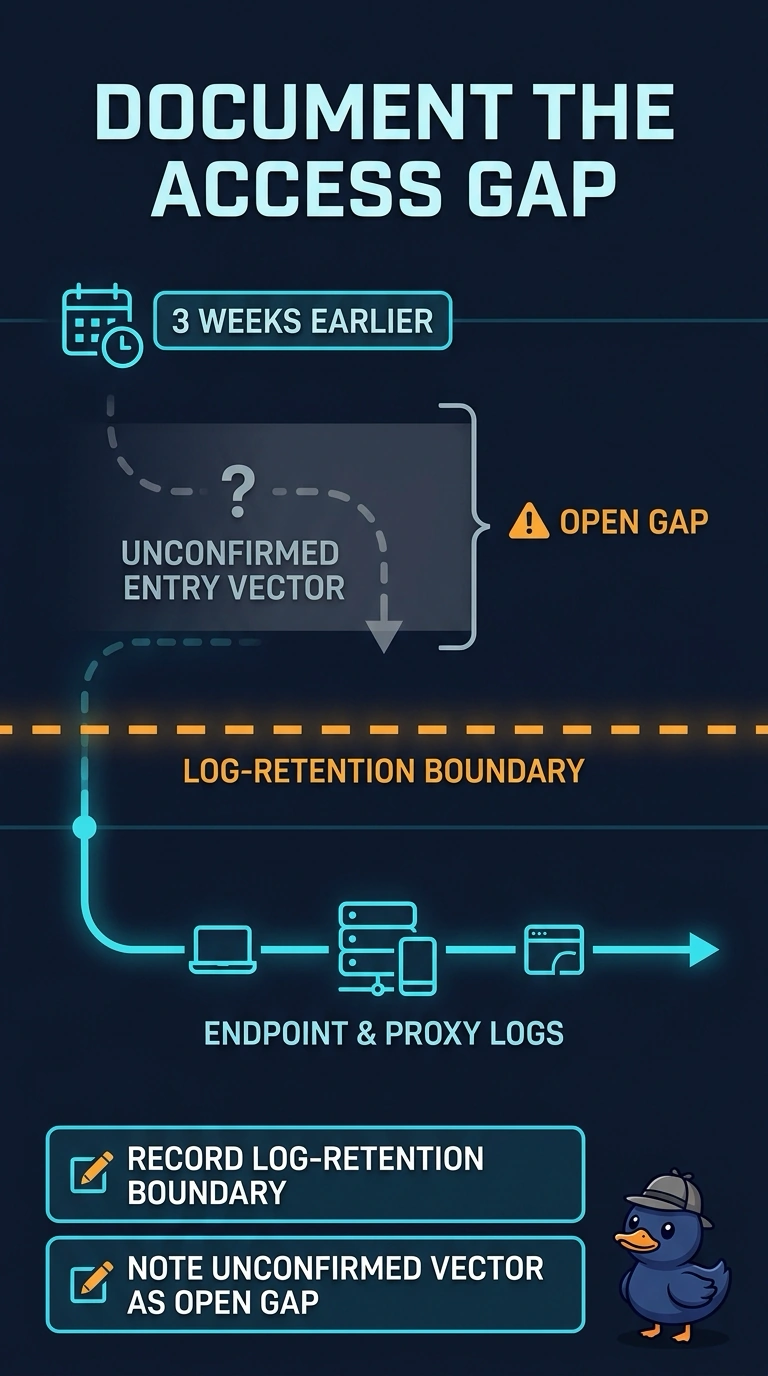
Accurate case documentation separates verified evidence from unknowns so responders, auditors, and leadership make sound decisions. When you record the log-retention boundary and note the unconfirmed entry vector as an open gap, you preserve investigative integrity and highlight where visibility ended. Choosing to state phishing as the confirmed entry vector because it is the most common retail attack introduces unverified speculation into the permanent record and may misdirect defensive spending. Deciding to leave the initial access section blank so the final case report contains no uncertainty hides a material visibility limitation and makes the report look incomplete during audit review. Choosing to delay closing the case indefinitely until the expired logs can be restored from SIEM search stalls operational closure because logs that have already aged out of retention cannot be retrieved through standard queries. Caveat: check whether secondary sources with longer retention, such as email gateway records or identity sign-in archives, still cover that earlier period before finalizing the gap. Operational check: state the exact earliest available log timestamp per source in the case summary and list any recommended retention or monitoring improvements.
Prefer to study offline? Printable PDF study book + test engine ($7.50, unofficial). These questions stay free here.