
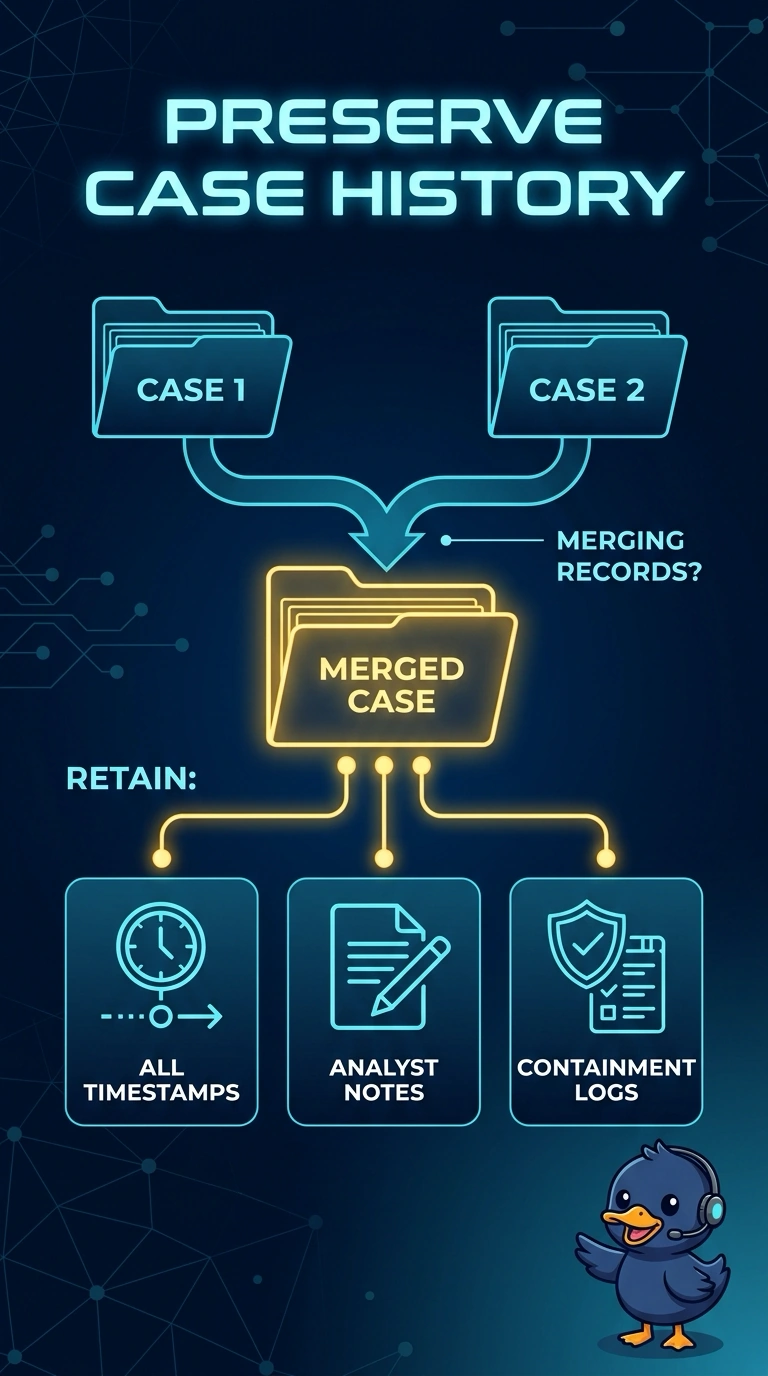
A distributed insurance company SOC discovers that two shift analysts opened separate cases for suspicious VPN logins and an endpoint script alert that belong to the same intrusion. What should the analysts preserve when merging the duplicate cases?
Select an answer to reveal the explanation.
Short Explanation
Combining two active cases is like splicing two investigation notebooks together: you want every page intact, not half the story tossed in the bin. The trap is cleaning up the queue by deleting or summarizing away early triage steps, which erases audit history and handoff context.
Full Explanation
When two analysts unknowingly investigate the same intrusion in parallel, the right approach is to Merge the records while retaining all timestamps, analyst notes, and containment logs. Preserving both timelines ensures responders and auditors can trace who observed each indicator, when containment occurred, and what hypotheses were already tested. Choosing to Delete the newer case record completely and keep only the original case summary destroys half of the investigative trail, including any containment actions or host checks performed under the second case. Similarly, if you Close both existing cases as duplicates and open a blank case with only the final conclusion, you strip away the supporting evidence and decision rationale needed for post-incident review. Even if you Copy only the alert identifiers into the primary case and discard earlier triage notes, future shifts lose critical context about why certain leads were pursued or ruled out. As a caveat, verify that merged records clearly attribute each note and timestamp to its original analyst and timezone so the combined chronology stays accurate. Before finalizing the merge, perform an operational check to confirm all linked observables, containment timestamps, and open tasks from both cases appear in the unified case view.
Prefer to study offline? Printable PDF study book + test engine ($7.50, unofficial). These questions stay free here.