
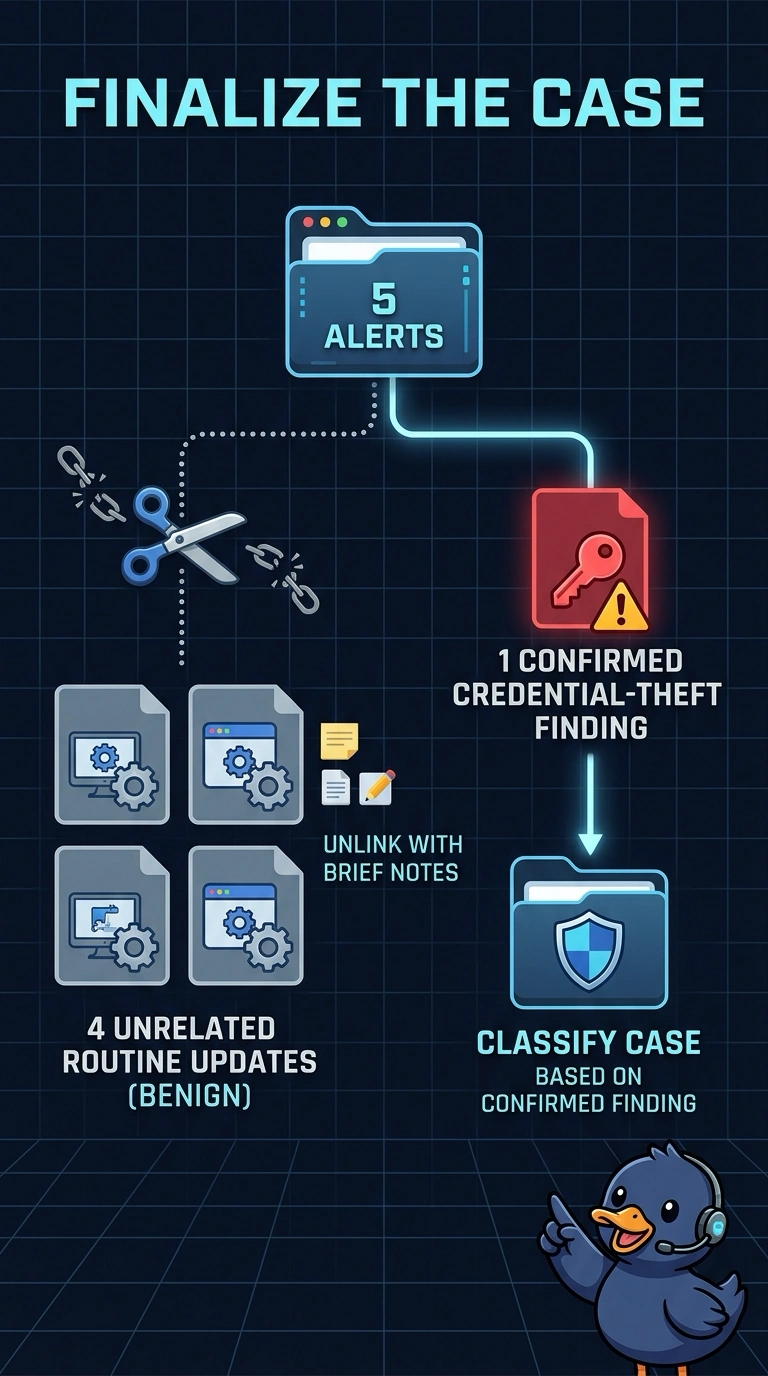
A retail SOC analyst investigates a case where five alerts were linked during initial triage: one confirmed credential-theft finding and four unrelated routine software updates. How should the analyst finalize the case record before closing it?
Select an answer to reveal the explanation.
Short Explanation
Leaving four false alarms stapled to a real fire report muddies the record for anyone who reads it later, including you. The trap is closing the whole case as benign or leaving unrelated noise attached, which distorts both audit trails and SOC metrics.
Full Explanation
Clean case hygiene ensures that incident metrics, audit records, and future investigations reflect verified facts without unrelated noise. Selecting Unlink the unrelated benign alerts with brief notes and classify the case based on the confirmed finding preserves an accurate true-positive record for the credential-theft event while documenting why the other four alerts were separated. By contrast, Close the entire case as a false positive so the four routine updates do not skew metrics erases a confirmed security incident from reporting and hides real risk. Choosing Leave all five alerts linked and label the case as inconclusive for future shift review fails to resolve the investigation and leaves contradictory evidence attached to the incident. Meanwhile, Delete the four unrelated alerts permanently from the SIEM so no record of them remains destroys auditability and removes context needed if an auditor asks why those detections were dismissed. As a caveat, always record a short rationale when unlinking or closing benign alerts so peers understand the decision. As an operational check, review the case's linked-alert list and final disposition field before closure to confirm only relevant evidence remains.
Prefer to study offline? Printable PDF study book + test engine ($7.50, unofficial). These questions stay free here.