
During a multi-day cloud intrusion investigation at a SaaS company, a SOC analyst initially notes in the case file that an alert appears to be an unauthorized login, but later telemetry proves it was an approved penetration test. How should the analyst update the case documentation?
Select an answer to reveal the explanation.
Short Explanation
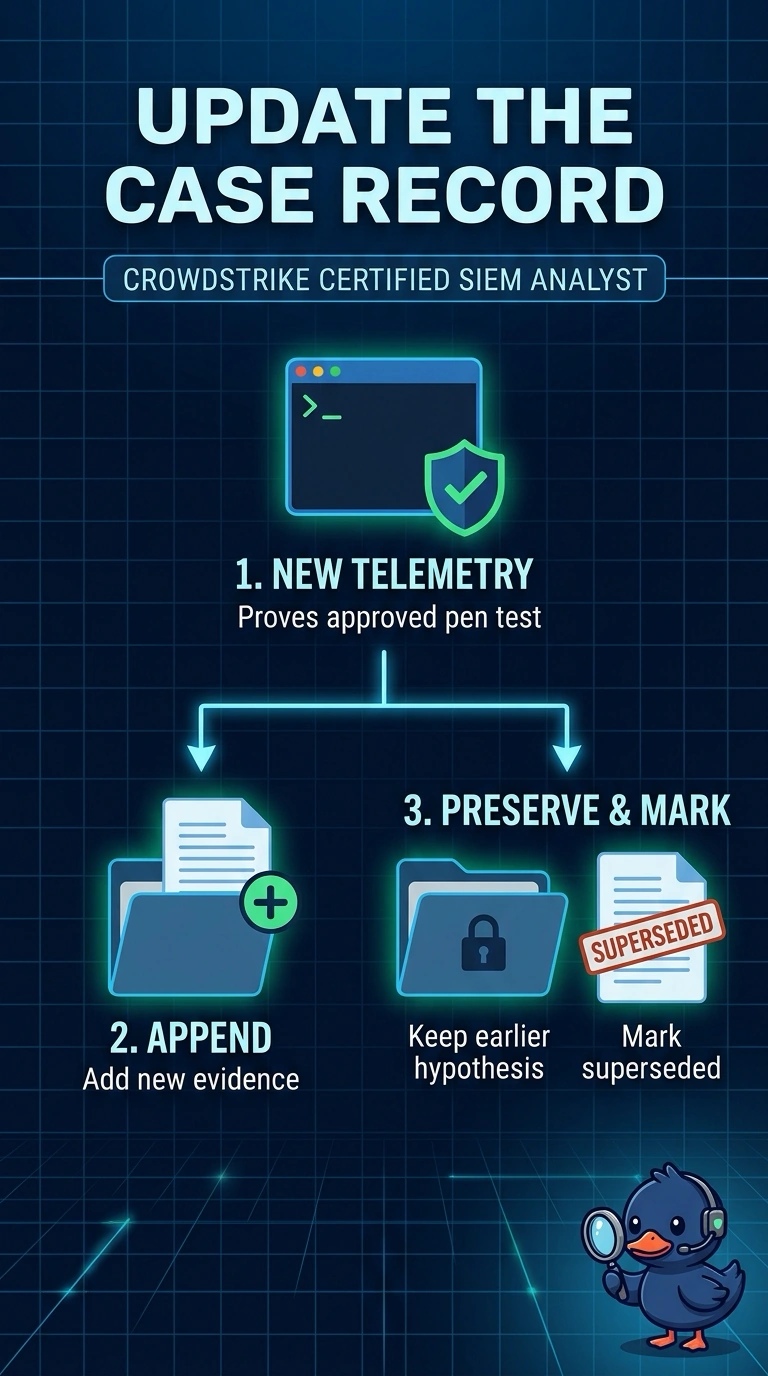
A good investigation case file works like an accountant's ledger—you never rip out old pages when new numbers arrive. The trap is erasing early notes to make the report look tidy, which destroys your audit trail. Appending new evidence while marking old hypotheses superseded keeps the full story honest.
Full Explanation
Accurate incident records require a transparent progression from initial triage to verified resolution, so the analyst should Append the new evidence and mark the earlier hypothesis as superseded to preserve both the final truth and the investigative trail. Choosing to Delete the earlier analyst notes so the case file shows only the final conclusion erases context needed for peer review and compliance audits, making it unclear why earlier actions were taken. Opting to Close the existing case without notes and open a blank replacement case fragments related telemetry, timestamps, and containment history across disconnected records. Conversely, deciding to Leave the initial conclusion unchanged to avoid altering the case timeline leaves an inaccurate finding in the official record and skews SOC metrics. As a caveat, clearly separate confirmed facts from early working hypotheses so leadership reading the summary sees the verified outcome immediately. As an operational check, verify the final case disposition accurately reflects benign authorized testing before closing.
Prefer to study offline? Printable PDF study book + test engine ($7.50, unofficial). These questions stay free here.