
A healthcare clinic SOC analyst completes containment for a compromised workstation and resets the affected user's credentials. What should the analyst record in the case before closing it?
Select an answer to reveal the explanation.
Short Explanation
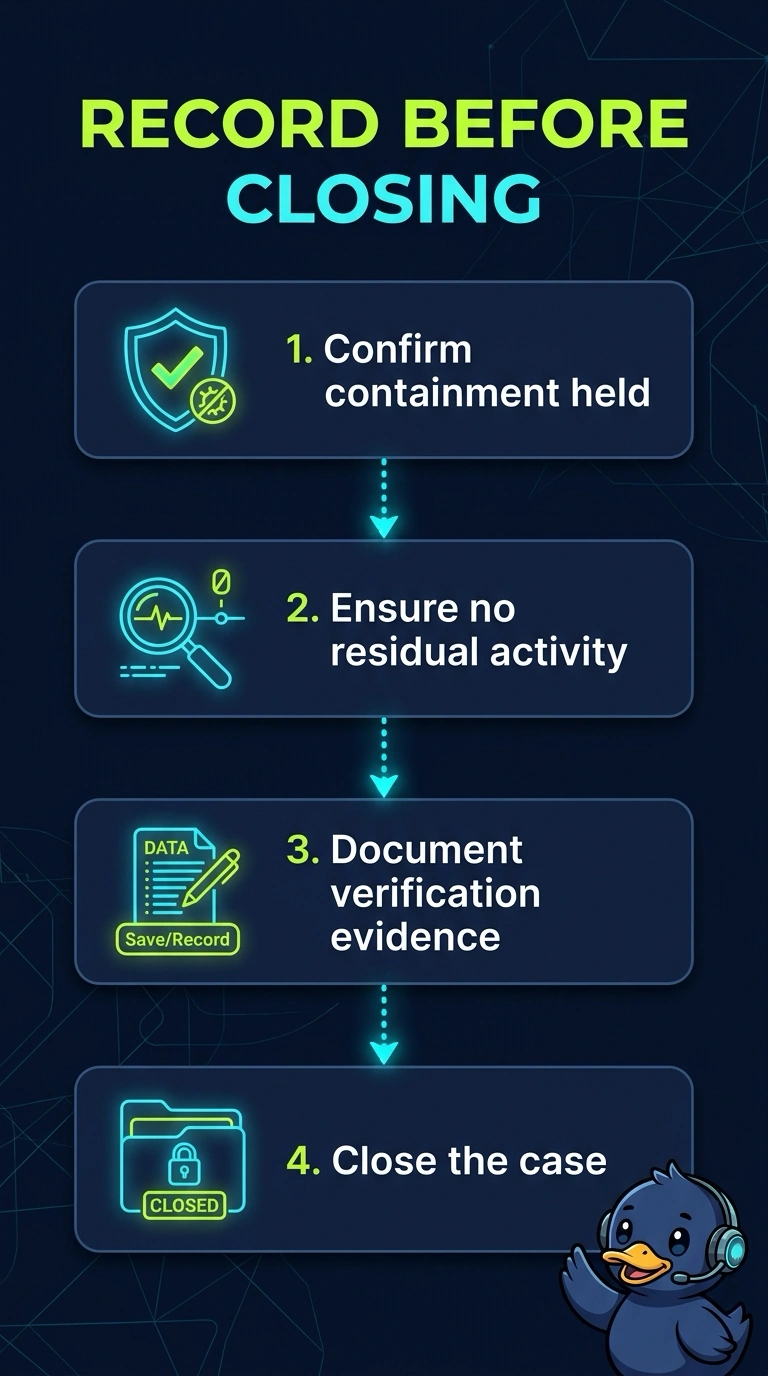
Taking action is only half the job—proving that the action worked is what closes the loop. Before you mark a case closed, record the evidence showing containment held and the attacker did not bounce back.
Full Explanation
Closing a case responsibly requires documenting "Verification evidence confirming containment held and no residual activity appeared" so peers and auditors can confirm the threat was truly neutralized. Recording post-containment checks demonstrates that host isolation, credential resets, and session revocations stopped ongoing access. Submitting "A request to delete raw SIEM logs for the workstation to free up storage capacity" destroys forensic and audit evidence needed for compliance and post-incident review. Leaving "Only the initial alert title, since timestamps and actions are unnecessary after closure" strips the record of who did what and when, making future audits impossible. Writing "A general statement that the incident is resolved without linking supporting queries" fails reproducibility standards because another analyst cannot verify how you confirmed the environment was clean. As a caveat, ensure your verification window accounts for any ingestion latency from cloud or third-party sources. Operationally, attach the final post-remediation CQL query results, isolation status confirmation, and credential-reset timestamp directly to the case before setting its final disposition.
Prefer to study offline? Printable PDF study book + test engine ($7.50, unofficial). These questions stay free here.