
A retail SOC analyst prepares an investigative visual summary for leadership after containing a phishing incident affecting four store workstations. How should the analyst present alert metrics so leaders understand the actual breach scope?
Select an answer to reveal the explanation.
Short Explanation
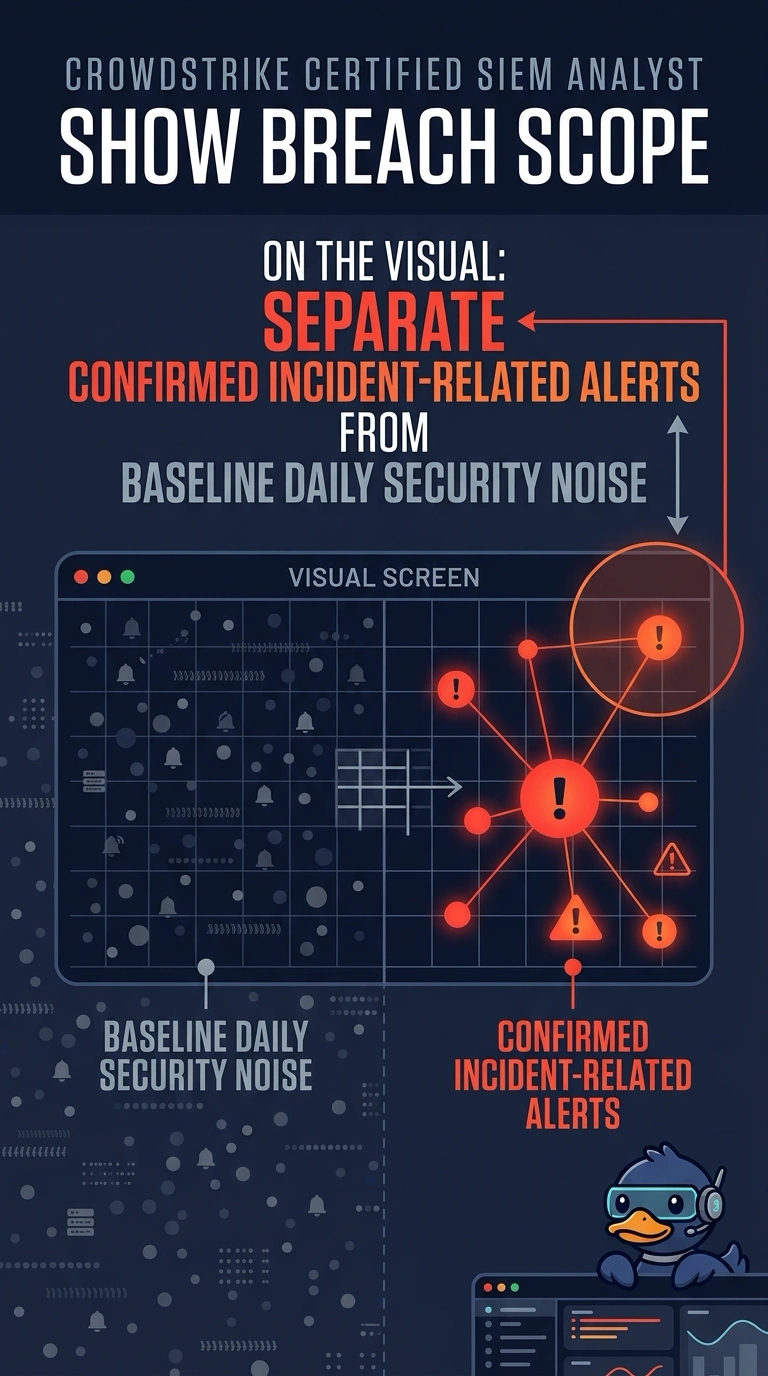
Mixing routine firewall drops with confirmed incident alerts is like reporting normal highway traffic in a crash report—it overwhelms your audience. Keep the focus clear by separating verified incident activity from everyday background noise.
Full Explanation
Leadership needs an accurate picture of what the attacker touched, which is why the analyst should "Separate confirmed incident-related alerts from baseline daily security noise on the visual" when reporting scope. Distinguishing verified intrusion events from routine background blocks prevents executives from misinterpreting normal perimeter hygiene as widespread compromise. Choosing to "Combine all blocked spam and routine firewall drops into one total to show overall SOC workload" inflates numbers and obscures the four-workstation scope. Putting forward "Display only raw CQL query syntax on the slide so executives can inspect the search logic directly" overwhelms non-technical stakeholders with query code instead of clear impact. Deciding to "Omit timeline timestamps from the visual summary so non-technical readers focus only on counts" strips away the sequence of events and hides when containment took effect. As a caveat, if you include baseline metrics for context, label them clearly as uncompromised routine blocks in a separate series or callout. Operationally, cross-check every charted incident count against the confirmed host and alert list in the case record before sharing the summary.
Prefer to study offline? Printable PDF study book + test engine ($7.50, unofficial). These questions stay free here.