
A university SOC contains a phishing incident by revoking sessions and resetting passwords for six staff accounts while the IT help desk fields calls from those staff. What should the analyst record in the case documentation to coordinate remediation?
Select an answer to reveal the explanation.
Short Explanation
Good case handoff notes are like a relay baton: if you drop the details, the next team either stalls or undoes your containment work. The trap is leaving vague summaries—or worse, insecure secrets—when the help desk needs clear account lists, timestamps, and re-enablement rules.
Full Explanation
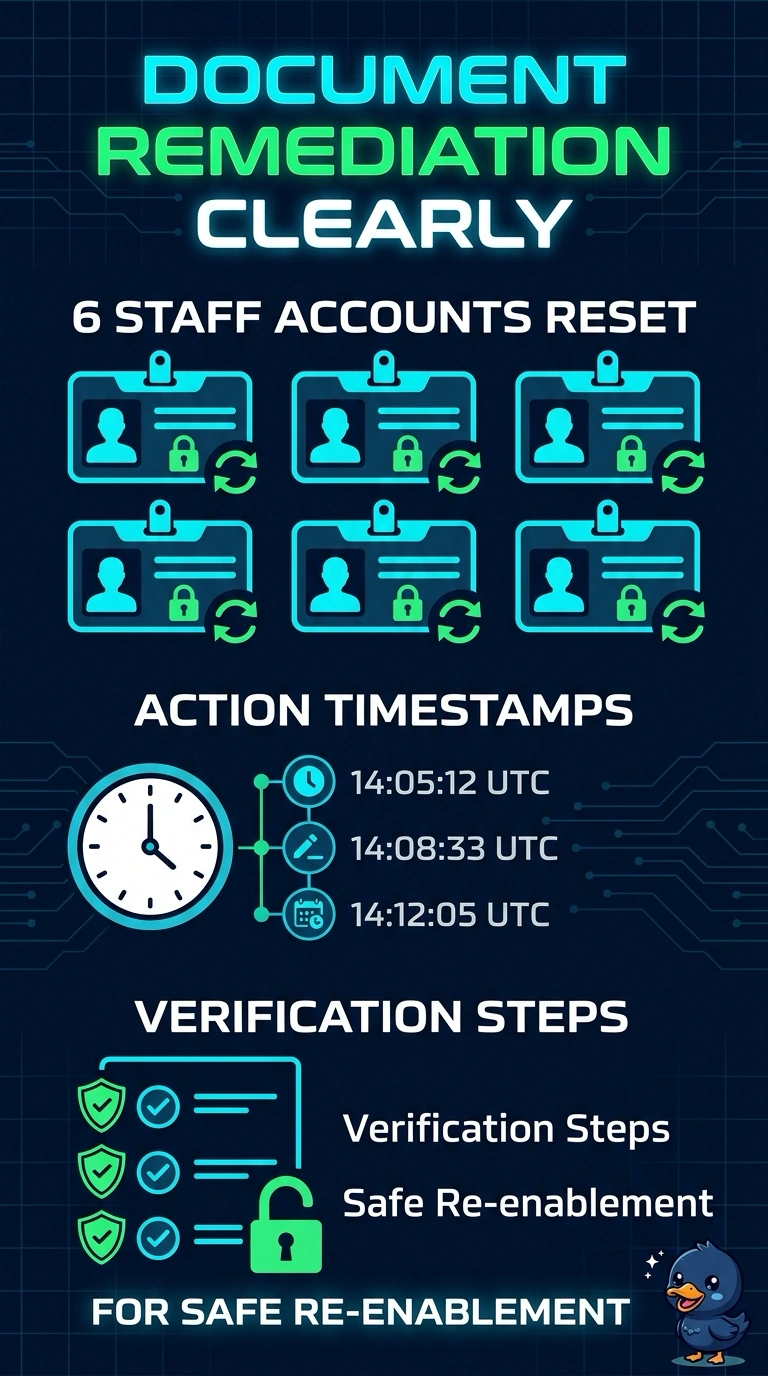
Coordinating containment across SOC and IT support requires documenting The specific accounts reset, action timestamps, and verification steps for safe re-enablement. Recording exact usernames, when sessions were revoked, and what identity verification is required before restoring access prevents help-desk staff from accidentally unlocking a compromised account prematurely. Documenting Only the phishing email subject line so the help desk can search their own personal inboxes fails to tell support which users were actually affected or what remediation occurred. Writing The plaintext temporary passwords assigned to each staff member so any agent can read them aloud violates credential security hygiene and creates new exposure inside the case record. Leaving A generic note stating the incident is resolved without listing which user accounts were changed forces support teams to guess which lockouts are security-driven versus routine login errors, risking duplicate work or premature re-enablement. As a caveat, keep sensitive personal details or authentication secrets out of shared case comments while still naming the affected account identifiers. As an operational check, confirm that the help-desk ticket queue references the exact case identifier and re-enablement checklist before closing the shift.
Prefer to study offline? Printable PDF study book + test engine ($7.50, unofficial). These questions stay free here.