
A financial firm SOC analyst writes a post-incident case report after an attacker used a phished password on an account that lacked phishing-resistant MFA and had overly broad file-share permissions. How should the analyst structure these findings?
Select an answer to reveal the explanation.
Short Explanation
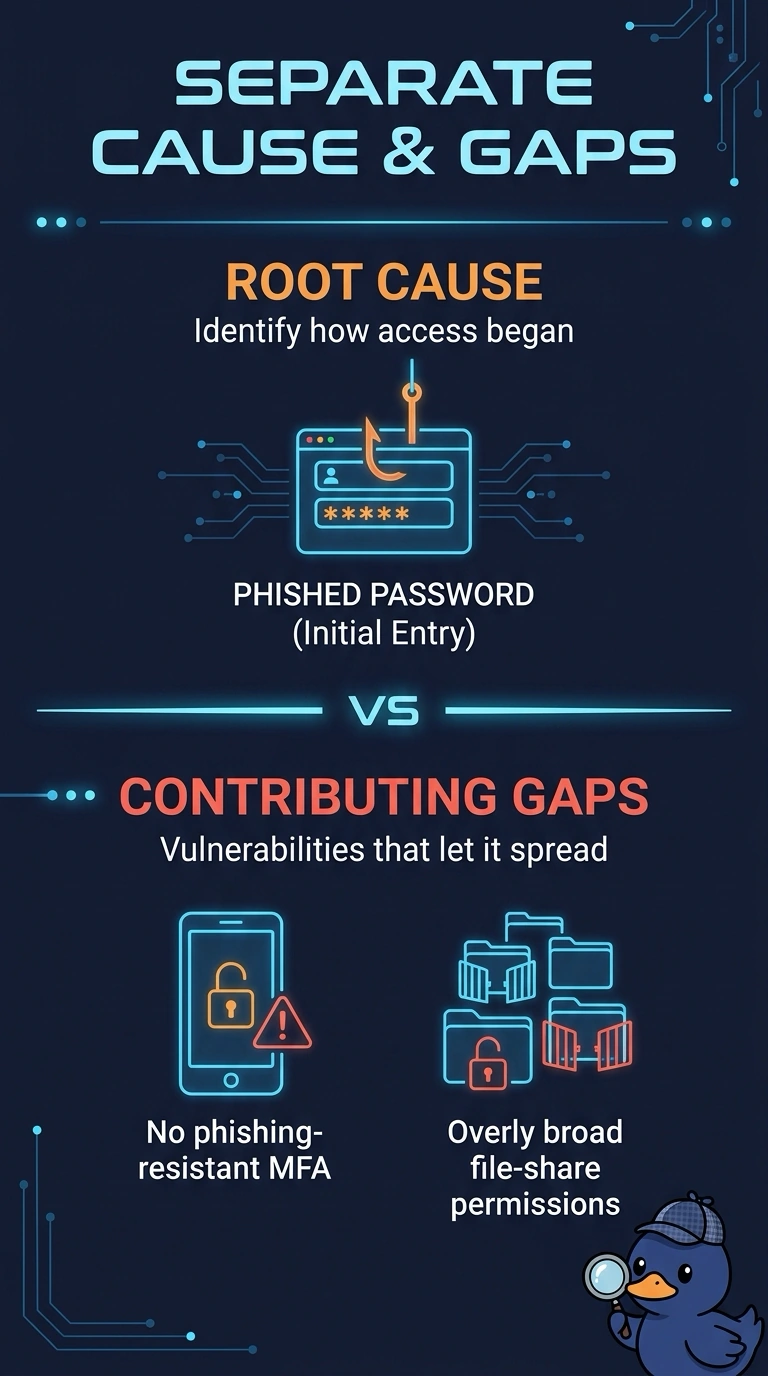
A good post-incident report works like a clear flight-safety review: it separates what started the trouble from what made the damage worse. The trap is lumping everything together or hiding uncomfortable control gaps. Spell out both the initial entry vector and the contributing weaknesses so your team fixes the right things.
Full Explanation
Effective post-incident documentation helps leadership and engineering address both how an intrusion began and why it was able to escalate or spread. You should Distinguish the initial entry root cause from the contributing permission and MFA gaps, which shows that credential phishing enabled access while missing phishing-resistant MFA and excessive permissions increased the blast radius. Choosing to List only the phishing email subject line so engineering teams do not feel blamed for access gaps hides systemic weaknesses that will allow the next compromised password to cause equal harm. Choosing to Combine every technical observation into a single uncategorized paragraph without action items makes the report hard to act on and obscures ownership for remediation. Deciding to Report the broad file-share permissions as the sole cause and omit the credential phishing event misrepresents how the attacker gained entry in the first place. As a caveat, back every stated root cause and control gap with timestamped evidence from the case record rather than speculation. As an operational check, pair each identified gap in the final case report with a concrete remediation owner and verification step.
Prefer to study offline? Printable PDF study book + test engine ($7.50, unofficial). These questions stay free here.