
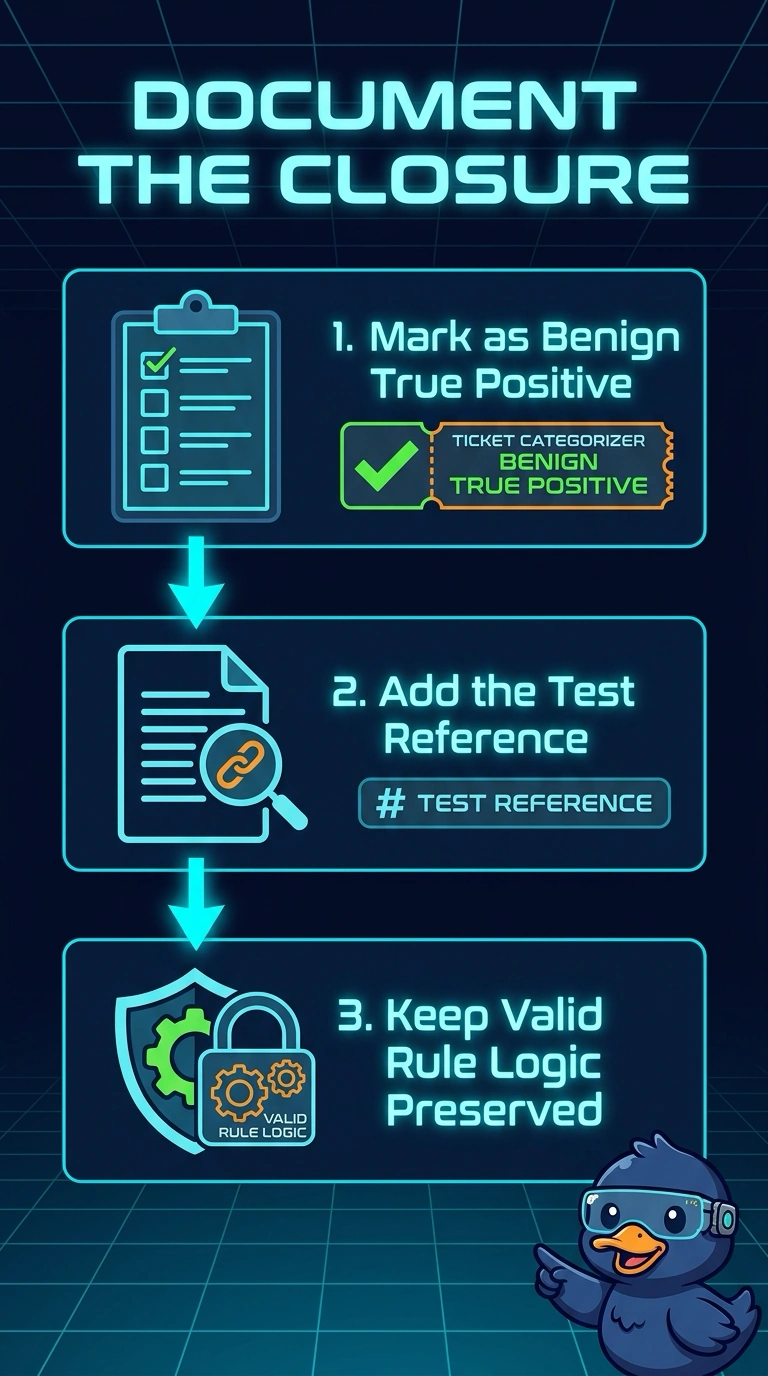
A financial firm SOC analyst confirms that a high-confidence correlation alert for lateral movement was triggered by an authorized internal penetration test rather than an attacker or a broken rule. How should the analyst document the closure in case management?
Select an answer to reveal the explanation.
Short Explanation
When a smoke detector rings because you burned toast, the detector is not broken—it did its job. Recording authorized testing as a benign true positive tells your team the rule works without inviting engineers to gut it. The trap is labeling authorized activity a false positive and triggering unnecessary rule tuning.
Full Explanation
Choosing Document it as a benign true positive with the test reference so valid rule logic is preserved accurately reflects that the correlation rule detected real lateral-movement behavior generated by an approved exercise. Preserving this distinction helps detection engineers measure rule accuracy without weakening coverage for real threats. Choosing Classify the case as a false positive caused by faulty correlation logic and request immediate rule removal misrepresents working detection logic and risks creating a blind spot against actual adversaries. Choosing Delete the alert from the queue without documentation so quarterly SOC true-positive metrics remain unaffected destroys audit evidence and prevents future analysts from verifying why the activity was permitted. Choosing Escalate the penetration test team's hosts for automated SOAR isolation before reviewing the test authorization disrupts an approved engagement without validating scope first. Caveat: even during an authorized penetration test, verify that the source host, target assets, and timestamps match the approved scope window. As an operational check, attach the penetration test authorization ticket and verified tester identity to the closed case record.
Prefer to study offline? Printable PDF study book + test engine ($7.50, unofficial). These questions stay free here.