
A school district SOC investigates suspected unauthorized grade-record access by an employee that may require legal and HR review. How should the analyst handle case documentation in Falcon Next-Gen SIEM?
Select an answer to reveal the explanation.
Short Explanation
When your investigation might land in front of HR or legal counsel, sloppy notes can spoil the evidence. The trap is sharing sensitive records broadly or skipping preservation details instead of locking down access and documenting custody.
Full Explanation
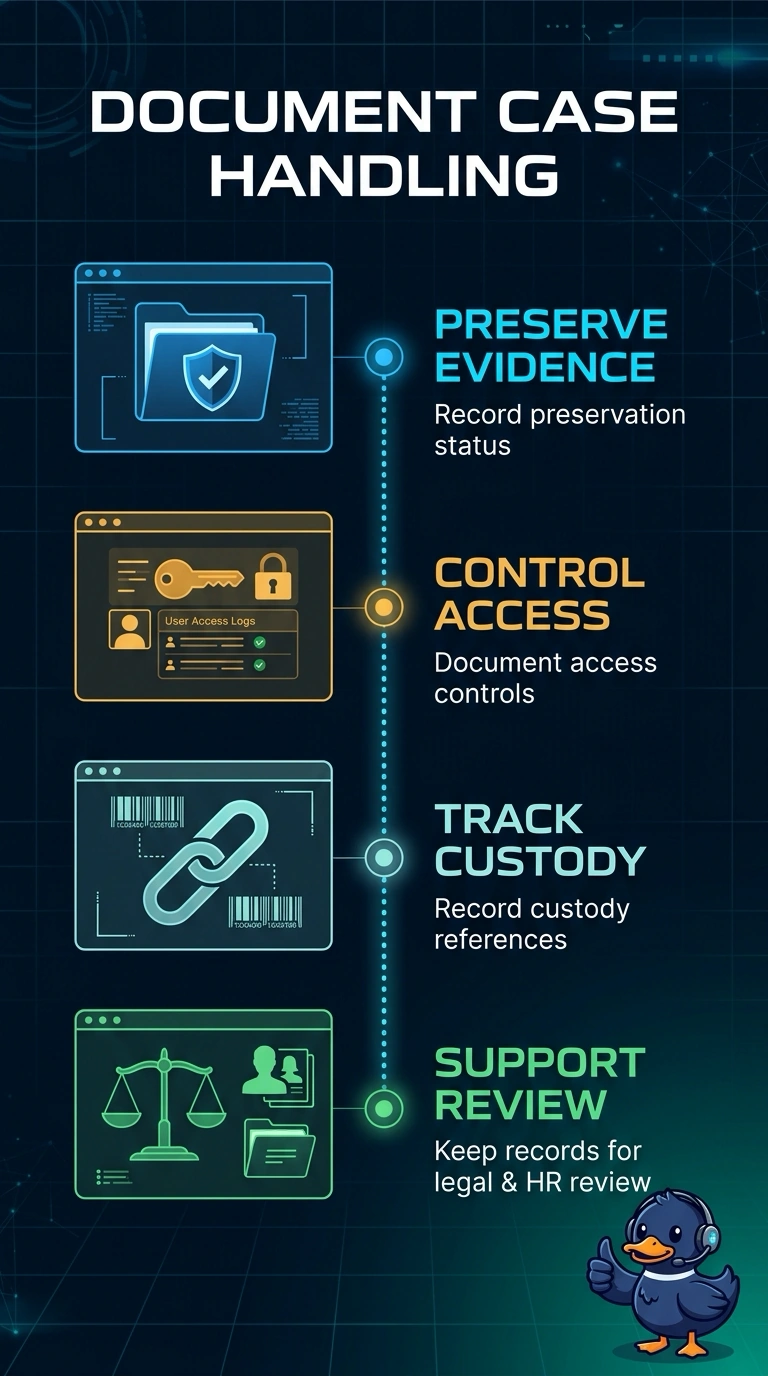
Potential insider-threat and regulatory cases demand strict evidentiary integrity and need-to-know handling. Choosing to Record evidence preservation status, access controls, and custody references ensures legal and HR reviewers can trace who collected each artifact, when it was preserved, and how unauthorized exposure was prevented. Choosing to Post raw employee access records in a public IT chat channel for fast feedback violates confidentiality and risks compromising the investigation. Choosing to Omit evidence timestamps from the case so HR can reconstruct the timeline later breaks chronological accountability and weakens evidentiary reliability. Choosing to Delete sensitive query results from the case once the employee is interviewed destroys auditability and may violate evidence-retention obligations. Caveat: follow your organization's legal-hold and privacy policies regarding which role-restricted case fields or external evidence vaults store sensitive personnel artifacts. Operational check: verify that case permissions are restricted to authorized responders, attach immutable query and log references, and log the preservation timestamp.
Prefer to study offline? Printable PDF study book + test engine ($7.50, unofficial). These questions stay free here.