
After issuing an initial investigative visual summary for a retail phishing incident, a SOC analyst discovers additional affected mailboxes in newly ingested mail logs. How should the analyst update the summary for leadership?
Select an answer to reveal the explanation.
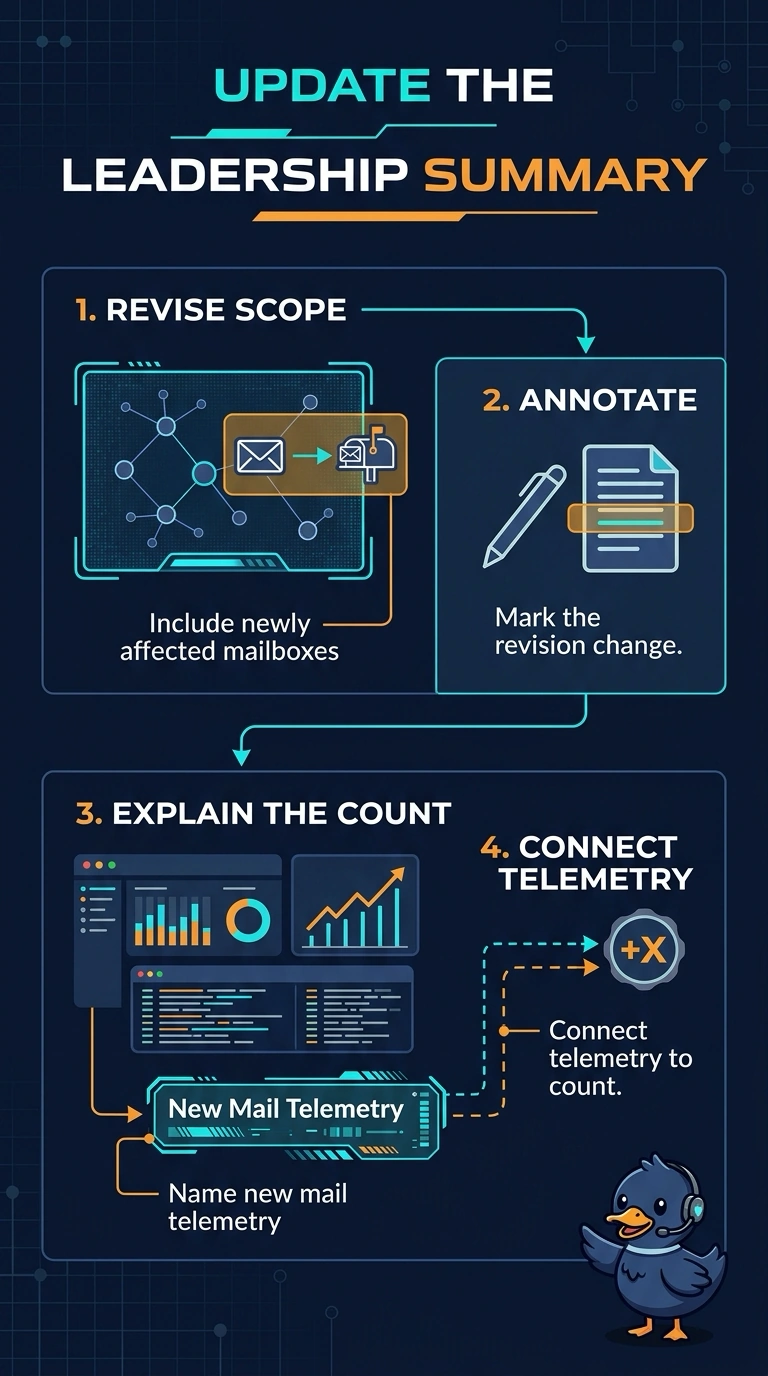
Short Explanation
When new evidence shifts your incident numbers, transparency keeps leadership on your side. The trap is quietly overwriting earlier metrics or freezing an outdated chart, both of which erode trust when stakeholders compare notes.
Full Explanation
Incident investigations evolve as delayed or newly onboarded log sources are analyzed, so leadership needs clear context when numbers change. Choosing to Annotate the scope revision and explain what new telemetry changed the count preserves stakeholder confidence and creates an accurate audit trail of how understanding progressed. Choosing to Replace the original figures silently so executives only see the latest chart creates confusion when leaders compare earlier briefings against the updated report without knowing why the numbers shifted. Choosing to Leave the original summary unchanged to avoid confusing stakeholders later knowingly leaves decision-makers acting on incomplete scope data. Choosing to Remove all numeric counts and replace them with qualitative risk ratings only strips out measurable impact metrics needed for remediation tracking and regulatory reporting. Caveat: keep the revision note concise and focused on operational impact rather than deep parser mechanics. Operational check: add a timestamped revision callout on the updated chart or summary header noting the prior count, the revised count, and the newly analyzed mail log source.
Prefer to study offline? Printable PDF study book + test engine ($7.50, unofficial). These questions stay free here.