
A financial firm SOC notices that monthly leadership reports show wildly inconsistent false-positive rates because analysts label similar closed cases with different free-text notes. How should the team improve case documentation for reporting?
Select an answer to reveal the explanation.
Short Explanation
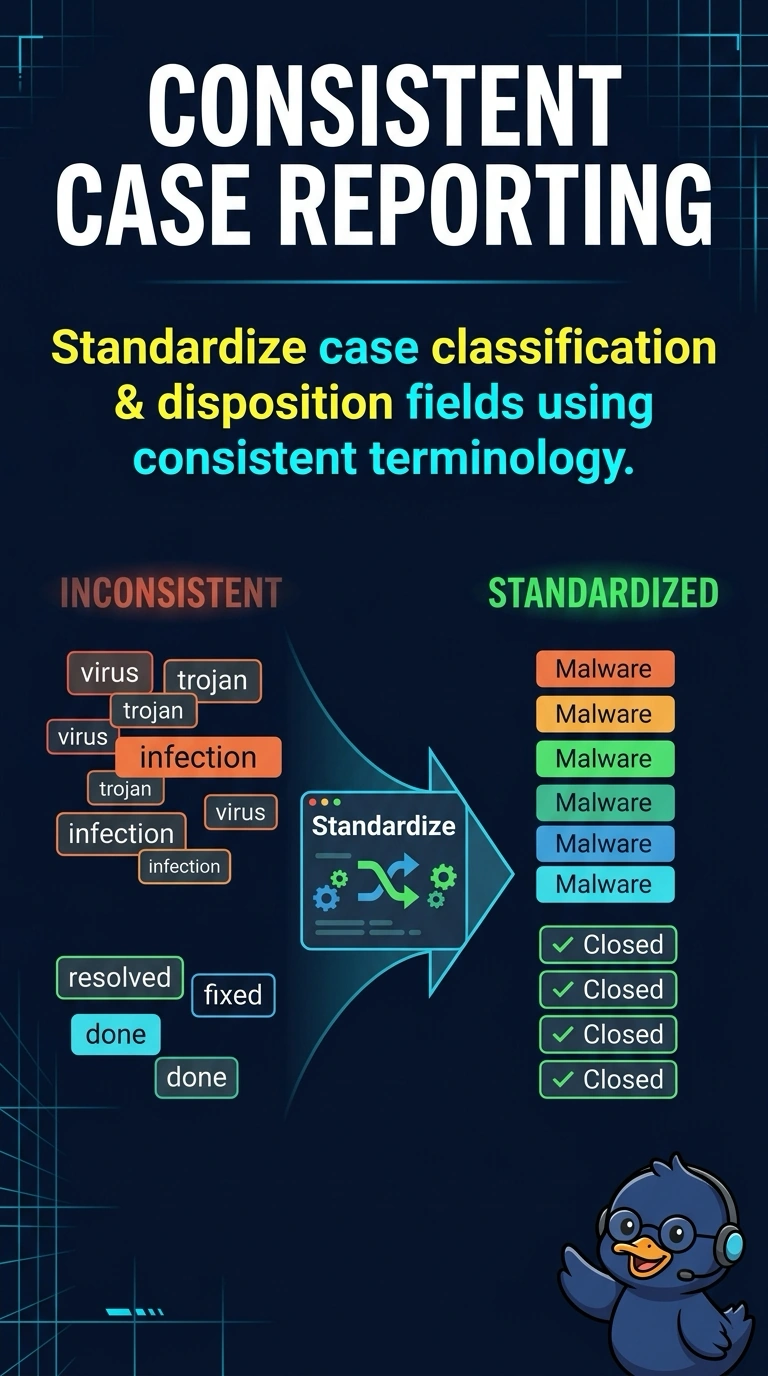
Think of trying to tally warehouse inventory when every clerk invents a different name for the same item. Standardizing your case classification and disposition fields keeps trend reports accurate, whereas the trap of relying on free-text notes or custom shift labels fragments the metrics you need for tuning.
Full Explanation
Consistent case metadata is essential for reliable reporting, which is why Standardize case classification and disposition fields using consistent terminology is the best choice: uniform dispositions let analysts and dashboards aggregate true positives, benign positives, and false positives accurately over time. Choosing Stop tracking false-positive cases in case management and record only confirmed incidents removes visibility into rule noise and tuning needs. Choosing Allow each shift lead to define custom disposition labels for their own weekly summaries fragments reporting across shifts and prevents apples-to-apples comparisons. Selecting Replace structured case fields with long narrative summaries at the end of every shift makes automated aggregation unreliable even though narratives add useful context. As a caveat, standardized fields work best when paired with brief supporting rationale so reviewers understand why a disposition was chosen. For an operational check, audit a sample of recently closed cases to confirm analysts apply the agreed disposition definitions consistently.
Prefer to study offline? Printable PDF study book + test engine ($7.50, unofficial). These questions stay free here.