
A school district SOC finishes containing a data-exposure incident and must prepare case documentation for external auditors and regulators. Which standard should the analyst follow when compiling the final record?
Select an answer to reveal the explanation.
Short Explanation
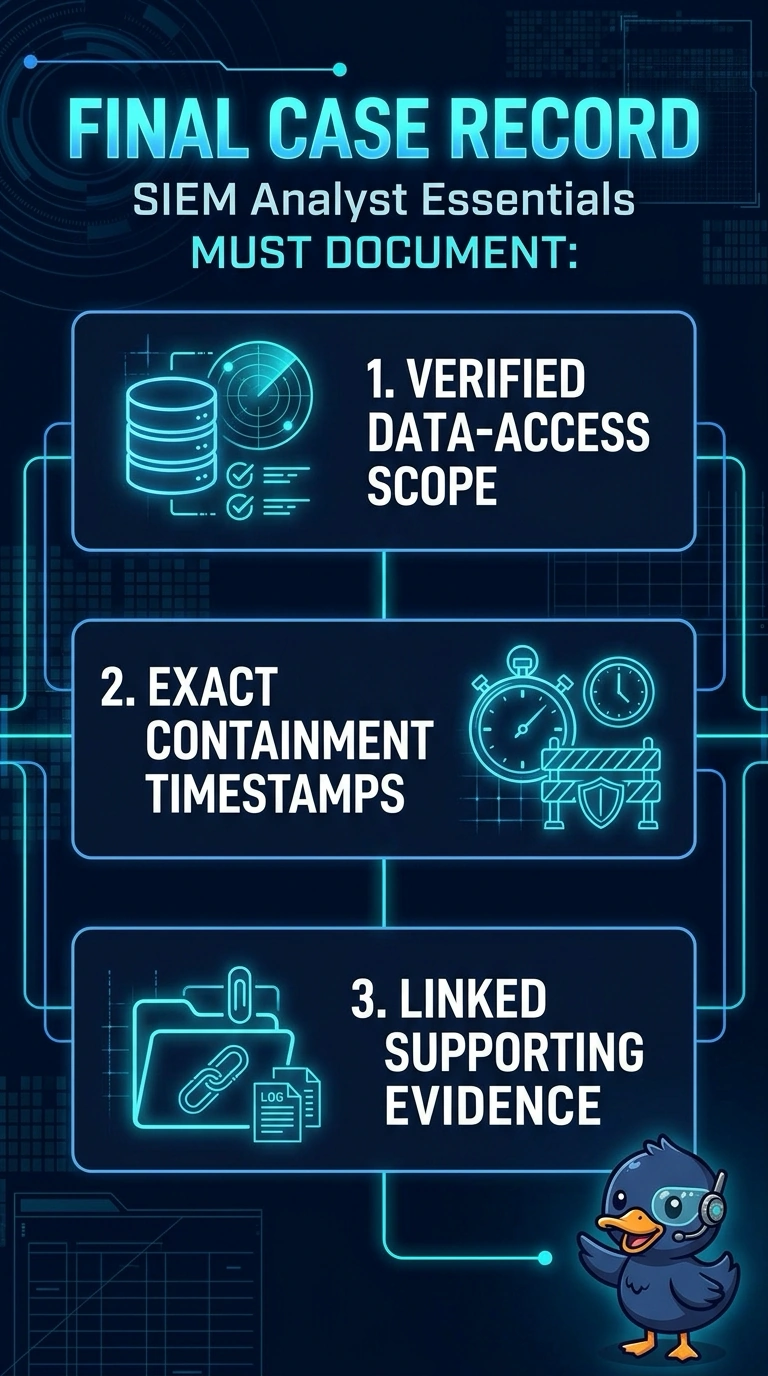
You’ll give auditors a much stronger record when you document verified scope, exact containment times, and linked evidence. That makes it easier to show what happened and support each conclusion during review.
Full Explanation
Regulatory and audit reviews depend on verifiable facts, so documenting verified data-access scope, exact containment timestamps, and linked supporting evidence gives reviewers a way to trace what data was exposed, when access stopped, and which artifacts support each claim. Informal SOC chat transcripts may capture useful discussion, but using them as the primary record leaves decisions fragmented and can obscure provenance and formal rationale. Rough estimates of affected records without supporting queries cannot be validated, weakening confidence in how the exposure scope was determined. Deleting investigative notes after containment removes material needed to substantiate findings, preserve the audit trail, and support later review. A caveat is to distinguish confirmed findings from uncertainties, including those caused by log-retention limits, rather than presenting unknowns as established facts. As a practical check, review the final case packet to ensure every scope claim and containment timestamp links to preserved supporting evidence.
Prefer to study offline? Printable PDF study book + test engine ($7.50, unofficial). These questions stay free here.