
After resolving a phishing-driven account compromise at a manufacturing firm, an analyst prepares the final post-incident case report. What should be included alongside the timeline to improve future defense?
Select an answer to reveal the explanation.
Short Explanation
A post-incident report that only says when the fire went out misses the chance to fix the faulty wiring—you want the next response to be faster and stronger. The trap is burying the report in raw logs or blaming a user instead of documenting actionable improvements.
Full Explanation
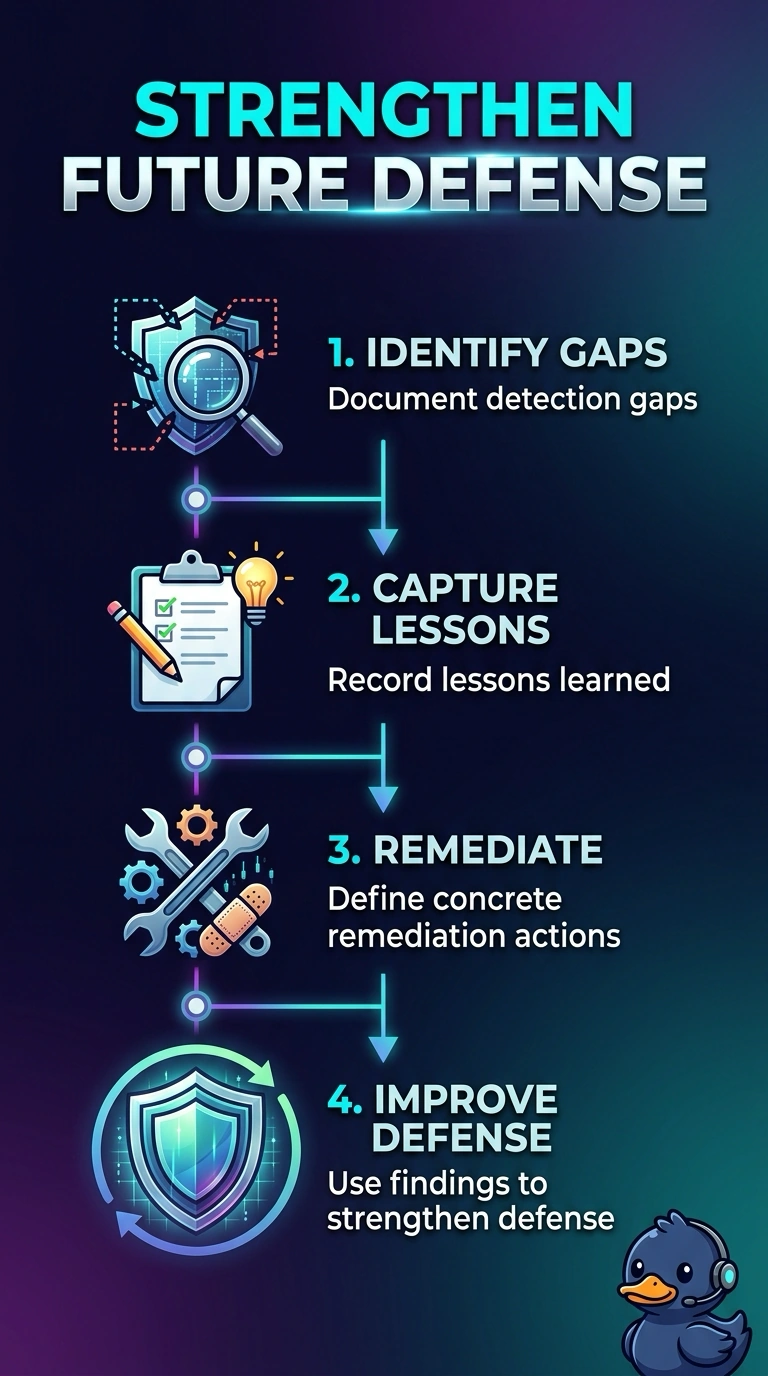
Post-incident reporting serves both as a historical record and as a blueprint for strengthening controls so the same attack path is harder to exploit next time. You should include Identified detection gaps, lessons learned, and concrete remediation actions so security engineering and IT teams have specific, trackable improvements tied to the incident timeline. Choosing to include Unfiltered raw firewall records from every plant subnet for the entire quarter bloats the report with irrelevant noise that obscures key takeaways. Choosing to include Only the final ticket closure timestamp without noting any detection delays hides visibility blind spots and prevents teams from measuring or improving response speed. Choosing to include Personal disciplinary recommendations for the employee who clicked the link shifts focus away from technical and process safeguards such as phishing-resistant authentication or rule tuning. As a caveat, assign clear owners and realistic follow-up priorities to each recommendation so gaps do not remain unaddressed after case closure. For an operational check, review the timeline for any missed telemetry or slow manual triage steps and verify each has a corresponding action item.
Prefer to study offline? Printable PDF study book + test engine ($7.50, unofficial). These questions stay free here.