
A retail SOC analyst confirms active lateral movement during initial triage and needs to escalate the investigation to the incident response team. How should the analyst update the case?
Select an answer to reveal the explanation.
Short Explanation
Handing off an active incident without context is like passing a baton in the dark—your responders waste precious minutes figuring out what you already proved. The trap is leaving ownership unclear or stripping away the evidence that justified escalation.
Full Explanation
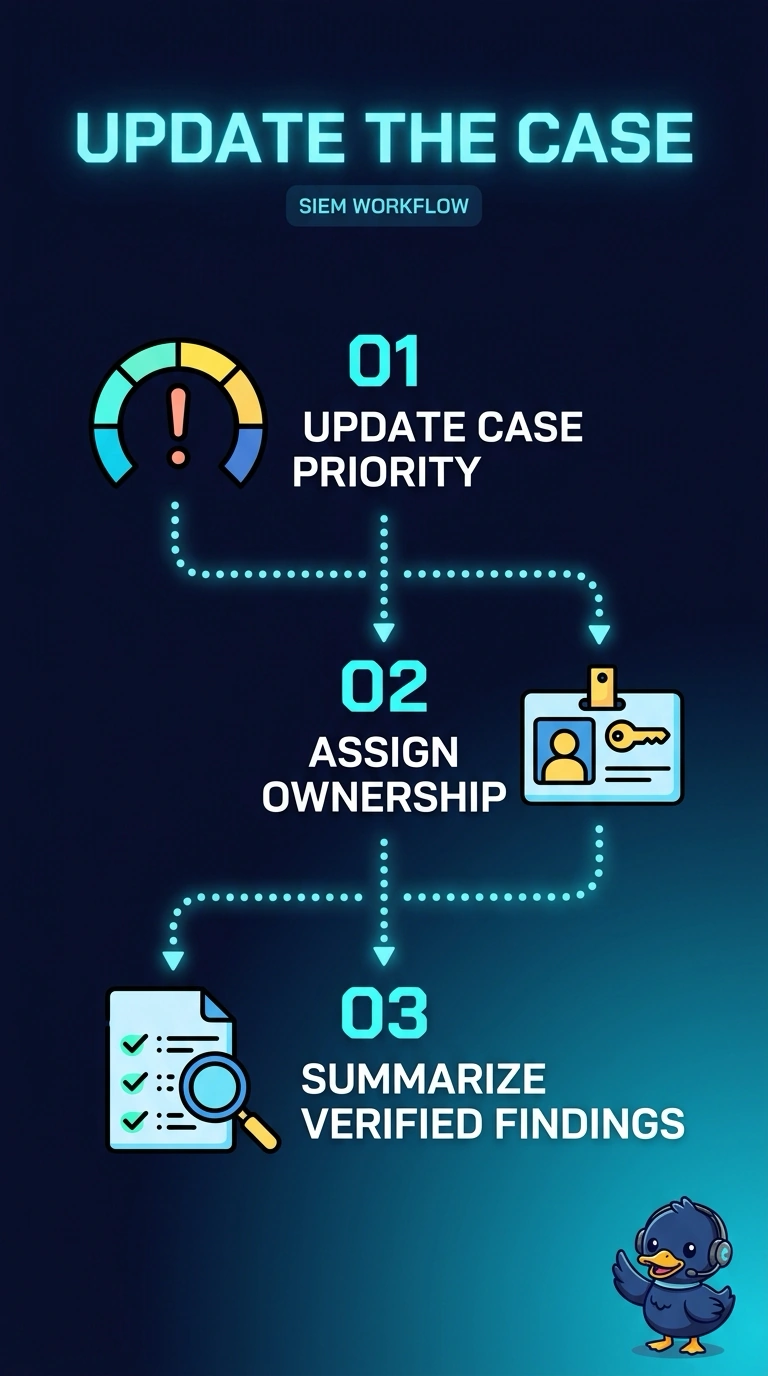
Clean case escalation preserves momentum and ensures accountability when a triage analyst hands an active intrusion to incident responders. You should Update the case priority, assign ownership, and summarize verified findings so the receiving team immediately understands urgency, responsibility, and what telemetry has already been confirmed. Choosing to Close the original case and open a blank ticket without linking any evidence fragments the audit trail and forces responders to re-collect observables and alerts. Choosing to Leave the case unassigned in the triage queue so any available engineer notices it risks delayed response while active lateral movement continues unchecked. Choosing to Delete preliminary timeline notes so the response team starts with a clean slate destroys valuable context and investigative leads established during triage. As a caveat, clearly separate confirmed observations from open questions in your handoff summary so responders do not treat hypotheses as proven facts. For an operational check, verify that all related alerts, affected hostnames, and key CQL queries are attached to the case before completing the transfer.
Prefer to study offline? Printable PDF study book + test engine ($7.50, unofficial). These questions stay free here.