
A software company SOC analyst completes a complex multi-stage cloud-to-endpoint investigation and prepares to close the case for future audit and peer review. What makes the case documentation reproducible?
Select an answer to reveal the explanation.
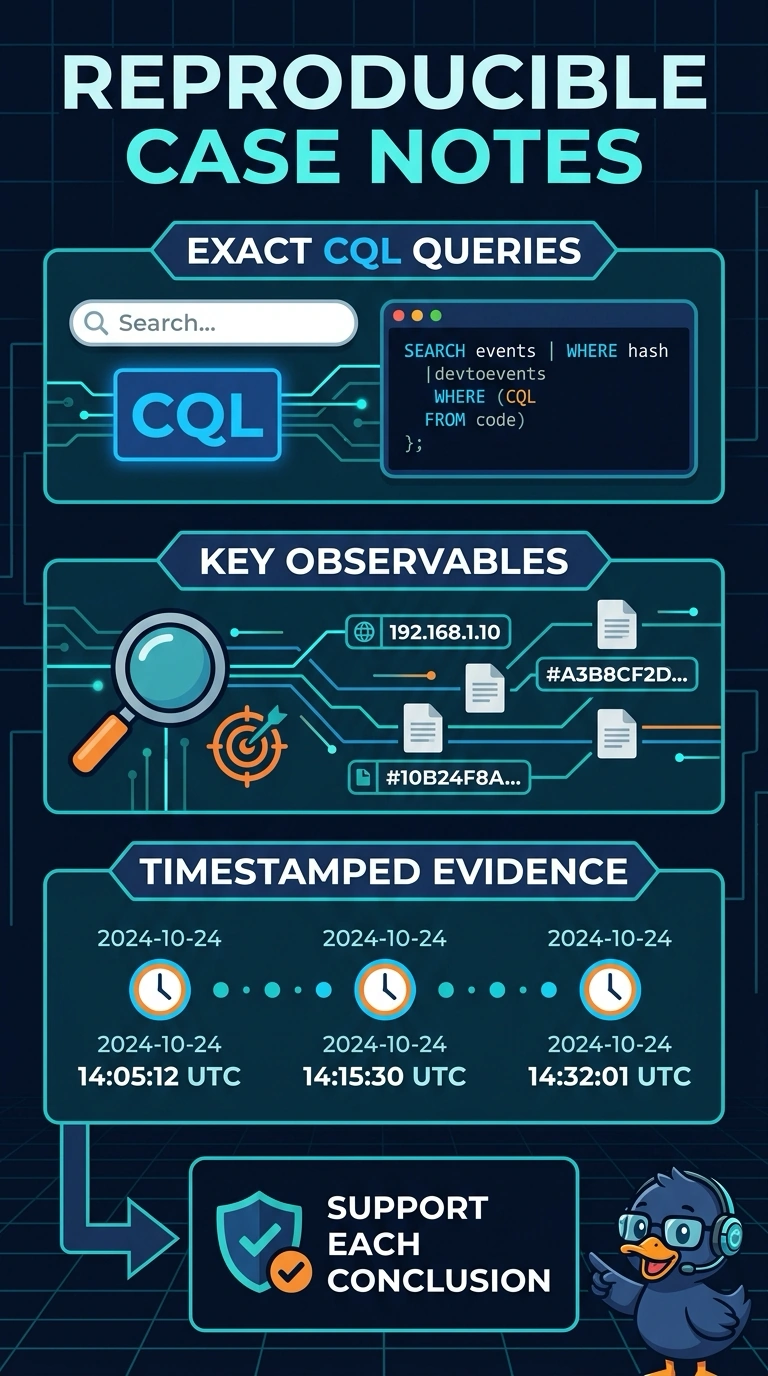
Short Explanation
Good case documentation works like a lab notebook: another analyst should be able to follow your steps and reach the same answer. When you save the exact queries and observables behind your findings, peer review becomes fast and reliable. The trap is leaving only a brief summary with no trail.
Full Explanation
To ensure an investigation can be independently verified during audit or peer review, you should Attach the exact CQL queries, key observables, and timestamped evidence supporting each conclusion. Recording the precise search logic, identifiers, and chronological artifacts allows another analyst to re-run the analysis and confirm how each finding was established. Choosing to Summarize the final verdict in one sentence without retaining supporting search criteria leaves reviewers with no way to validate how the conclusion was reached. Deciding to Reference the analyst's personal notes stored outside the shared case management system fragments evidence and creates access gaps when team members rotate or leave. Opting to Include only the initial alert title and omit intermediate investigation steps hides the pivot path and makes it impossible to tell which hosts or accounts were actually cleared. As a caveat, note the exact query time window alongside each saved CQL search so results remain meaningful even as underlying logs age out. As an operational check, review the closed case checklist to confirm every conclusion links to stored observables, queries, and timestamps.
Prefer to study offline? Printable PDF study book + test engine ($7.50, unofficial). These questions stay free here.