
A healthcare clinic analyst wants to correlate which user account launched a specific unsigned executable on clinical workstations in Falcon Next-Gen SIEM. Both the normalized username and the process command line already appear in the same endpoint process event schema. What is the best CQL querying approach?
Select an answer to reveal the explanation.
Short Explanation
When everything you need is already sitting in one event record, don't build a Rube Goldberg machine to fetch it! The trap here is reaching for a complex cross-source join when a single normalized query does the job faster and with fewer missed matches.
Full Explanation
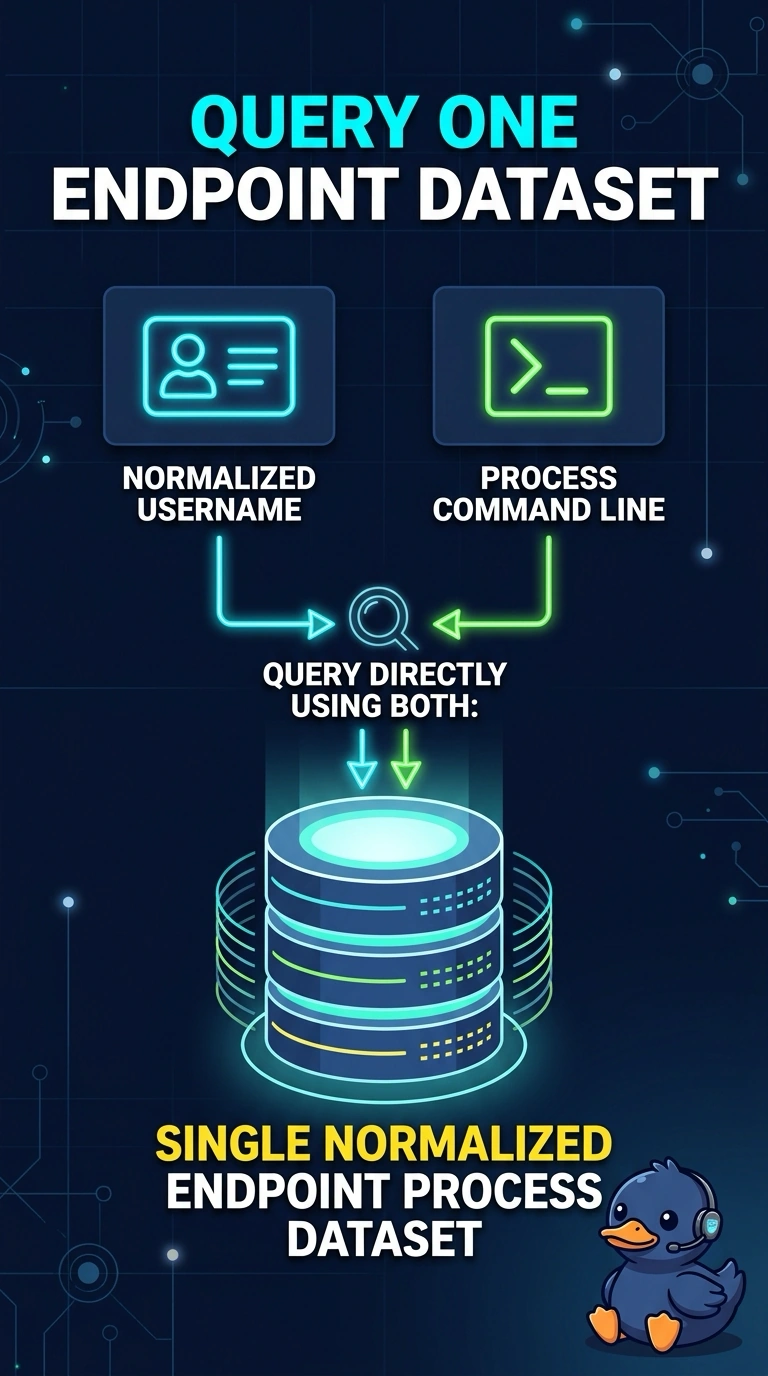
Query the single normalized endpoint process dataset directly using both fields works best because CrowdStrike Parsing Standard (CPS) schemas already bind the user identity and process execution attributes into the same event record, eliminating unnecessary query overhead and join-key mismatches. By contrast, Build a multi-dataset join linking identity logs with process events introduces latency, requires matching join windows, and can drop valid events if user identifier formats differ slightly across sources. Run two separate raw text searches and compare timestamps manually is slow, error-prone at scale, and forfeits the precision of structured CPS field filtering. Export all endpoint telemetry to a spreadsheet for local filtering bypasses SIEM analytics, hits export row limits quickly, and creates unmanaged copies of sensitive clinical telemetry. As an exam caveat, cross-dataset joins are valuable when correlating distinct telemetry types—such as firewall flows with cloud sign-ins—but are counterproductive when one schema already holds both attributes. As an operational check, inspect a sample parsed endpoint event in CQL to confirm that both the normalized user field and process command-line field are populated before writing your filter.
Prefer to study offline? Printable PDF study book + test engine ($7.50, unofficial). These questions stay free here.