
A software company analyst queries CQL for outbound traffic to an external API over one hour and sees 4,500 events in web proxy logs but only 300 events in perimeter firewall logs for the same workstation. What explains this discrepancy?
Select an answer to reveal the explanation.
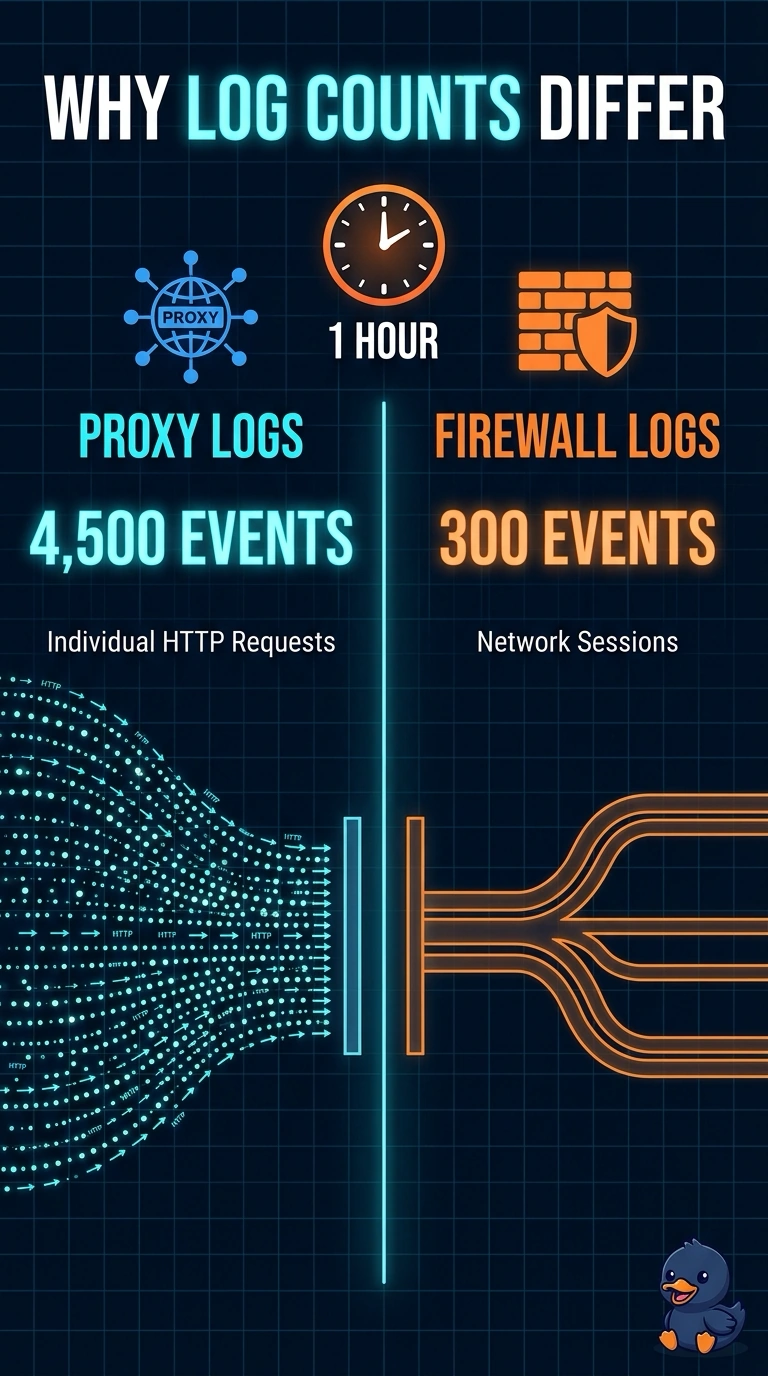
Short Explanation
Comparing proxy logs to firewall logs by raw event count is like counting individual grocery items against the number of store receipts. You need to understand how each telemetry source defines an event before assuming data is missing. The trap is treating unequal log counts as dropped traffic.
Full Explanation
Different security sensors log network activity at different layers of the stack, which directly affects event counts in CQL. Recognizing that Proxy logs record individual HTTP requests while firewall logs record network sessions explains why a single long-lived TLS or HTTP/2 connection can appear as one firewall session while generating dozens of individual proxy request records. Assuming The firewall dropped 93 percent of the workstation's outbound packets silently misinterprets normal session-level logging as packet loss or blocking without checking action fields. Claiming CQL automatically deduplicates firewall events to one record per destination port invents non-existent query behavior rather than examining the source telemetry. Blaming the gap on The analyst's CQL query failed to apply CPS normalized fields across the web proxy repository does not explain why the proxy returned thousands of matching records. As a caveat, always verify whether persistent connections or multiplexing are in use when comparing application and network telemetry. As an operational check, inspect sample raw events from both sources and compare byte-volume or unique destination counts alongside raw event counts.
Prefer to study offline? Printable PDF study book + test engine ($7.50, unofficial). These questions stay free here.