
A manufacturing SOC analyst receives a threat advisory naming a malicious parent domain and wants to hunt in CQL across DNS logs for connections to that domain as well as any randomly generated subdomains. Searching with an exact equality filter on the normalized domain field returns zero hits. What should the analyst adjust?
Select an answer to reveal the explanation.
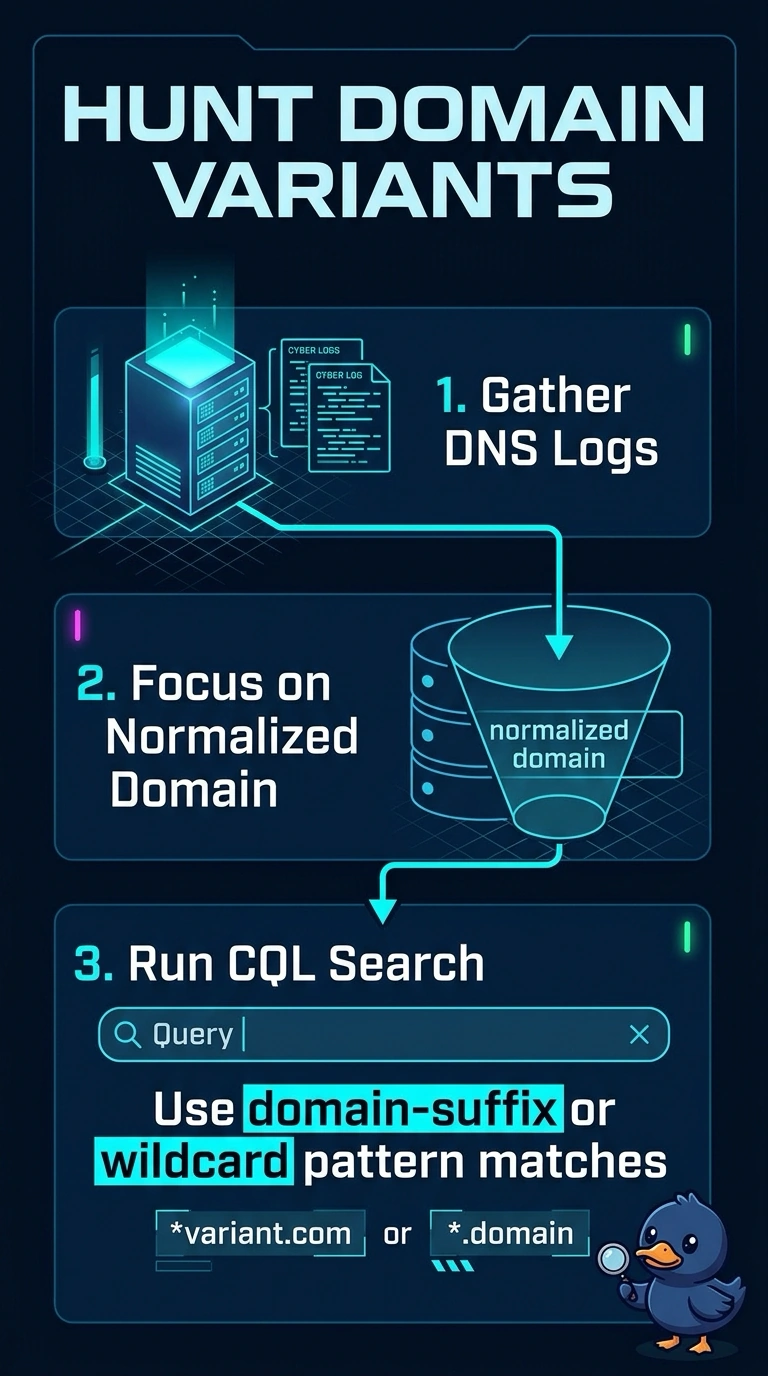
Short Explanation
Hunting for an exact domain name when an attacker uses rotating subdomains is like searching a phone book for one specific apartment without checking the rest of the building. You should match the parent domain suffix so every subdomain surfaces in your results. The trap is assuming zero exact hits mean the domain was never queried.
Full Explanation
Adversaries frequently use dynamic or algorithmically generated subdomains under a single registered parent domain for command-and-control or DNS tunneling. Choosing to Use a domain-suffix or wildcard pattern match on the normalized domain field captures both the apex domain and any prefix subdomains in a single CQL search. Choosing to Switch the CQL search to filter solely on the numeric destination port field matches all routine DNS traffic across the environment and buries the target domain. Choosing to Increase the dashboard panel refresh rate without modifying the CQL filter logic leaves the overly strict exact-match filter intact and will continue returning zero subdomain hits. Choosing to Remove all time-window constraints and aggregate every DNS record in the repository degrades query performance without fixing the exact-match logic that misses subdomains. As a caveat, anchor suffix patterns carefully so you do not accidentally match unrelated domains that merely end with similar characters. As an operational check, test the updated pattern over a narrow time window first to confirm it matches expected subdomains cleanly.
Prefer to study offline? Printable PDF study book + test engine ($7.50, unofficial). These questions stay free here.