
A school district SOC analyst runs a CQL threat-hunt query for a specific command-line flag across endpoint logs and gets zero results. Before concluding that the flag never appeared in the environment, how should the analyst validate the query?
Select an answer to reveal the explanation.
Short Explanation
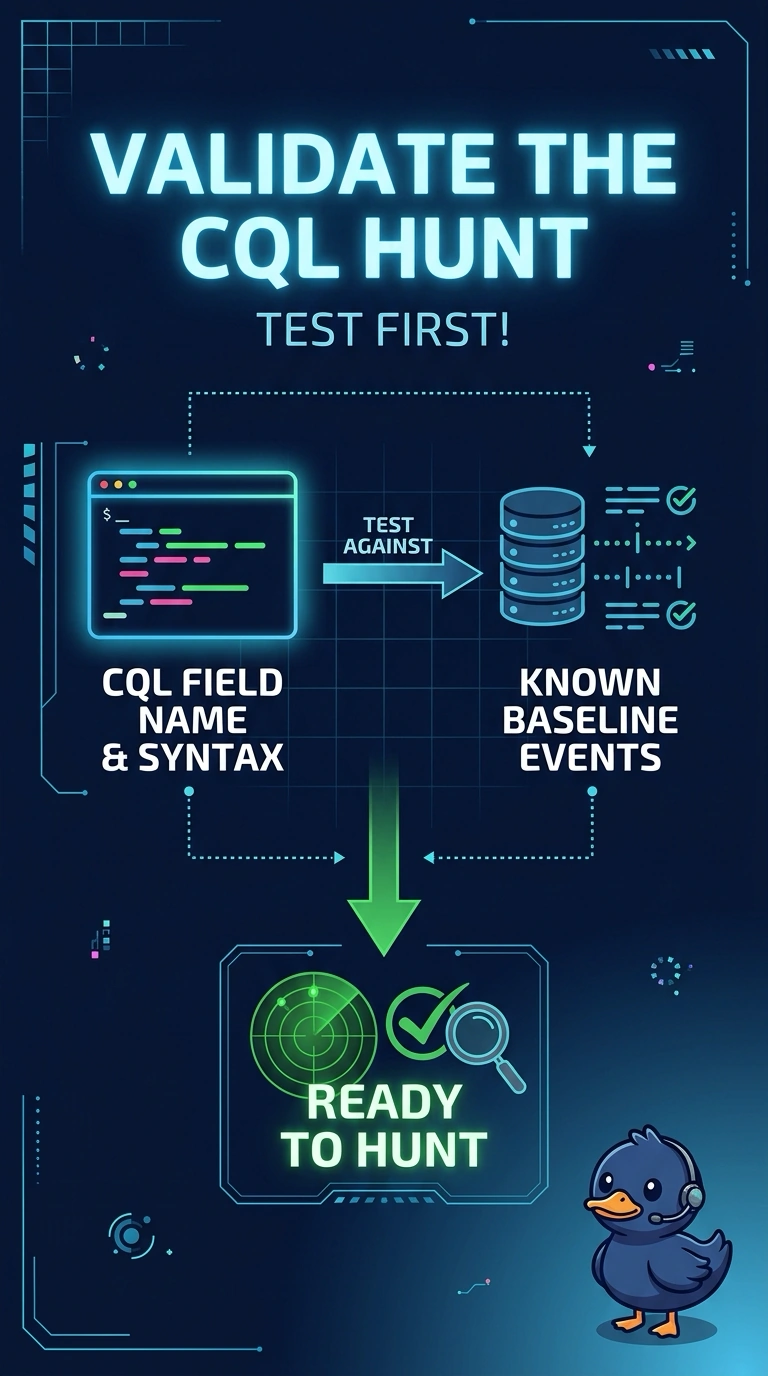
Before you celebrate an empty mousetrap, make sure the trap actually snaps when a mouse steps on it. Running a quick check against known events confirms your field names and syntax work as expected before you declare the network clean. The trap is trusting zero results from an untested query.
Full Explanation
Choosing to Test the field name and syntax against known baseline events first acts as a positive control that verifies your query actually matches real telemetry in the target repository. A typo in a normalized field name, unexpected quoting, or an unpopulated attribute can silently return zero hits even when malicious activity occurred. Choosing to Assume zero results always prove the environment is completely clean treats an unverified query as infallible evidence and risks missing an active compromise. Attempting to Convert the CQL query into a pie chart so empty results render visually does nothing to validate whether the underlying filter matches real event formatting. Deciding to Disable all other log repositories permanently to speed up the search breaks visibility across unrelated data sources without testing whether the query logic itself is sound. As a caveat, even a syntactically valid query can return zero hits if the selected time window excludes the relevant events or the target log source is delayed. As an operational check, remove the rarest filter condition or search for a known benign command-line string in the same field and time range to confirm events appear in the expected format.
Prefer to study offline? Printable PDF study book + test engine ($7.50, unofficial). These questions stay free here.