
A financial services SOC analyst writes a CQL query to sum connection duration across firewall logs from two different vendors, and one vendor's traffic dominates the chart by a factor of a thousand. What should the analyst check first?
Select an answer to reveal the explanation.
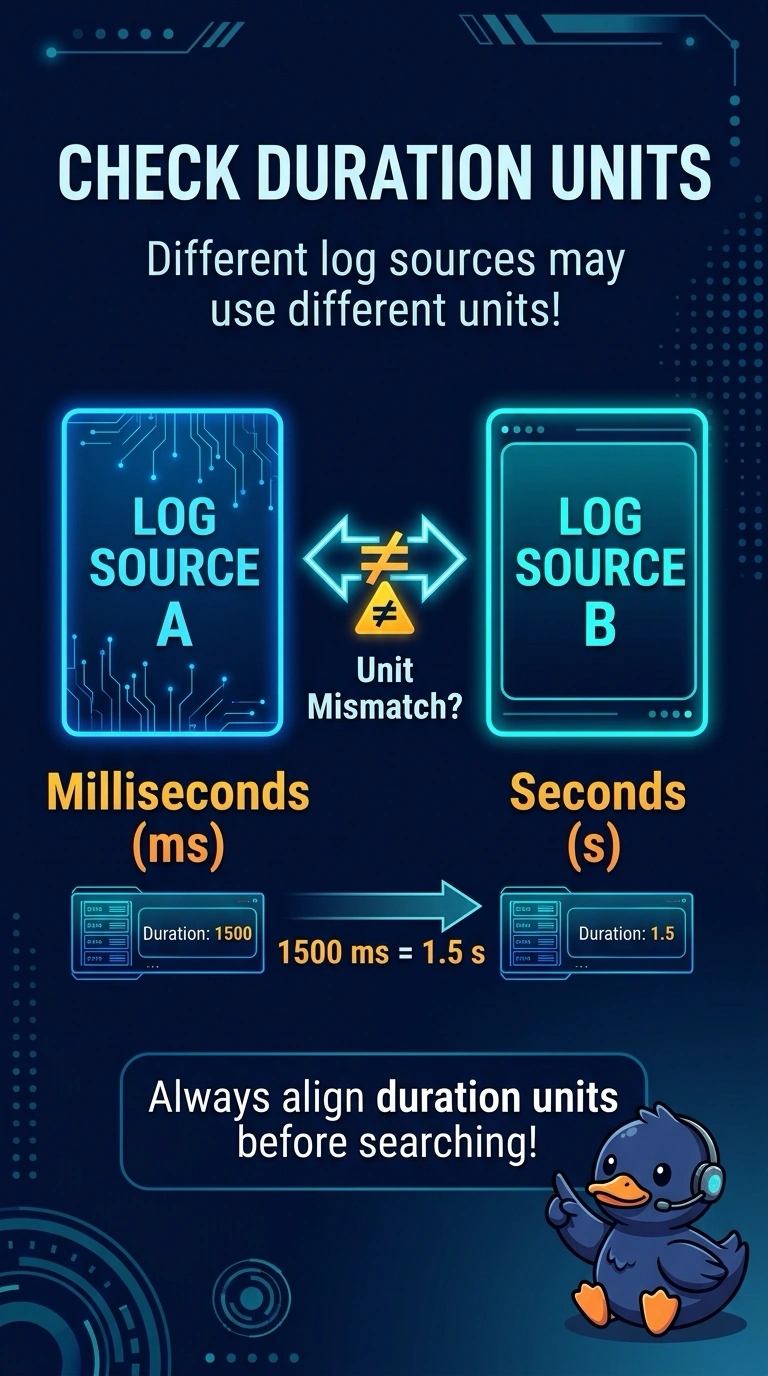
Short Explanation
Adding seconds and milliseconds together is like adding miles and feet on the same road trip—the smaller unit will always make one leg look huge. Before you escalate a massive traffic anomaly, verify how each vendor formats its numeric fields. The trap is assuming identical field concepts share identical units across different log sources.
Full Explanation
When a single vendor dominates a multi-source numeric aggregation by an exact order of magnitude such as a factor of one thousand, checking Whether the two log sources record duration in different units such as milliseconds versus seconds resolves the mismatch at its root. Different appliances frequently log latency, session duration, or transfer size in different scales unless normalized into a consistent unit before summation. Assuming Whether the dominant vendor's firewall is experiencing a sustained denial-of-service flood across all subnets jumps to an operational incident conclusion without checking whether raw event counts actually spiked. Checking Whether the CQL query time window accidentally excluded the second vendor's peak business hours could explain missing volume, yet it would not produce a consistent thousand-fold scaling gap across overlapping events. Inspecting Whether the dashboard visualization panel is configured with a logarithmic vertical scale changes how bars are drawn on screen, not the underlying numeric ratio calculated by the query. As a caveat, even normalized schemas can retain source-specific unit conventions if a custom parser maps raw values directly without conversion. As an operational check, sample a few raw and parsed events from both vendors side by side, confirm the unit of each duration field, and scale them to a common unit in CQL before summing.
Prefer to study offline? Printable PDF study book + test engine ($7.50, unofficial). These questions stay free here.