
An insurance company SOC analyst runs a CQL query using groupBy on source hostnames to identify which workstation uploaded the most outbound data over the past 24 hours. The top-ranked host shows 12,000 events, yet firewall totals indicate a different workstation transferred 18 GB. What should the analyst change in the CQL aggregation?
Select an answer to reveal the explanation.
Short Explanation
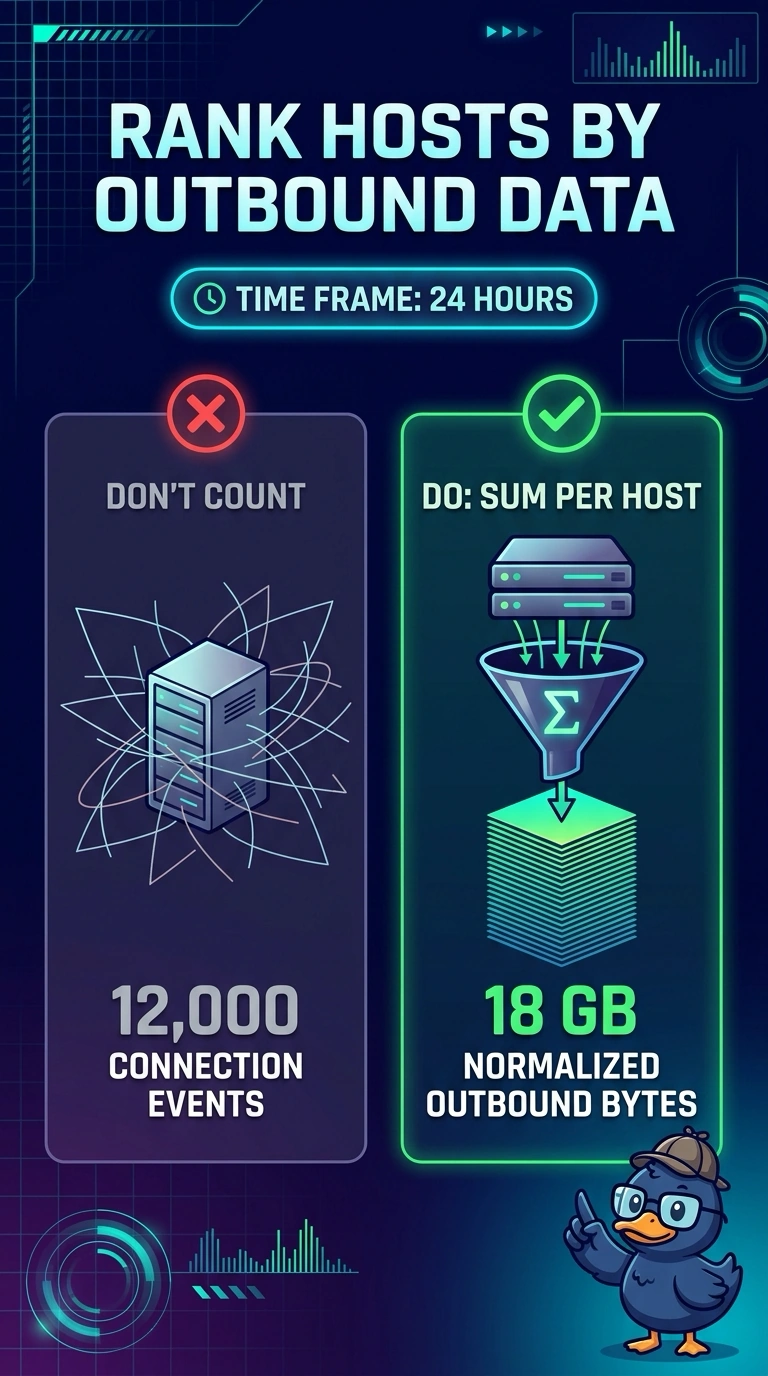
Counting connection events when you want data volume is like counting trips to the grocery store instead of weighing the bags. A chatty health-check script can generate thousands of tiny packets, while one quiet upload moves gigabytes—so summing the byte field keeps your ranking honest.
Full Explanation
To measure actual data transfer volume, the analyst must Sum the normalized outbound bytes field instead of counting total connection events. By default, counting rows in a CQL groupBy aggregation treats a 64-byte keepalive packet and a 2-gigabyte archive upload as equal weight, which causes high-frequency, low-volume applications to dominate the top of the table. Choosing to Sort the raw event table by destination port before applying the groupBy aggregation fails because pre-sorting raw events does not change how groupBy tallies event counts per host. Choosing to Increase the query lookback window to seven days to capture slower background transfers fails because widening the time window still counts connection frequency rather than byte volume within the 24-hour period of interest. Choosing to Filter out all internal RFC1918 destinations before running the default event count fails because even among external destinations, a workstation making thousands of small API polls will still outrank a host performing a single massive upload. As a caveat, confirm that the summed byte field uses consistent units across all included log sources before comparing totals. As an operational check, inspect a few sample events from the top-ranked host to verify that outbound byte counts are populated and not zeroed by proxy logging.
Prefer to study offline? Printable PDF study book + test engine ($7.50, unofficial). These questions stay free here.