
A healthcare SOC analyst runs a CQL groupBy on username to review VPN activity and sees normal daily login counts for every clinician. However, an attacker is simultaneously using a clinician's stolen credentials from an overseas IP. Which CQL adjustment surfaces this anomaly?
Select an answer to reveal the explanation.
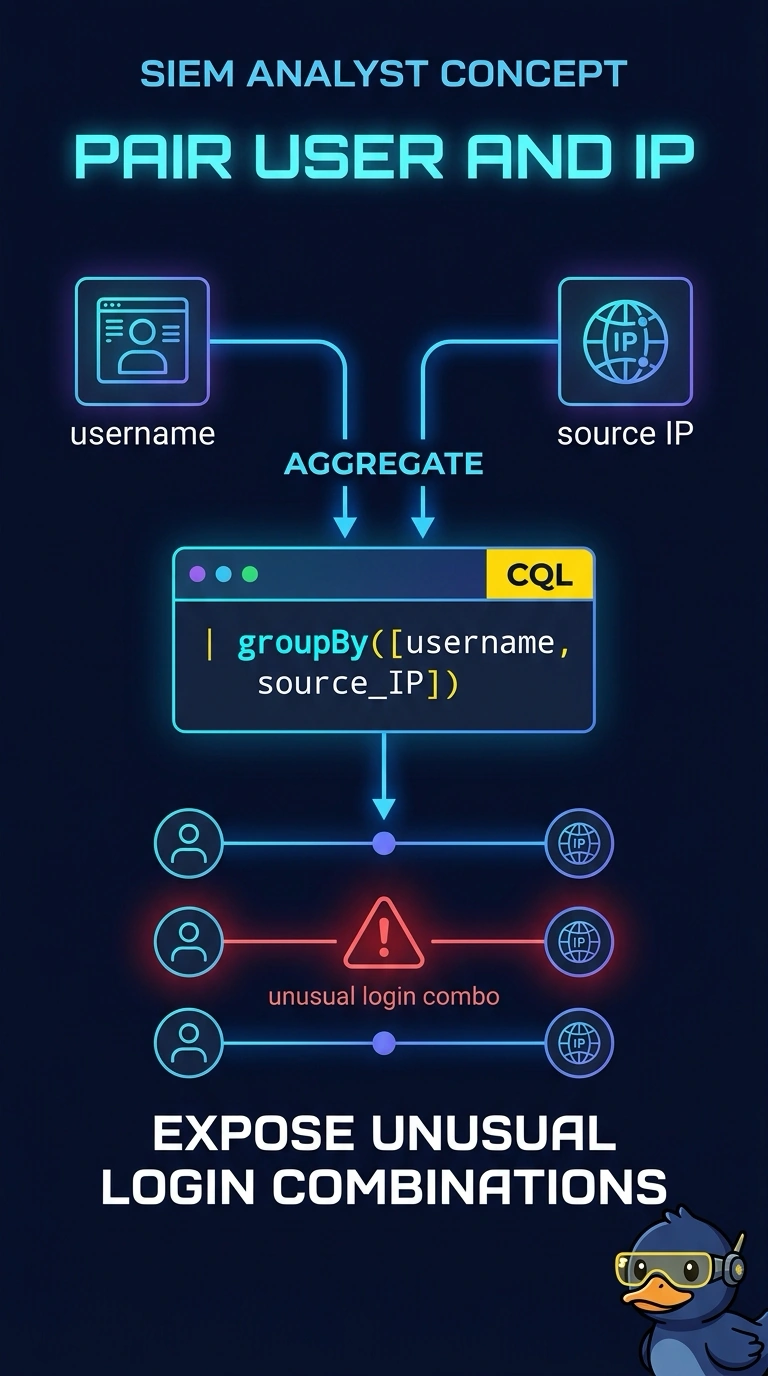
Short Explanation
Counting logins by username alone is like counting how many times a badge swiped without checking which door opened—your attacker hides inside normal volume. Grouping by multiple fields lets you spot the impossible combinations right away.
Full Explanation
Single-field aggregations summarize total volume per entity, which easily masks credential abuse when an attacker adds only a few logins to an active user's normal daily total. Choosing to Aggregate by both username and source IP together to expose unusual login combinations pairs identity with network origin, immediately highlighting accounts accessed from unexpected addresses or multiple locations at once. Selecting Sort the single-field username aggregation in alphabetical order only changes display order and never reveals the hidden source-IP diversity. Opting to Remove the groupBy function and read every raw VPN event one by one is impractical across large authentication volumes and defeats the summarizing purpose of CQL aggregation. Choosing to Filter the query to show only usernames with zero failed login attempts misses valid stolen-credential use altogether because attackers with working passwords often succeed on the first try. As a caveat, high-cardinality field pairs over long time windows can produce large result sets, so filter to relevant VPN event types first. For an operational check, pivot on any unexpected username-and-IP pair to inspect geolocation, user-agent, and session duration.
Prefer to study offline? Printable PDF study book + test engine ($7.50, unofficial). These questions stay free here.