
A hospital SOC analyst writes a CQL query across firewall logs from two different vendors using a field name specific to Vendor A, and notices that Vendor B events never appear in the results. What should the analyst do to query both sources together?
Select an answer to reveal the explanation.
Short Explanation
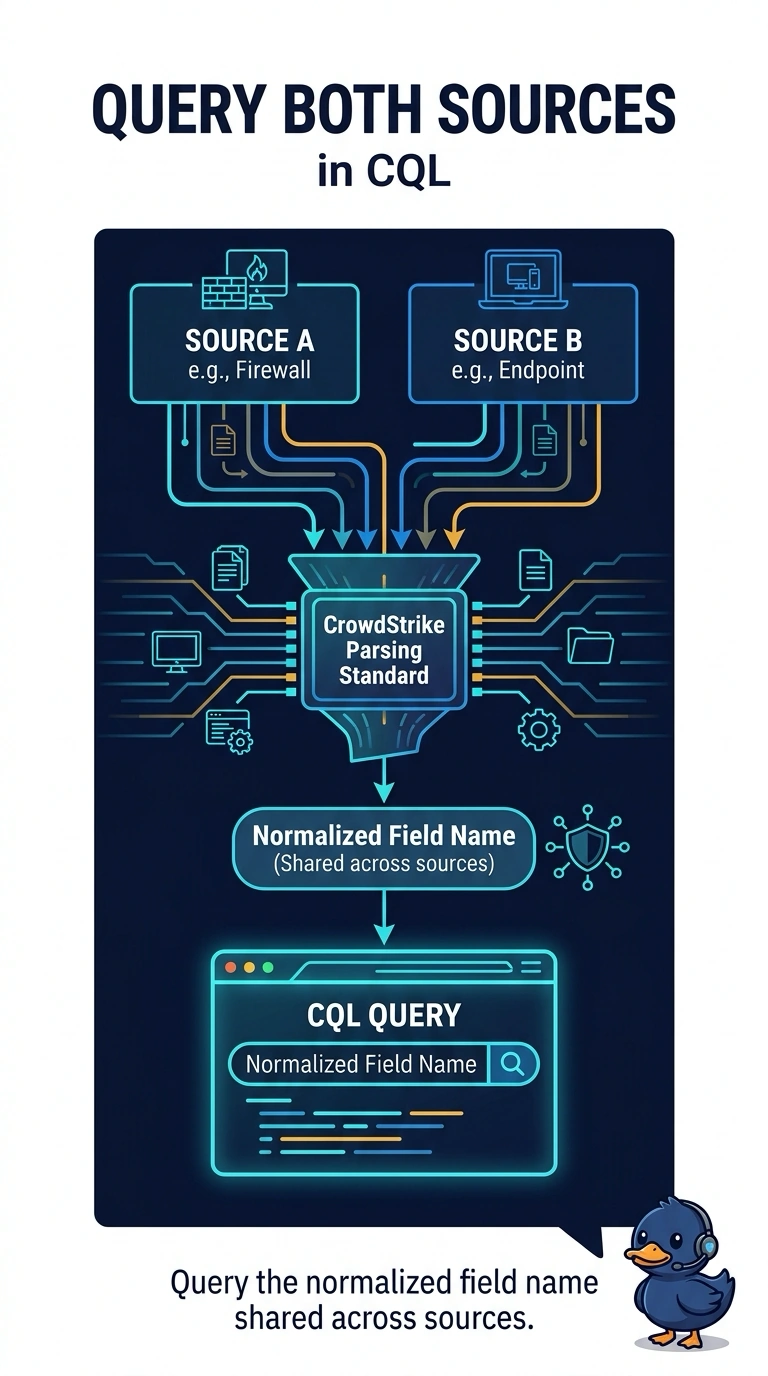
When you search two different firewalls with one vendor’s custom field name, the other vendor’s events may not match. Using the shared normalized field lets you query both sources together and avoid silently missing telemetry.
Full Explanation
CrowdStrike Parsing Standard (CPS) maps vendor-specific attributes into a unified schema, so querying the normalized field name shared across sources lets one CQL search return matching events from both Vendor A and Vendor B. Running the same Vendor A field query twice and merging exported CSV files manually does not solve the mismatch: Vendor B events still lack Vendor A’s proprietary field name. Disabling parsing for Vendor B logs so raw text keyword searches match both appliances sacrifices structured filtering, field-level aggregations, and reliable correlation. Asking Vendor B to rename its proprietary log fields inside the appliance firmware is impractical and unnecessary because SIEM normalization already handles schema translation. One caveat is that a rare vendor-specific attribute may not be mapped into the common schema, so you may need to inspect original event fields alongside normalized ones. As a practical check, verify a sample of parsed events from both vendors to confirm the target CPS field is populated in each.
Prefer to study offline? Printable PDF study book + test engine ($7.50, unofficial). These questions stay free here.