
During a multi-week hospital intrusion investigation, an analyst notices that high-volume DNS and web proxy logs have a much shorter retention period than endpoint detections. What should the analyst do to protect the investigative timeline?
Select an answer to reveal the explanation.
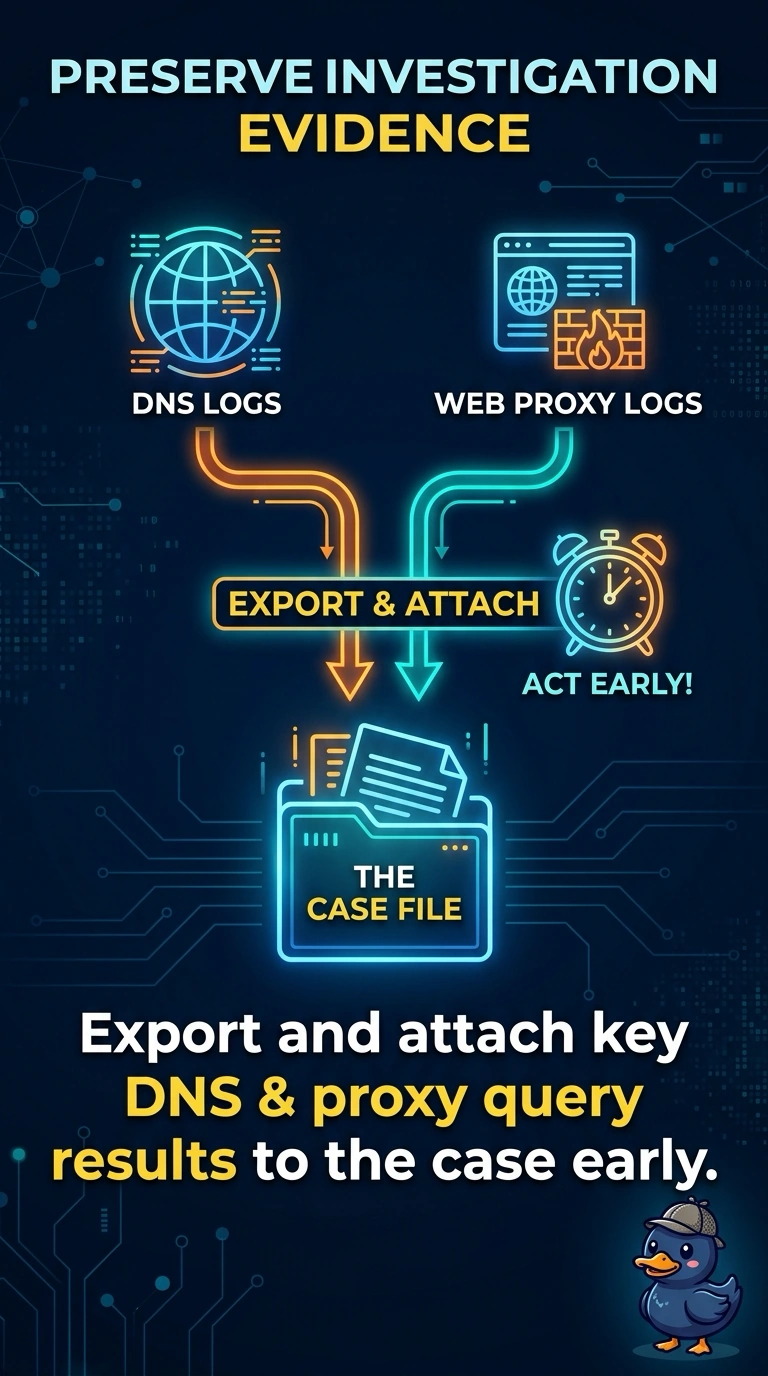
Short Explanation
If your network logs are about to age out, waiting until the end of the investigation means you'll be flying blind! The trap is assuming short-retention DNS and proxy records will still be there weeks later when you write the final timeline.
Full Explanation
Export and attach key DNS and proxy query results to the case early ensures that critical supporting evidence—such as initial domain lookups and proxy connections—is preserved inside the case record before automated log-retention aging removes the underlying events. Capturing exact queries and result records during active scoping protects timeline integrity. Wait until final case closure to run all supporting network and DNS queries risks permanent data loss if the retention window expires mid-investigation. Delete older endpoint detections so all log sources share the same time span destroys valuable long-term forensic visibility rather than preserving short-lived evidence. Rely solely on memory from initial triage notes instead of saving query outputs leaves the case without verifiable artifacts for peer review, compliance, or legal handoff. As an exam caveat, different telemetry sources frequently have different retention windows, so analysts must account for data availability throughout an investigation. As an operational check, document the exact time window, query text, and retention boundary alongside any attached DNS or proxy records in the case.
Prefer to study offline? Printable PDF study book + test engine ($7.50, unofficial). These questions stay free here.