
A consulting firm SOC analyst confirms that an employee clicked a phishing link on a corporate laptop, followed minutes later by successful cloud SSO logins from an unfamiliar external IP. Isolating the laptop alone will not stop the attacker. What should the analyst coordinate next?
Select an answer to reveal the explanation.
Short Explanation
Locking the front door after the burglar already grabbed your spare keys won't keep them out of your cloud apps! The trap here is treating an identity compromise like a purely local endpoint infection when the attacker already holds valid cloud sessions.
Full Explanation
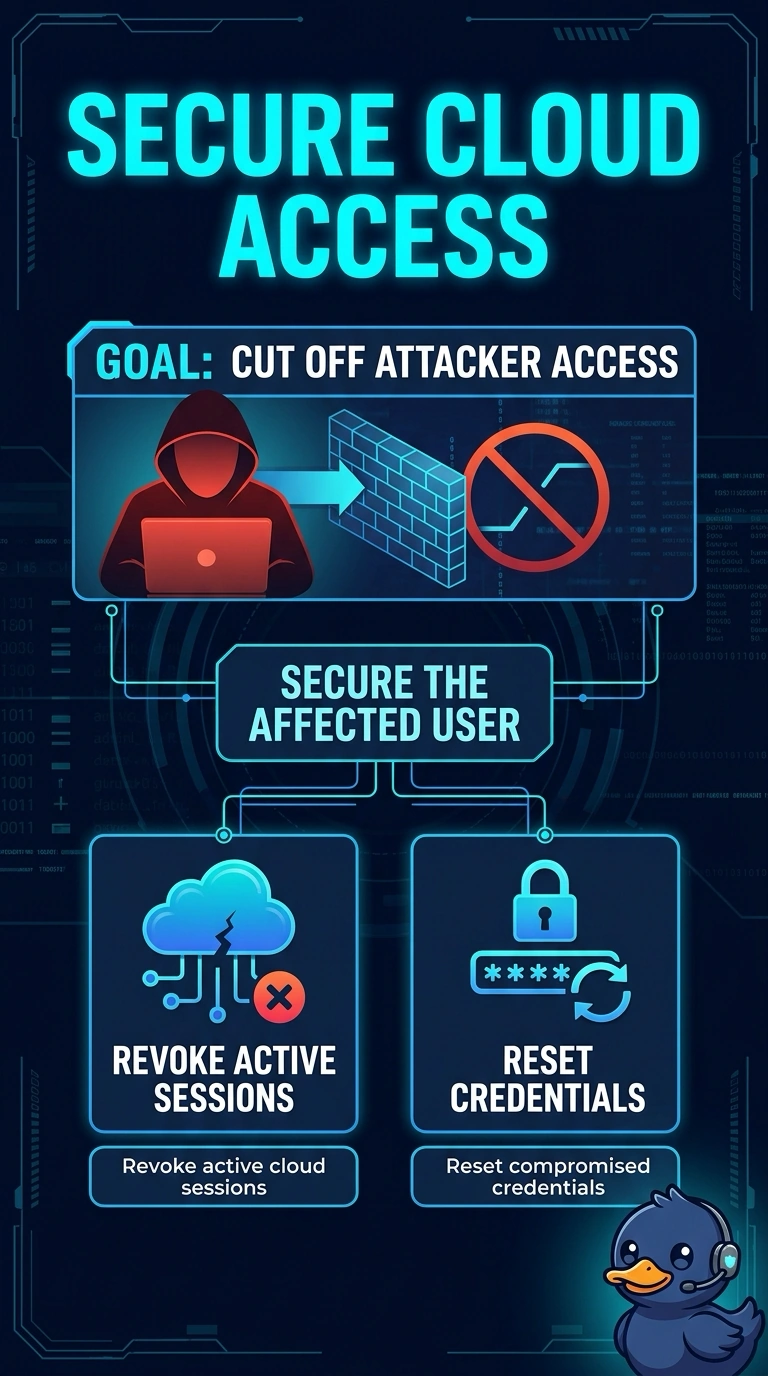
Revoke active cloud sessions and reset compromised credentials for the user is the right next step because once an attacker authenticates to cloud SSO from an external IP, isolating the corporate laptop does not terminate their active cloud tokens or prevent logins from other devices. Effective containment must match the compromised layer by invalidating sessions and rotating credentials. Reimage the laptop immediately without checking cloud authentication or session logs destroys local forensic evidence while leaving the attacker's cloud access completely intact. Wait for the laptop isolation to expire before reviewing any external login events delays critical identity containment and gives the adversary time to access sensitive cloud data. Block only the unfamiliar external IP at the corporate office perimeter firewall fails because cloud SSO traffic bypasses the office perimeter and attackers easily rotate source IPs. As an exam caveat, endpoint containment and identity containment are complementary actions rather than mutually exclusive choices. As an operational check, review cloud audit logs after session revocation to confirm no new MFA devices, inbox rules, or OAuth grants were added during the window of exposure.
Prefer to study offline? Printable PDF study book + test engine ($7.50, unofficial). These questions stay free here.