
A university SOC analyst notices a research server generating thousands of DNS queries to unique subdomains of an unfamiliar domain, yet web proxy logs show zero HTTP or HTTPS connections to that domain. Which investigative step best evaluates this behavior?
Select an answer to reveal the explanation.
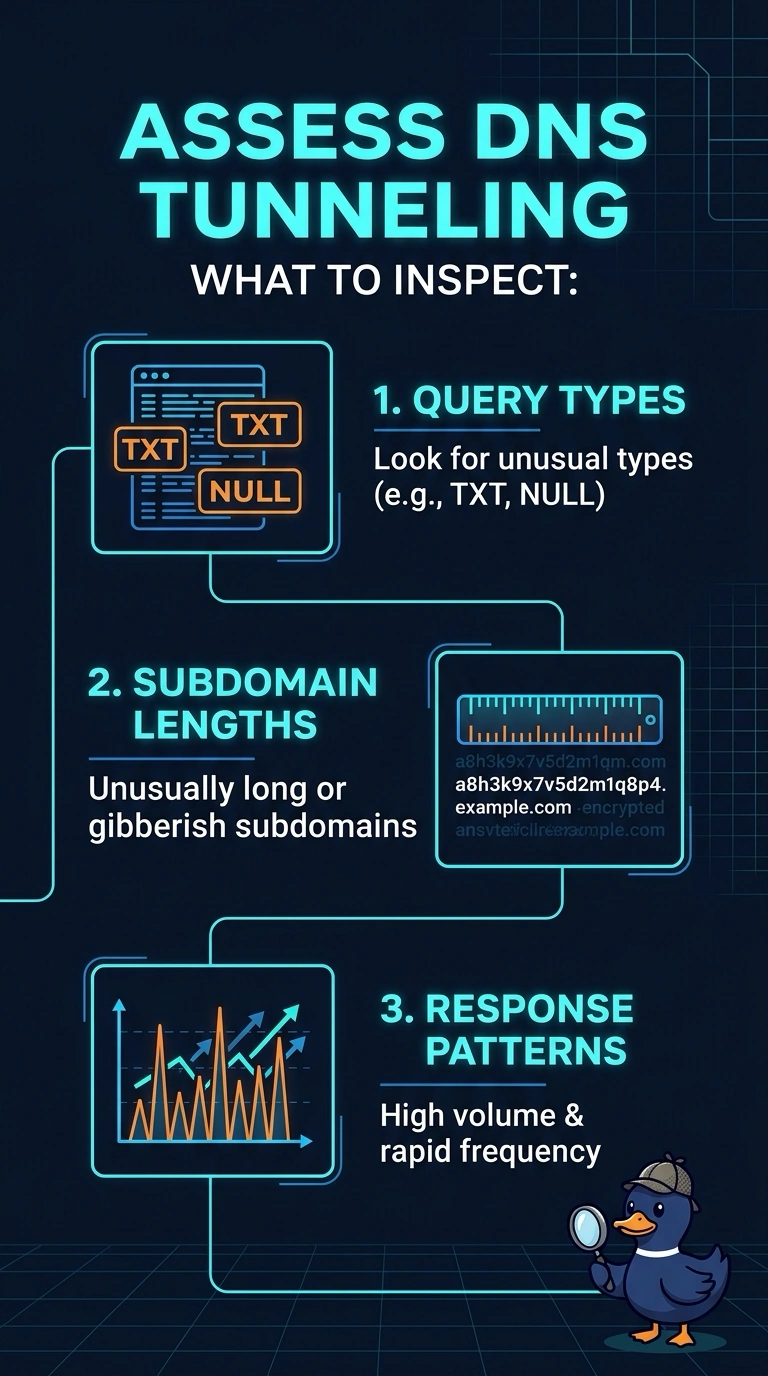
Short Explanation
Zero web proxy hits can feel reassuring, but DNS can carry traffic where HTTP and HTTPS logs will not see it. Inspecting query patterns for tunneling helps you evaluate whether the unusual DNS activity is covert communication.
Full Explanation
DNS tunneling can encode command-and-control traffic or exfiltrated data in DNS subdomain labels and responses, bypassing web proxies entirely. Inspecting DNS query types, subdomain lengths, and response patterns can reveal high-entropy or unusually long subdomains, frequent TXT or NULL lookups, and repeated queries that indicate covert data transfer. Closing the investigation because zero HTTP proxy connections supposedly prove no data left the research server overlooks non-HTTP exfiltration over DNS. Restarting the research server before collecting DNS or endpoint process telemetry destroys volatile runtime context and can leave you unable to identify which process generated the queries. Filtering the CQL search to web proxy logs only removes the DNS telemetry showing the suspicious behavior. One caveat is that legitimate security tools, telemetry agents, and content-delivery checks can also generate many unique subdomain lookups, so confirm the source before concluding the activity is malicious. As a practical check, pivot from the queried domain to endpoint process telemetry on the research server and inspect sample DNS query strings in CQL.
Prefer to study offline? Printable PDF study book + test engine ($7.50, unofficial). These questions stay free here.