
A biotech lab SOC analyst confirms that an attacker used a compromised researcher account to sign into a cloud document portal for twenty minutes before the session was revoked. Which audit telemetry best determines whether sensitive research files were actually exfiltrated?
Select an answer to reveal the explanation.
Short Explanation
Knowing an intruder logged into a cloud portal tells you they got inside the building, not whether they carried anything out the door. You need to check the file download and sharing logs to prove whether data actually left.
Full Explanation
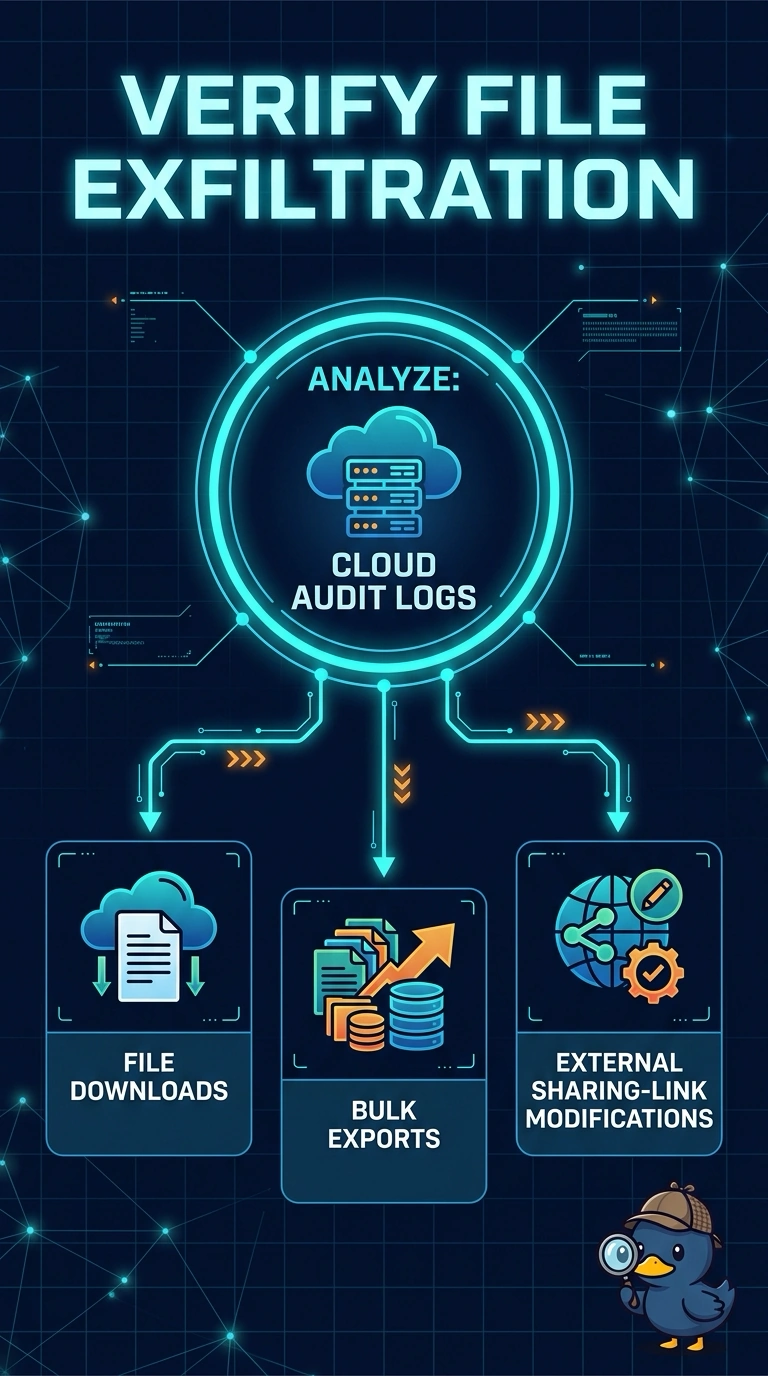
The telemetry that directly answers whether data left is Cloud audit logs for file downloads, bulk exports, and external sharing-link modifications. These application-level audit records show whether the attacker merely viewed pages, downloaded files, or exported collections during the twenty-minute session. A created or widened external link establishes exposure/persistence, not proof that anyone retrieved the content. Verify download/export/access events and their semantics before reporting actual transfer. Choosing to check Perimeter VPN disconnect timestamps from the researcher's corporate laptop three days earlier is irrelevant to a cloud portal session occurring days later from an attacker's session. Choosing to review Only the initial login success event and the researcher's password reset confirmation email confirms entry and credential remediation but provides zero visibility into what actions occurred inside the portal. Choosing to inspect Aggregate daily CPU utilization metrics from an unrelated on-premises laboratory file server offers no evidence about cloud portal file access. As a caveat, some cloud portals experience ingestion latency, so confirm audit logs for the full twenty-minute window have finished arriving before closing the scope. For an operational check, query cloud audit events filtered to the researcher's account and attacker source IP across the exact session window.
Prefer to study offline? Printable PDF study book + test engine ($7.50, unofficial). These questions stay free here.