
A software company SOC analyst detects a legitimate third-party cloud-sync utility uploading large archives from an engineering workstation to an external storage bucket. What should the analyst verify before either dismissing the activity or triggering a broad software-removal workflow?
Select an answer to reveal the explanation.
Short Explanation
Seeing a moving van outside your office only makes sense once you check who hired it and where the boxes are going. Dual-use sync tools can serve legitimate engineering backups or silent data theft, so you must verify authorization and destination first. The trap is trusting a signed tool without checking where it sends data.
Full Explanation
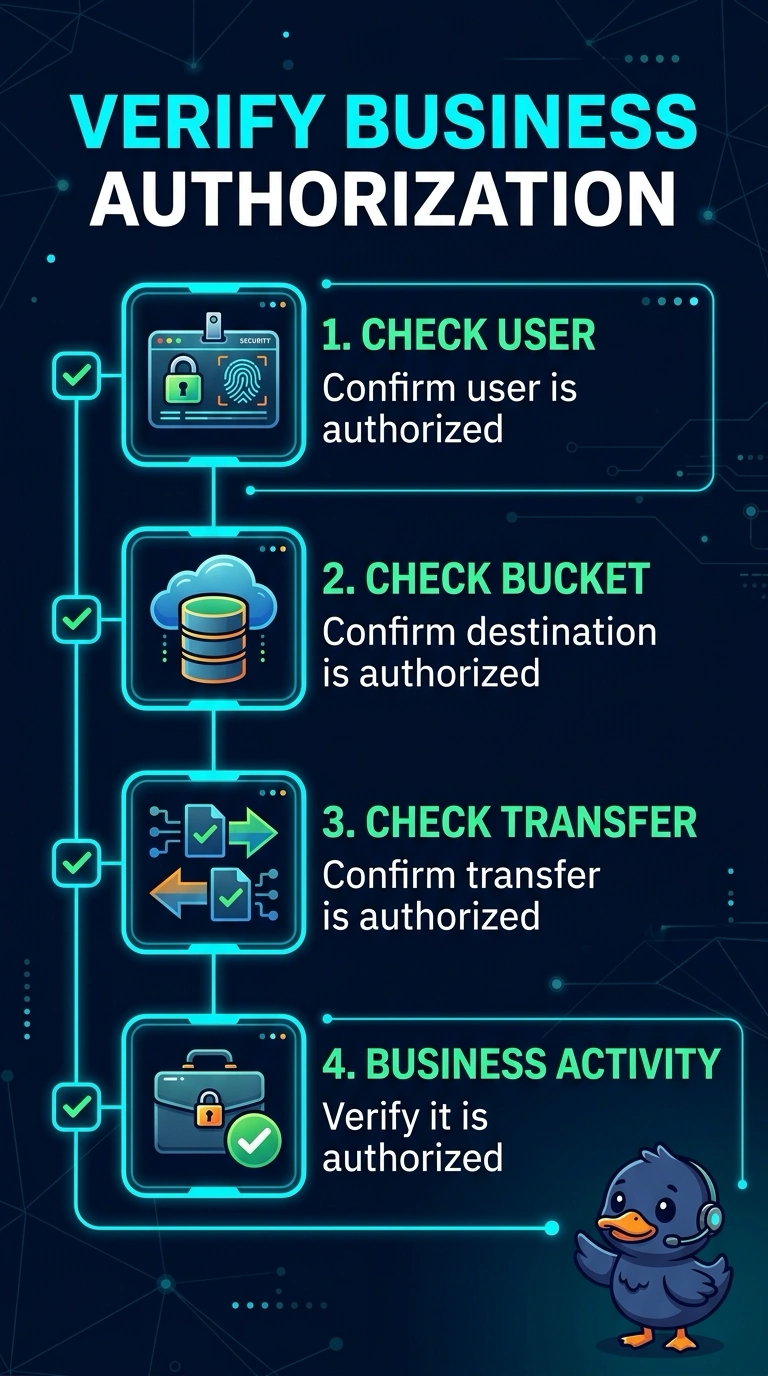
Checking Whether the user, destination bucket, and transfer are authorized business activity directly resolves whether a dual-use utility is serving approved engineering work or unauthorized exfiltration. Attackers increasingly rely on legitimate, signed sync tools precisely because they blend into normal software inventories while moving large volumes of data to attacker-controlled storage. Checking Whether the utility's installer carries a valid vendor digital signature only confirms the binary is authentic, not that the specific upload destination or user intent is legitimate. Looking at Whether the workstation's CPU temperature rose during the upload provides hardware telemetry that has no bearing on data-transfer authorization. Asking Whether other departments use unrelated cloud backup products does not validate the specific storage bucket or archive contents observed on this workstation. As a caveat, an authorized employee could still use an approved tool to stage data improperly before departure. As an operational check, correlate the process command line, destination URL or bucket name, and user context against approved project tickets and corporate storage inventories before deciding on containment.
Prefer to study offline? Printable PDF study book + test engine ($7.50, unofficial). These questions stay free here.