
A healthcare SOC analyst investigates an endpoint alert for an outbound connection to an unfamiliar external IP address from a billing server, but finds no matching DNS query in the five minutes preceding the connection. What should the analyst check next?
Select an answer to reveal the explanation.
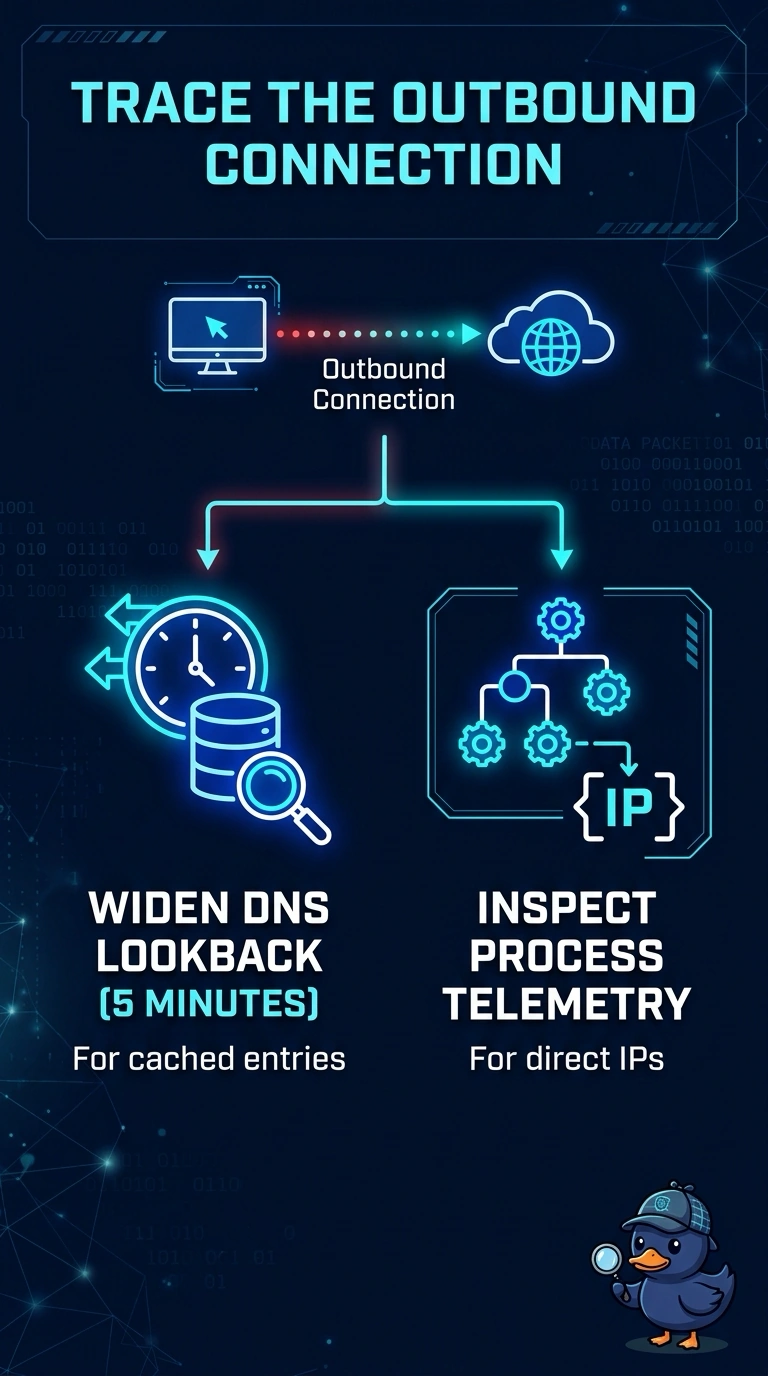
Short Explanation
Not every phone call requires opening the directory right before you dial—sometimes the number is already cached or memorized. The trap is assuming DNS logs are broken or the connection is benign just because no lookup appeared in the last five minutes.
Full Explanation
An outbound IP connection without an immediate preceding DNS query can happen when an application reuses a cached DNS record or connects directly to a hardcoded IP address. Choosing Widen the DNS lookback window for cached entries and inspect process telemetry for direct IPs lets you determine whether an earlier resolution mapped a domain to that IP or whether a suspicious binary bypassed DNS altogether. By contrast, Conclude that the server's DNS logging pipeline has failed completely across the hospital leaps to an infrastructure diagnosis without checking whether other DNS queries from the same server are still arriving. Selecting Ignore the outbound connection because legitimate applications always perform a fresh DNS lookup overlooks both OS/application DNS caching and malware that hardcodes command-and-control IPs. Finally, Reimage the billing server immediately before checking any process or network telemetry destroys local context and disrupts clinical billing before confirming unauthorized activity. As a caveat, long DNS time-to-live values can keep cached IP mappings valid for hours. As an operational check, query historical DNS logs for the destination IP over the past 24 hours and inspect the initiating process command line in endpoint telemetry.
Prefer to study offline? Printable PDF study book + test engine ($7.50, unofficial). These questions stay free here.