
An e-commerce company SOC analyst sees an alert for an internal application server initiating outbound HTTP requests to an unfamiliar external IP address. What should the analyst do to determine whether this traffic reflects server-side request forgery rather than routine application behavior?
Select an answer to reveal the explanation.
Short Explanation
Think of an internal server acting like a courier that suddenly mails packages to a stranger's address—you need to check who handed it the slip. The trap is blocking the destination or restarting the service before seeing how the request was triggered, which leaves the underlying flaw open.
Full Explanation
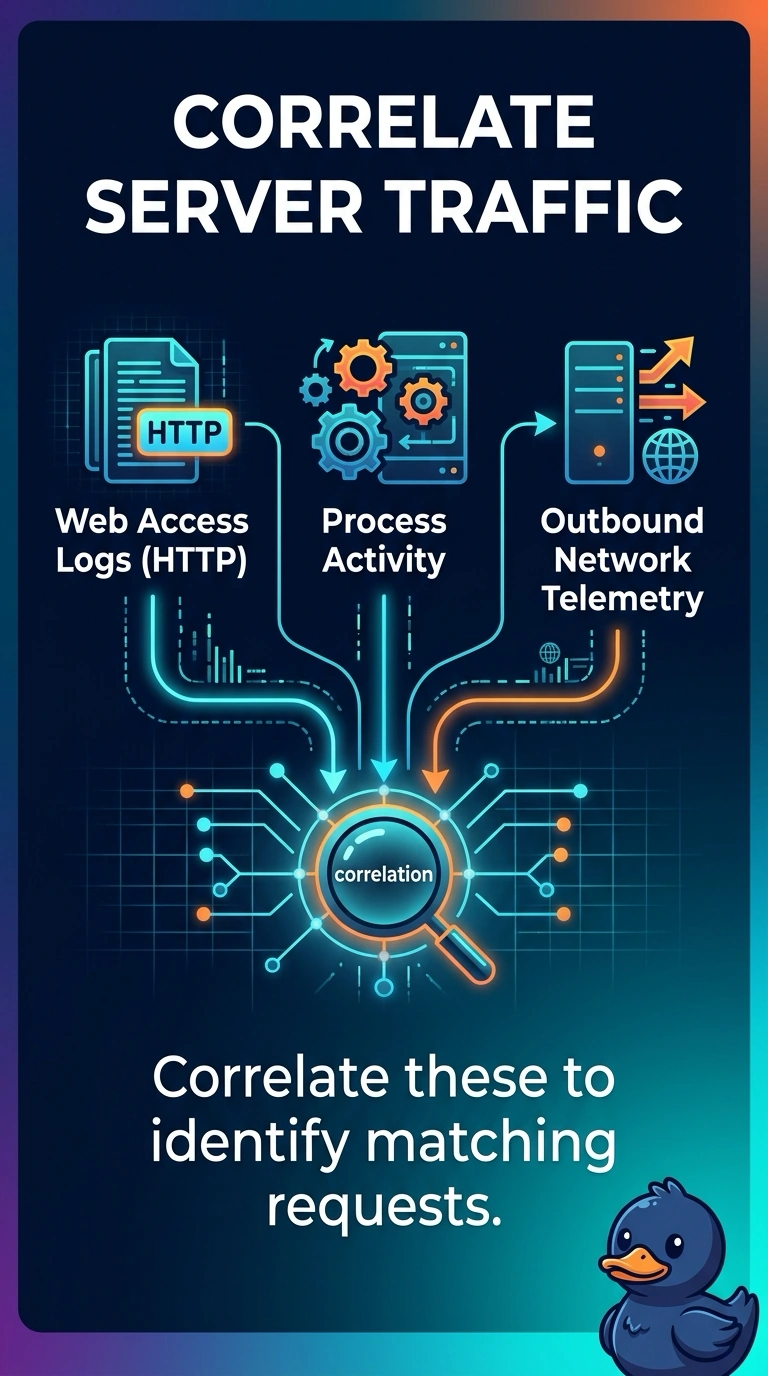
To distinguish server-side request forgery from legitimate outbound calls, you must trace the request chain from incoming user input to the server's outbound socket. Selecting Correlate web access logs with process and outbound network telemetry for matching requests lets you match suspicious URL parameters or payloads in web logs directly to the application process initiating the connection. By contrast, Block the external IP address at the perimeter firewall and close the alert immediately may stop one destination, but it fails to identify whether an attacker is abusing an exposed parameter to pivot to other external or internal targets. Similarly, Restart the application server service to clear any temporary memory-resident connections disrupts availability and erases volatile runtime state without explaining why the server made the request. Finally, Rebuild the correlation rule using a higher outbound byte-count threshold before investigating suppresses future visibility because SSRF probes and metadata lookups often transfer very little data. Keep in mind as a caveat that legitimate webhook integrations or package updates can also trigger outbound HTTP traffic, so context matters. As an operational check, align timestamps across web access, endpoint process, and firewall logs in CQL to confirm whether a specific incoming HTTP request preceded the outbound call.
Prefer to study offline? Printable PDF study book + test engine ($7.50, unofficial). These questions stay free here.