
A manufacturing SOC analyst confirms that credential-stealing malware executed on a plant engineer's laptop. Beyond isolating the laptop, what should the analyst investigate to determine full incident scope?
Select an answer to reveal the explanation.
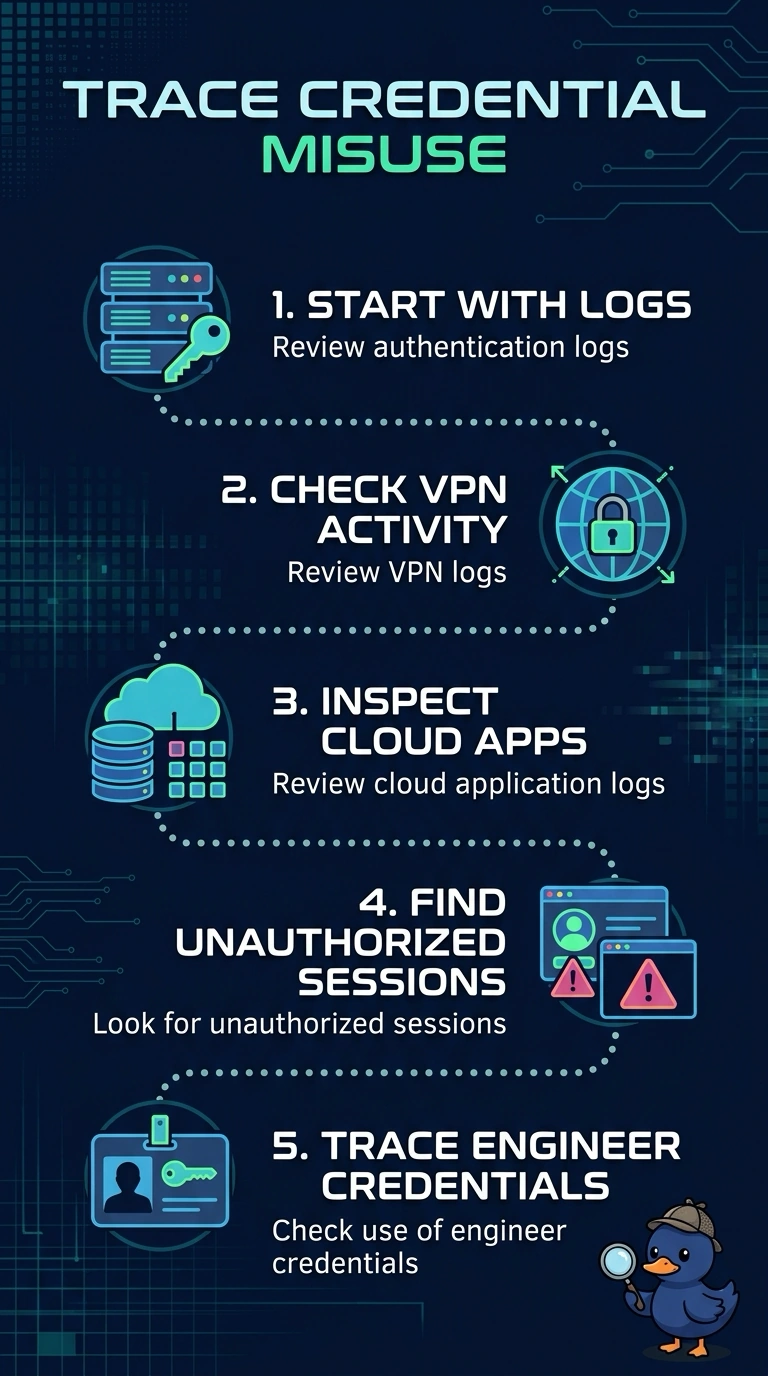
Short Explanation
Isolating the laptop locks the front door, but stolen credentials let the attacker walk into other buildings. You need to trace where those credentials were used across VPN and cloud logs to know the true scope.
Full Explanation
Network containment restricts ordinary network communication from that endpoint; it does not itself stop local processes or invalidate credentials, and permitted Falcon/allowlisted traffic can continue. So the analyst must also inspect "Authentication, VPN, and cloud application logs for unauthorized sessions using the engineer's credentials" to find external reuse. Once credentials are harvested, an adversary can authenticate from unmanaged infrastructure without touching the isolated laptop again. Checking "Only the local browser history on the isolated laptop, since containment blocks all future logins" ignores that valid stolen credentials still work from other devices until revoked. Searching "Whether the engineer's laptop hostname appears in historical third-party printer maintenance logs" is irrelevant to credential reuse across remote access or cloud services. Asking "Whether a new correlation rule can be written to retroactively delete the stolen credentials" confuses detection logic with identity remediation, because correlation rules only generate alerts and cannot revoke secrets. As a caveat, look for newly registered MFA methods or persistent tokens alongside interactive logins. Operationally, pivot on the engineer's normalized username across identity and VPN datasets from before malware execution through the present, then revoke sessions and reset credentials.
Prefer to study offline? Printable PDF study book + test engine ($7.50, unofficial). These questions stay free here.