
A university SOC analyst sees an endpoint alert for an outbound connection to an unfamiliar external IP address, but the network flow log does not record a hostname. Which SIEM pivot best reveals whether the host resolved a suspicious domain immediately before connecting?
Select an answer to reveal the explanation.
Short Explanation
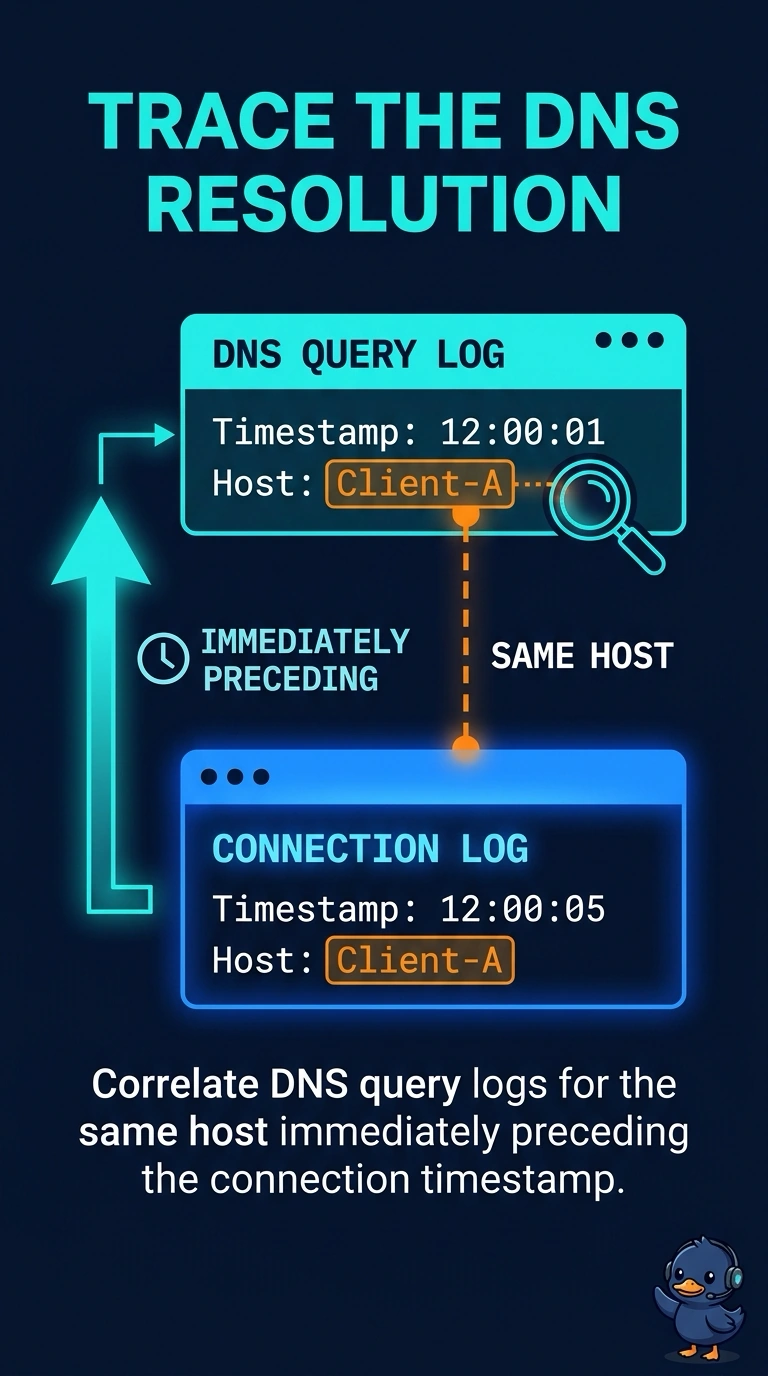
When you see an outbound IP without a hostname, you need the lookup that happened just before the connection. Correlating that host’s DNS logs immediately beforehand can reveal the requested domain and give you stronger context than static records.
Full Explanation
Correlating DNS query logs for the same host immediately before the connection is the best pivot because it can link the outbound IP to the domain the host queried and the answer returned. Modern adversaries often use shared cloud or CDN IPs, so the queried domain provides stronger investigative context than the IP alone. A reverse WHOIS lookup on the university’s internal subnet range returns registration details for the university, not information about the external destination. Local DHCP lease renewal records from the previous month can help map an internal IP to a host at a given time, but they do not connect an external IP to a domain name. Checking whether the endpoint’s local hosts file contains default loopback entries examines standard local resolution configuration, not dynamic external domain lookups. Exam caveat: DNS logs may contain no matching query if the host used a hardcoded external IP or encrypted DNS that bypassed corporate resolvers; in that case, also check proxy or TLS SNI telemetry. As a practical check, query DNS logs in CQL for the source host during the five minutes before the connection and match the returned answer IP.
Prefer to study offline? Printable PDF study book + test engine ($7.50, unofficial). These questions stay free here.