
A SaaS company SOC confirms that an attacker accessed an employee's cloud collaboration account using stolen credentials from an unmanaged external IP, while endpoint telemetry confirms the employee's corporate laptop is clean and uninvolved. Which containment approach best fits this confirmed scope?
Select an answer to reveal the explanation.
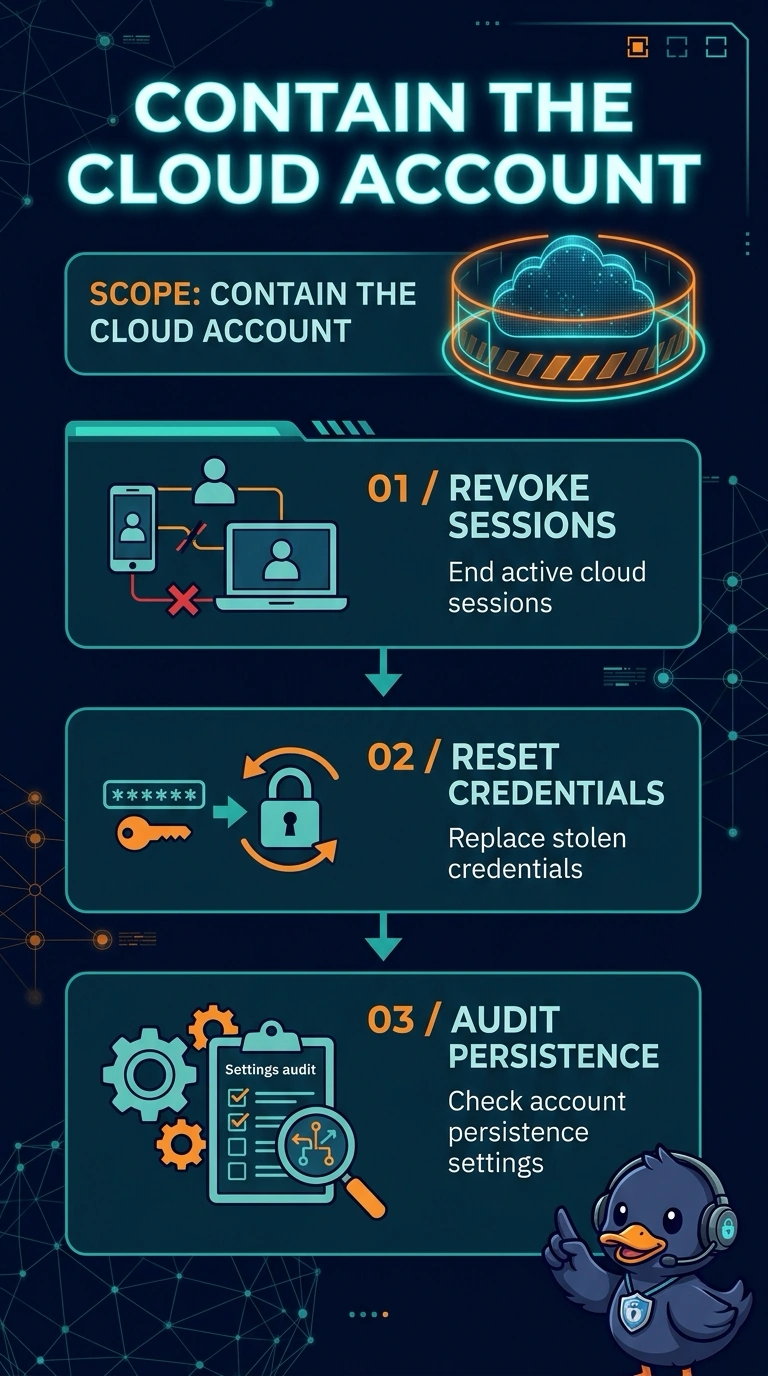
Short Explanation
Locking the front door of an empty house won't stop a thief who already has a key to your cloud storage unit. Since the compromise lives purely in the cloud identity layer, you need to revoke active cloud sessions and reset credentials rather than isolating a clean laptop. Always aim your containment directly at where the attacker actually has access!
Full Explanation
Effective incident containment targets the specific control plane and assets where unauthorized access is occurring without disrupting unaffected systems. Choosing to Revoke active cloud sessions, reset credentials, and audit account persistence settings Revoke supported sessions/refresh tokens, reset credentials, remove persistence, and verify effective access termination; some existing access tokens or app sessions need expiry or resource-side revocation. and checks for lingering backdoors such as unauthorized MFA devices or forwarding rules. Conversely, choosing to Isolate the employee's clean corporate laptop from the network while leaving the cloud sessions active disrupts the employee's endpoint while allowing the attacker to continue operating in the cloud from the unmanaged external IP. Choosing to Delete the employee's historical cloud audit logs so the attacker cannot view past activity records destroys forensic evidence needed for scoping and compliance without stopping access. Meanwhile, choosing to Create a new CQL dashboard panel without taking any action on the compromised cloud account monitors the problem rather than containing it. As an exam caveat, always verify whether an existing Falcon Fusion SOAR workflow can automate session revocation safely before executing manual changes. As an operational check, re-query cloud authentication logs after revocation to confirm no new tokens or sessions appear from the external IP.
Prefer to study offline? Printable PDF study book + test engine ($7.50, unofficial). These questions stay free here.