
A healthcare clinic SOC isolates a workstation via an existing Falcon Fusion SOAR workflow after detecting malware execution. Before closing the incident as fully remediated, what must the analyst verify?
Select an answer to reveal the explanation.
Short Explanation
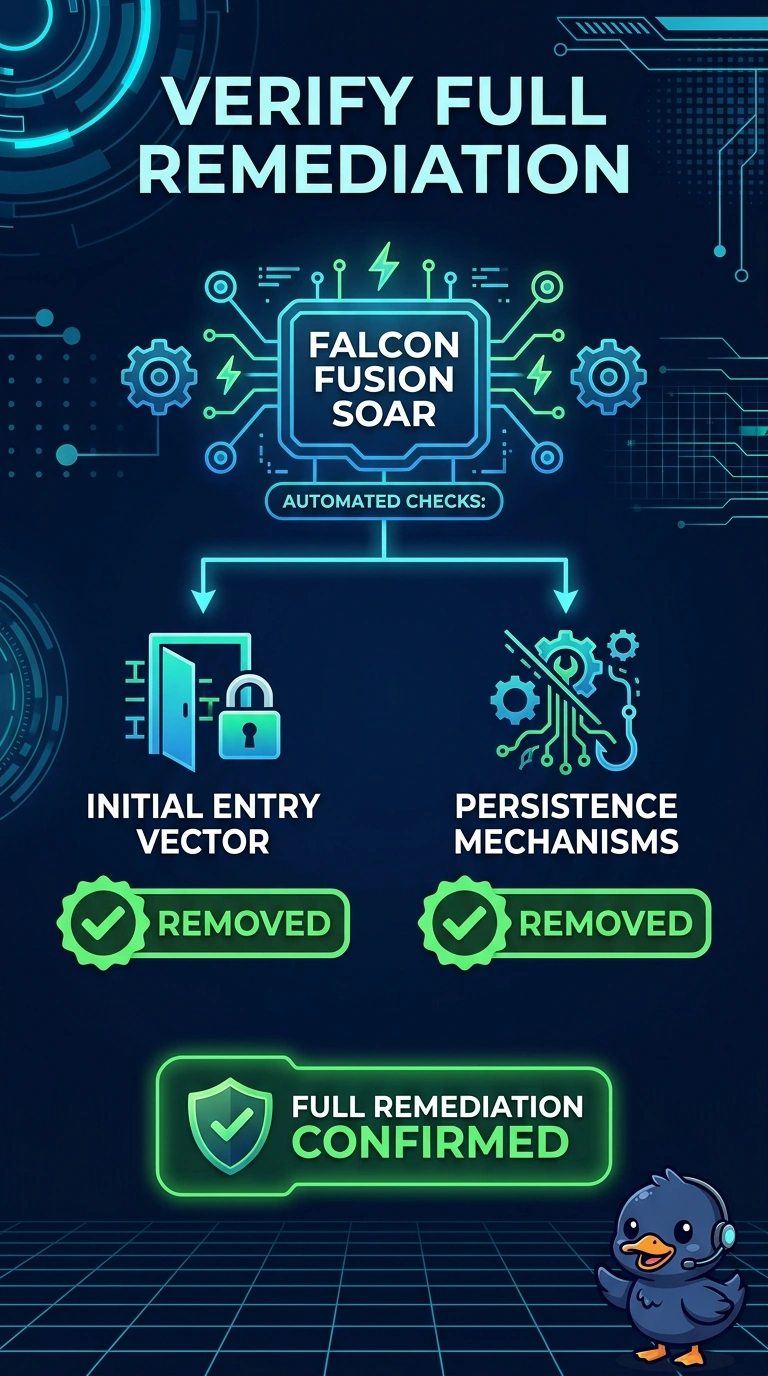
You’ve stopped the immediate spread by isolating the workstation, but containment is only the first step. Before closing the incident, verify remediation by confirming the original entry vector and any persistence mechanisms are gone.
Full Explanation
Containment restricts ordinary network communication while retaining permitted Falcon/allowlisted paths. Verify containment policy and observed traffic; isolation does not by itself revoke credentials, remove persistence or guarantee no communication. Verifying that the initial entry vector and any persistence mechanisms were removed ensures that, once the host returns to service—or if the attacker holds valid credentials elsewhere—access cannot be immediately re-established. Preserving the workstation wallpaper and local display settings has no bearing on security remediation. Deleting all historical SIEM logs for the endpoint reflects a misconception: containment isolates the host rather than erasing audit telemetry. Stopping the clinic firewall from logging all outbound traffic globally would indicate a logging outage rather than successful remediation. Caveat: if the entry vector was a phished account or an unpatched remote service, host isolation alone leaves other systems exposed. Operational check: review endpoint persistence artifacts, identity sign-in logs, and email delivery records to confirm both persistence removal and entry-vector closure before lifting isolation.
Prefer to study offline? Printable PDF study book + test engine ($7.50, unofficial). These questions stay free here.