
A media company SOC analyst investigates a confirmed compromise where an adversary rotates external command-and-control IP addresses every few hours. Searching only for the initial external IP across firewall logs shows no further activity. How should the analyst continue scoping the intrusion?
Select an answer to reveal the explanation.
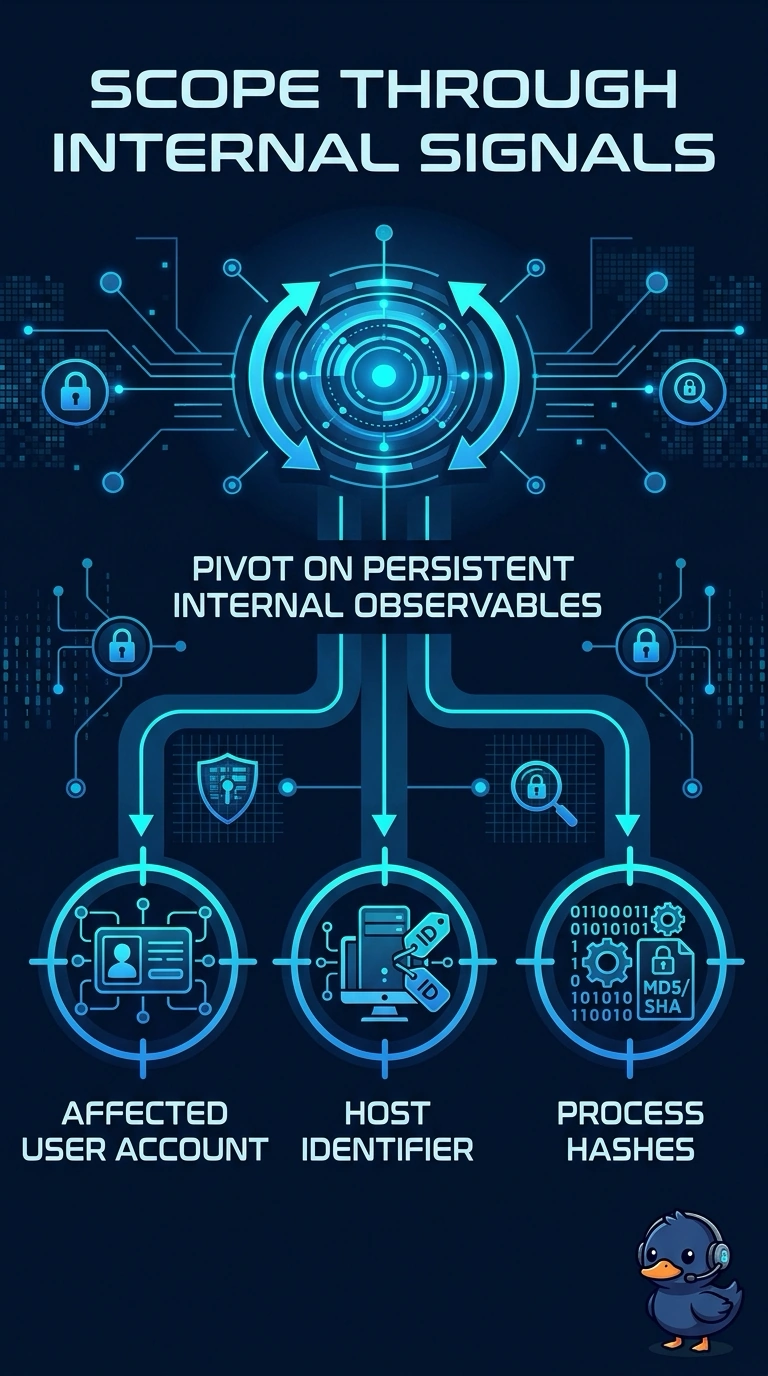
Short Explanation
Chasing a rotating external IP is like trying to track someone by the disposable phone they threw away yesterday—you will always be one step behind. When you pivot to internal host, user, and process observables, you follow the attacker's actual footprint. The trap is assuming zero hits on an old IP means the intrusion stopped.
Full Explanation
Selecting Pivot on persistent internal observables such as the affected user account, host identifier, or process hashes keeps the investigation anchored to These provide additional starting points when external IPs rotate, but attackers can change payload hashes, use new accounts or move to other hosts; follow derived persistence and activity instead of assuming any observable is permanent. Even when external infrastructure rotates rapidly, the compromised account, endpoint host, or malicious binary hash remains visible in endpoint, authentication, and outbound connection logs. Choosing Wait for third-party threat-intelligence feeds to publish the newly rotated external IP addresses delays scoping while the adversary continues operating, and ephemeral infrastructure may never appear in public feeds. Choosing Close the firewall investigation because the absence of repeat hits confirms the attacker disconnected mistakes an indicator change for remediation. Choosing Delete the initial external IP from the case file so the investigation focuses on newer indicators removes valuable historical evidence needed for timeline reconstruction and blocking. Caveat: internal accounts can also be abandoned if the attacker creates new persistence or secondary accounts, so check for newly created identities too. As an operational check, pivot in CQL from the affected host and user across DNS, proxy, and process logs after the initial IP's last seen timestamp.
Prefer to study offline? Printable PDF study book + test engine ($7.50, unofficial). These questions stay free here.