
A manufacturing SOC analyst finds a suspicious administrative script running on a plant quality-control server and needs to determine whether a local operator ran it or an attacker launched it remotely over the network. Which telemetry should the analyst inspect?
Select an answer to reveal the explanation.
Short Explanation
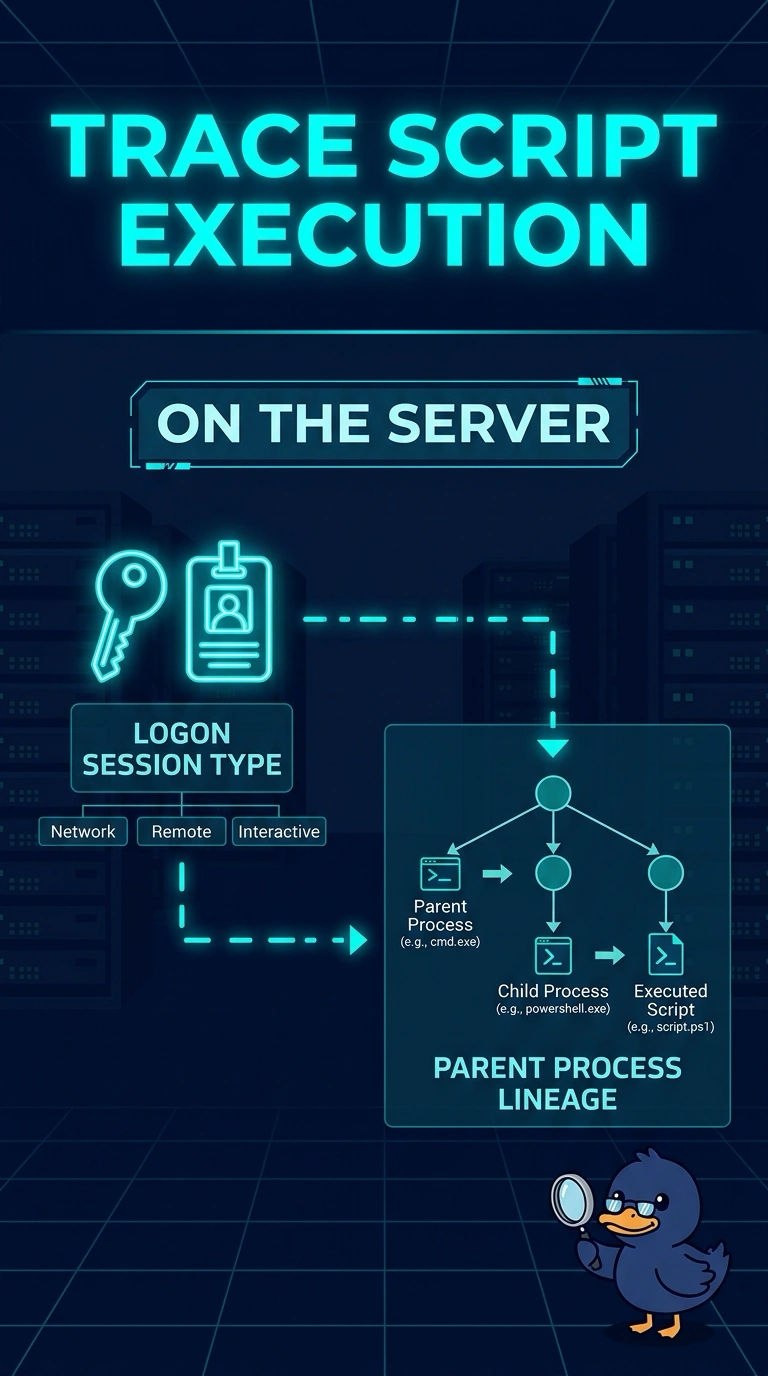
Determining how a script started is like checking a doorway's badge log and security camera together. You need the process tree and logon type to see whether someone sat at the keyboard or arrived over the network, and the trap is looking at aggregate firewall volume instead.
Full Explanation
Distinguishing local operator activity from remote execution requires inspecting "The parent process lineage and associated logon session type on the server" because interactive console launches descend from desktop shells under an interactive logon, whereas remote execution typically spawns from remote-management services or network logon sessions. Checking "The total number of bytes transferred by the plant perimeter firewall that morning" gives only aggregate traffic volume and cannot attribute a specific script launch on an internal server. Reviewing "The MITRE ATT&CK tactic label assigned to an unrelated third-party proxy alert" provides no execution evidence for the quality-control host. Looking at "The default retention period configured for the SIEM's long-term archive repository" only tells you how long logs are kept, not who launched the script. Caveat: an attacker using a compromised remote-desktop session can still generate an interactive-looking process tree, so also check the source IP of the logon session. Operational check: query endpoint process events in CQL for the script's process ID, walk up to its parent and grandparent processes, and correlate the logon ID with authentication logs.
Prefer to study offline? Printable PDF study book + test engine ($7.50, unofficial). These questions stay free here.