
After confirming an attacker compromised a software company employee's cloud email account, the SOC resets the user's password and revokes active sessions. What should the analyst verify next in cloud audit logs before closing the incident?
Select an answer to reveal the explanation.
Short Explanation
Changing the locks does not help if an intruder already tucked a spare key under the mat. The trap is stopping after a password reset when you have not checked for attacker-added inbox rules or rogue MFA methods.
Full Explanation
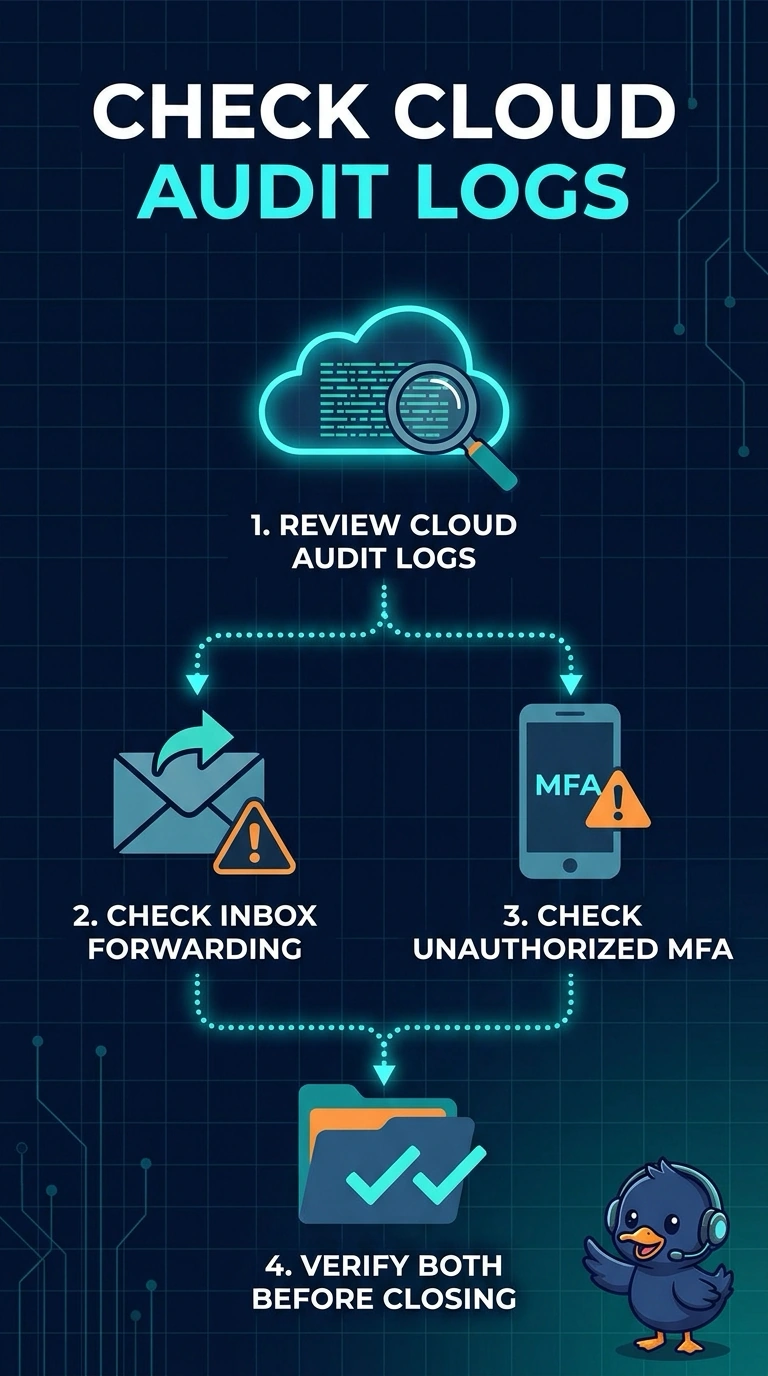
Account takeover remediation is incomplete until persistence inside the cloud account itself is removed, making Whether the attacker added inbox forwarding rules or unauthorized MFA devices the critical check. Adversaries routinely register secondary MFA factors or create hidden mail-forwarding rules during brief access so they can continue exfiltrating messages or regain entry later. Checking Whether the employee's local workstation BIOS firmware is up to date addresses hardware patching rather than cloud account persistence. Verifying Whether every outbound firewall rule across all corporate offices was reset to default is an unrelated and disruptive network change that does nothing to clear compromised mailbox settings. Confirming Whether the user's password meets minimum character complexity rules is good hygiene after a reset, but it does not detect existing persistence left behind by the intruder. As a caveat, review audit events from before the password reset as well as immediately after to catch silent modifications. For an operational check, query cloud identity and mail-audit logs for rule creation, delegate changes, and MFA enrollment events tied to the user.
Prefer to study offline? Printable PDF study book + test engine ($7.50, unofficial). These questions stay free here.