
A healthcare clinic SOC receives an email security alert showing a suspicious macro-enabled attachment was delivered to a nurse's inbox an hour ago. What should the analyst do before triggering host isolation on the nurse's workstation?
Select an answer to reveal the explanation.
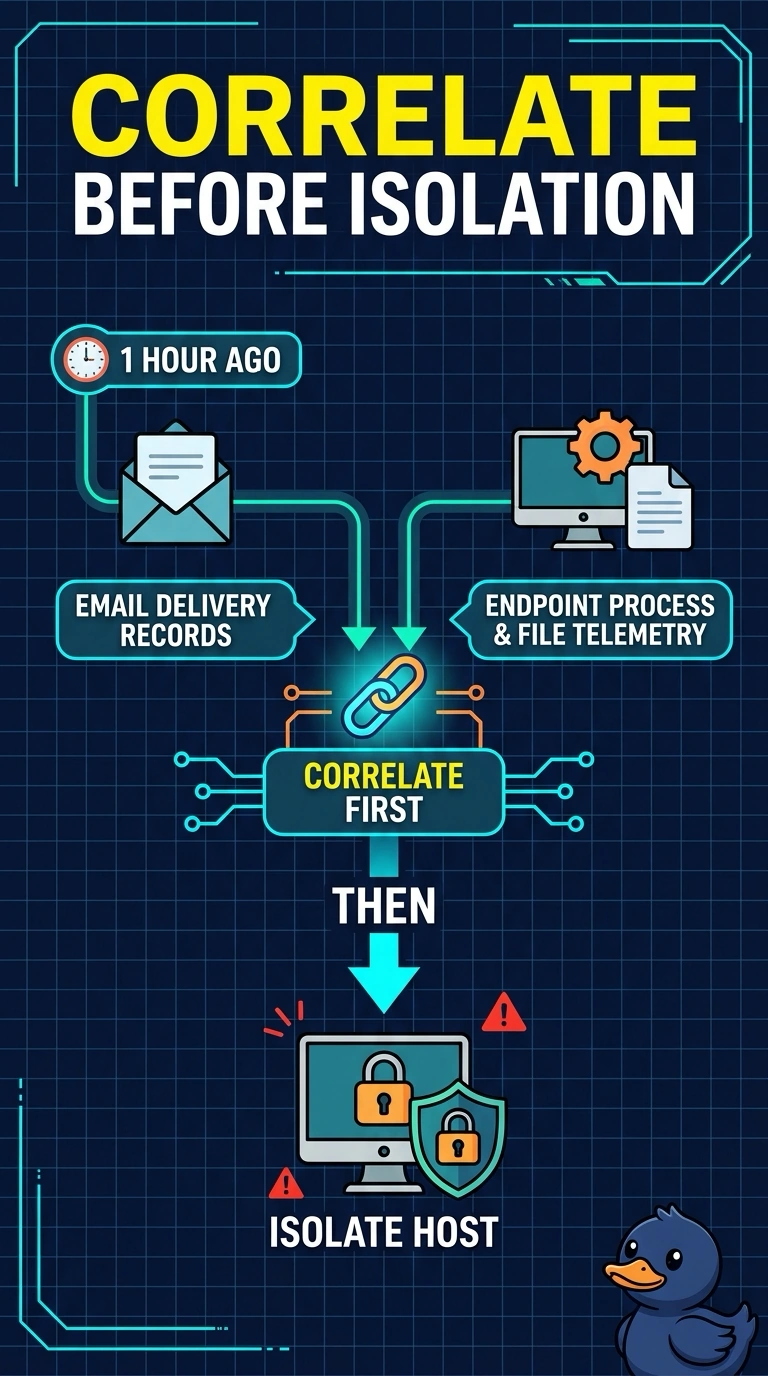
Short Explanation
Delivery to an inbox does not automatically mean someone opened the file, so treat that alert like a package left on a porch rather than a break-in. The trap is isolating a clinical workstation immediately when you have not verified execution on the endpoint.
Full Explanation
In Falcon Next-Gen SIEM, confirming whether a delivered attachment was actually opened requires pivoting from email telemetry to host activity, making Correlate email delivery records with endpoint process and file telemetry first the right decision. Checking endpoint process creation, child scripts, and file-write events establishes whether the macro executed before disruptive containment is applied. Choosing Immediately isolate the workstation and revoke the nurse's active identity sessions skips verification and can disrupt clinical care if the message sat unread. Choosing Delete the email from the mail server and close the alert as fully remediated removes the message from the mailbox but fails to check whether the user already saved or ran the attachment locally. Choosing Wait for a third-party antivirus passthrough alert before checking the host leaves potential macro execution uninvestigated if the file evaded signature detection. As a caveat, if endpoint telemetry shows the file was launched or spawned a script, escalate to containment immediately. For an operational check, query the user's hostname across endpoint process events from the delivery timestamp forward to confirm no suspicious child processes ran.
Prefer to study offline? Printable PDF study book + test engine ($7.50, unofficial). These questions stay free here.