
A SOC analyst at a logistics firm investigates a confirmed malware infection on a dispatch laptop and extracts several domains and process names from its telemetry. Before pivoting across the entire fleet with those observables to count affected hosts, what should the analyst check?
Select an answer to reveal the explanation.
Short Explanation
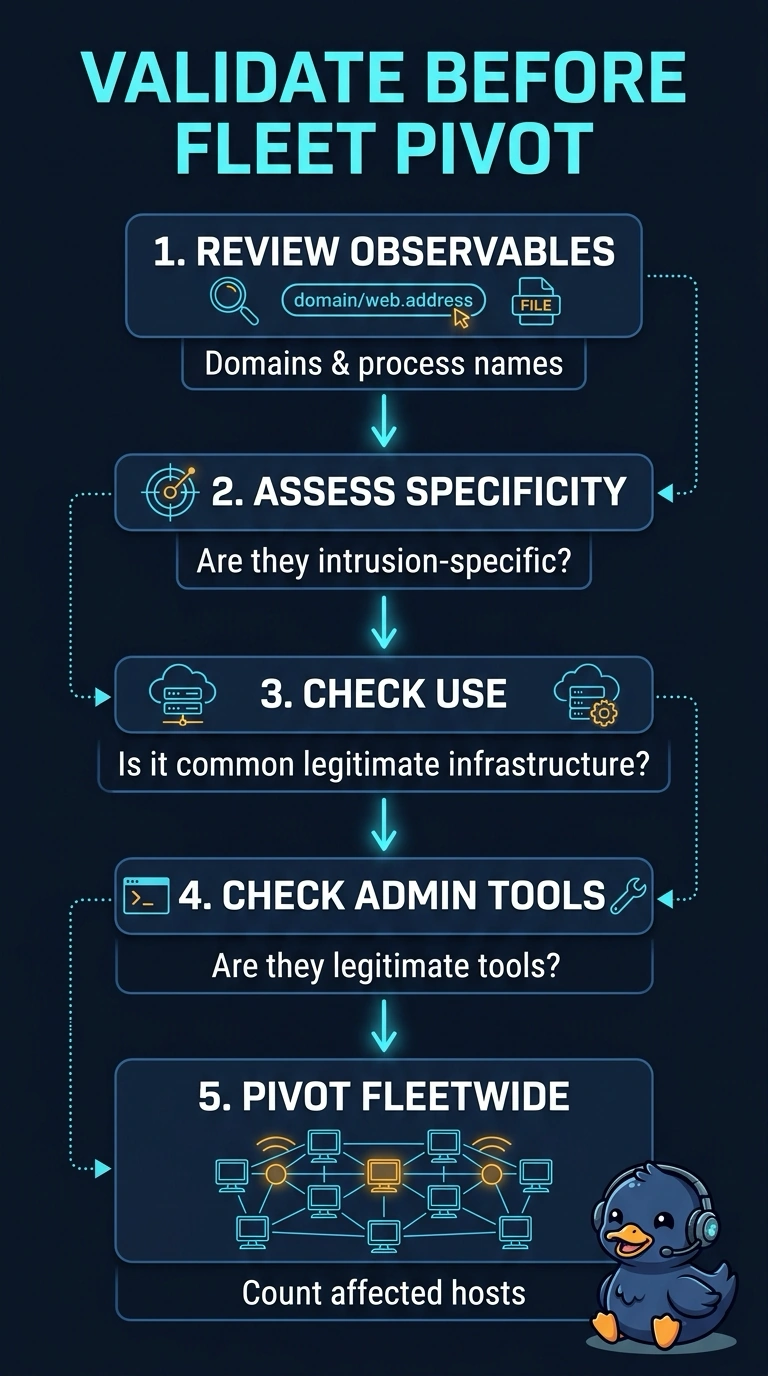
Before you scope the incident across the fleet, check whether each observable is truly tied to the intrusion. Common infrastructure or administrative tools can create many false positives and obscure the hosts you need to find.
Full Explanation
Checking whether each observable is specific to the intrusion, rather than common legitimate infrastructure or administrative tooling, helps keep a fleet-wide scope query focused on relevant hosts. Infected systems may contact shared content delivery networks or update servers, or run built-in operating-system utilities alongside malicious payloads; pivoting on those common artifacts can turn a single-host incident into hundreds of false leads. A high severity score in a threat-intelligence feed does not establish that an observable is unique to this intrusion or uncommon in your environment. Confirming that the dispatch laptop’s local firewall logs were forwarded to the SIEM verifies telemetry availability for that host, but does not show that the extracted observables are suitable for fleet-wide pivoting. An existing SOAR workflow that can automatically block every extracted domain addresses remediation, not scoping, and blocking shared infrastructure could disrupt legitimate business services. As an exam caveat, even a seemingly rare domain may belong to a specialized vendor tool used by one department. As a practical check, run a prevalence count in CQL across your environment for each candidate observable before adding it to the official scoping query.
Prefer to study offline? Printable PDF study book + test engine ($7.50, unofficial). These questions stay free here.