
A hospital SOC investigates a suspicious outbound connection from an internal DHCP-assigned IP address recorded three days ago. Why should the analyst correlate DHCP lease logs for that exact timestamp before isolating the host currently holding that IP?
Select an answer to reveal the explanation.
Short Explanation
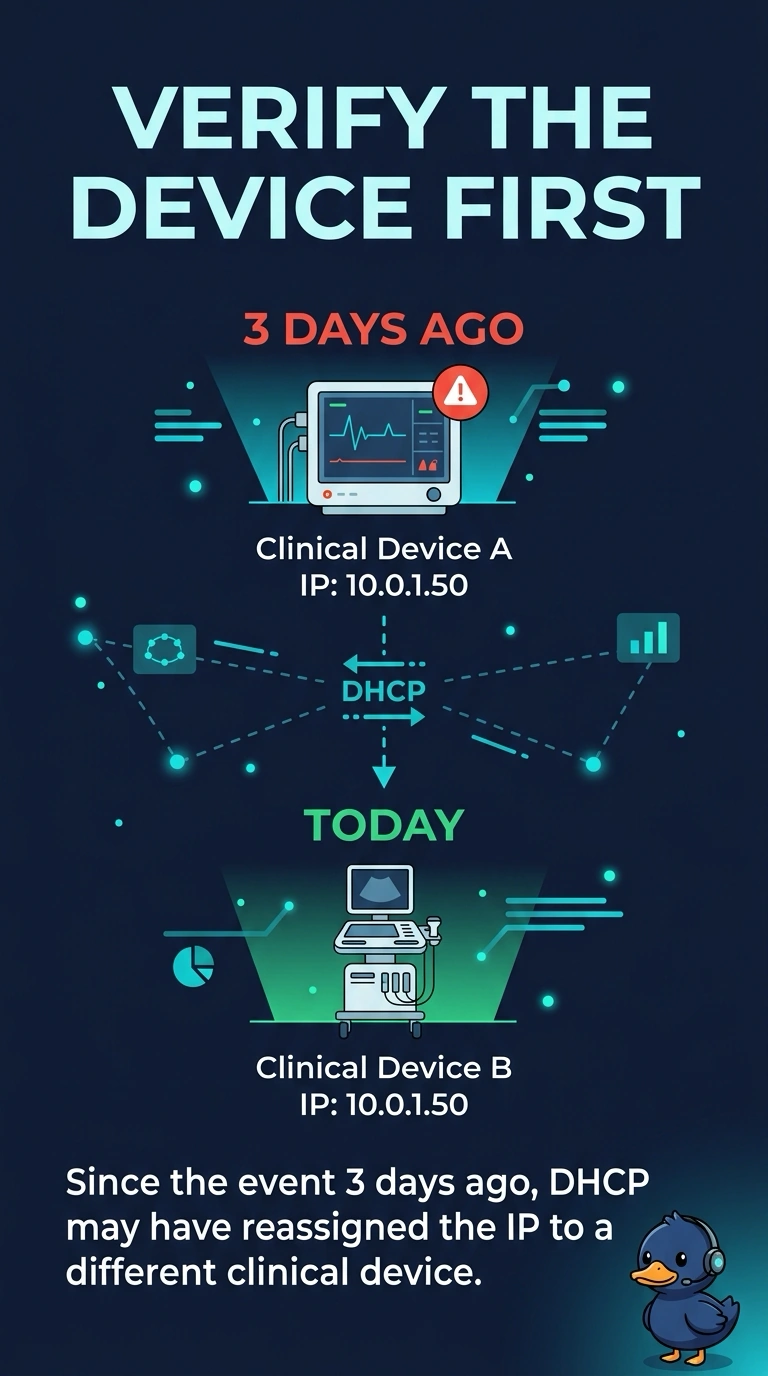
In a busy hospital network, a DHCP address is like a hotel room key—yesterday's guest may have checked out and someone else is there now. The trap is isolating today's IP holder before you verify who actually held that address three days ago.
Full Explanation
Dynamic IP addressing changes host-to-IP mappings over time, which makes The IP address may have been reassigned to a different clinical device since the event the critical reason to check lease history first. Isolating the current holder of a three-day-old IP without verifying the historical lease risks taking an innocent clinical system offline while leaving the actual compromised host connected. Claiming DHCP servers encrypt endpoint hostnames inside third-party alerts is inaccurate because DHCP assigns leases rather than encrypting alert fields. Stating SOAR workflows cannot isolate hosts that use dynamic addressing is false, as containment targets persistent host or agent identifiers once the right device is identified. Believing CQL queries automatically rewrite historical IP addresses to current ones confuses historical log storage with live asset resolution. As a caveat, also account for VPN or NAT gateways that may multiplex multiple hosts behind one address. For an operational check, query DHCP lease or authentication events covering the exact three-day-old timestamp to resolve the true hostname and MAC address before taking action.
Prefer to study offline? Printable PDF study book + test engine ($7.50, unofficial). These questions stay free here.