
A manufacturing SOC finds an internal jump host initiating suspicious SMB connections toward three file servers. Before concluding the jump host was the initial entry point, what should the analyst investigate next?
Select an answer to reveal the explanation.
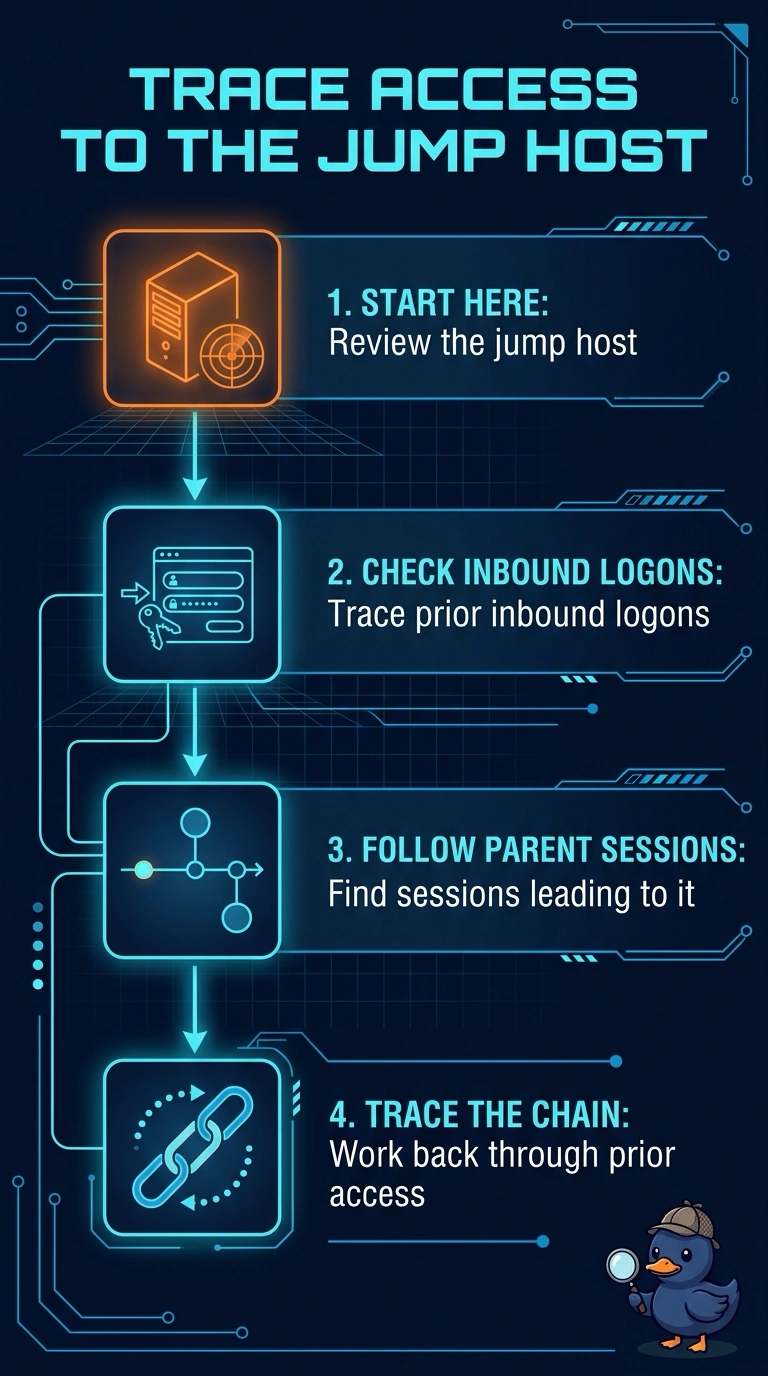
Short Explanation
Spotting an intruder on a hallway camera does not mean they climbed in through that hallway—you have to check which door they used first. Jump hosts are classic pivot points, so stopping your timeline at the jump host risks leaving the real entry point wide open.
Full Explanation
Jump hosts sit between administrative workstations and sensitive internal tiers, making them frequent staging points rather than initial targets. Choosing to Trace prior inbound logons and parent sessions leading to the jump host reconstructs the upstream path so you can identify the true patient-zero endpoint or compromised identity. Selecting Delete the jump host's local DNS cache to stop further SMB name resolution destroys volatile context without revealing how the attacker reached the system or preventing IP-based lateral movement. Opting to Rewrite the correlation rule to ignore SMB traffic originating from jump hosts blinds your monitoring to legitimate lateral-movement indicators instead of scoping the active intrusion. Choosing to Close the file-server alerts as duplicates of the jump-host detection prematurely discards downstream impact evidence before confirming whether those servers were accessed. As a caveat, attackers may use valid administrative credentials to reach the jump host, so compare logon timestamps and source hosts against approved maintenance windows. For an operational check, query identity and endpoint authentication logs prior to the SMB activity to map every upstream source host and account.
Prefer to study offline? Printable PDF study book + test engine ($7.50, unofficial). These questions stay free here.